| Cabinet Selection | Chemical hazard class | Select a cabinet designed for the hazards being stored. Keep flammable liquids, corrosive chemicals, oxidizers, toxic substances, and water-reactive materials separated according to the applicable safety requirements and site risk assessment. | Before purchase and whenever the chemical inventory changes |
| Cabinet Selection | Capacity and load rating | Choose a cabinet with enough internal volume for the current inventory while leaving usable space for safe handling. Confirm that shelves, trays, and the cabinet base can support the combined container weight without overloading. | At installation and during quarterly inventory reviews |
| Cabinet Selection | Construction and containment | Use chemically compatible, corrosion-resistant materials and adjustable shelves with secure support. Provide secondary containment, such as spill trays or a liquid-tight cabinet base, for containers that could leak. | Monthly visual inspection |
| Cabinet Placement | Access and escape routes | Position the cabinet where authorized users can reach it without blocking exits, aisles, emergency equipment, electrical panels, fire extinguishers, eyewash stations, or safety showers. | Monthly workplace inspection |
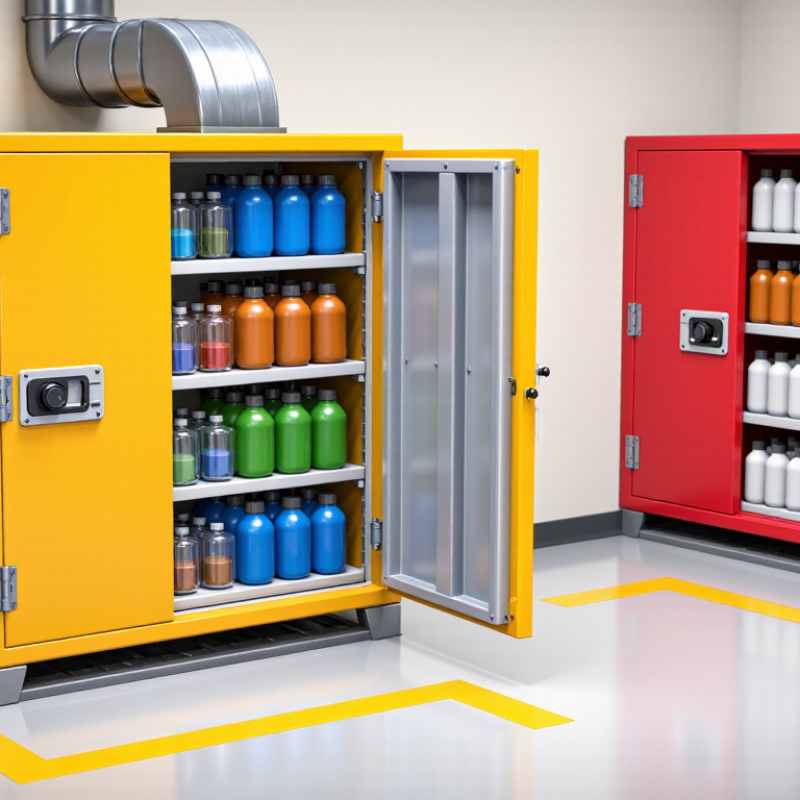
| Cabinet Placement | Ventilation and heat sources | Follow the cabinet and facility safety requirements for ventilation. Keep chemical cabinets away from direct sunlight, radiators, hot surfaces, ignition sources, and areas subject to flooding or impact. | At installation and after facility layout changes |
| Cabinet Placement | Floor stability and security | Install the cabinet on a level, stable surface. Secure it against tipping where required, especially in locations exposed to vibration, seismic activity, vehicle traffic, or accidental impact. | After installation and following any impact or relocation |
| Organization | Compatibility-based segregation | Organize chemicals by compatibility rather than alphabetically. Keep incompatible groups physically separated, including acids from bases, oxidizers from flammables and organic materials, and water-reactive substances away from water-based storage areas. | During every restocking activity |
| Organization | Container placement | Store containers upright with caps tightly closed. Place heavier containers on lower shelves, keep liquids below eye level, and avoid storing materials where they could fall, roll, or obstruct cabinet doors. | Weekly visual check and after restocking |
| Organization | Labeling and inventory control | Keep original labels legible and ensure secondary containers are properly identified. Maintain an inventory with the chemical name, hazard information, quantity, location, receipt date, and disposal or review status. | Update when materials are received, moved, or discarded |
| Organization | Stock rotation and quantity limits | Store only the quantity needed for the work area. Use older compatible stock first, remove expired or degraded materials, and avoid accumulating duplicate containers or unneeded chemicals. | Monthly inventory review |
| Ongoing Maintenance | Leak and damage inspection | Check containers, caps, shelves, trays, hinges, latches, seals, and cabinet surfaces for leaks, corrosion, swelling, cracks, or other damage. Isolate suspect containers using the site spill and hazardous-waste procedures. | Weekly for active-use areas; monthly at minimum |
| Ongoing Maintenance | Housekeeping and spill response | Keep the cabinet clean, dry, and free of unrelated items. Clean minor spills only when trained and authorized, using compatible materials and the applicable safety data sheet instructions. Report significant releases immediately. | After each spill and during monthly inspections |
| Ongoing Maintenance | Safety data and emergency readiness | Ensure current safety data sheets are accessible and that users know the emergency procedures, required personal protective equipment, spill kit location, and reporting process for the chemicals stored. | Review at least annually and whenever hazards change |
| Ongoing Maintenance | Training and authorization | Limit access to trained personnel. Provide instruction on chemical compatibility, cabinet use, labeling, container inspection, spill response, waste handling, and emergency actions before independent work begins. | Before authorization, annually, and after significant changes |
| Ongoing Maintenance | Documented corrective actions | Record inspection dates, findings, responsible persons, corrective actions, and completion dates. Remove the cabinet from service when structural damage or contamination makes continued use unsafe. | Every inspection and after any incident |



 08045479132
 Send Inquiry

 Send Inquiry
 Send SMS