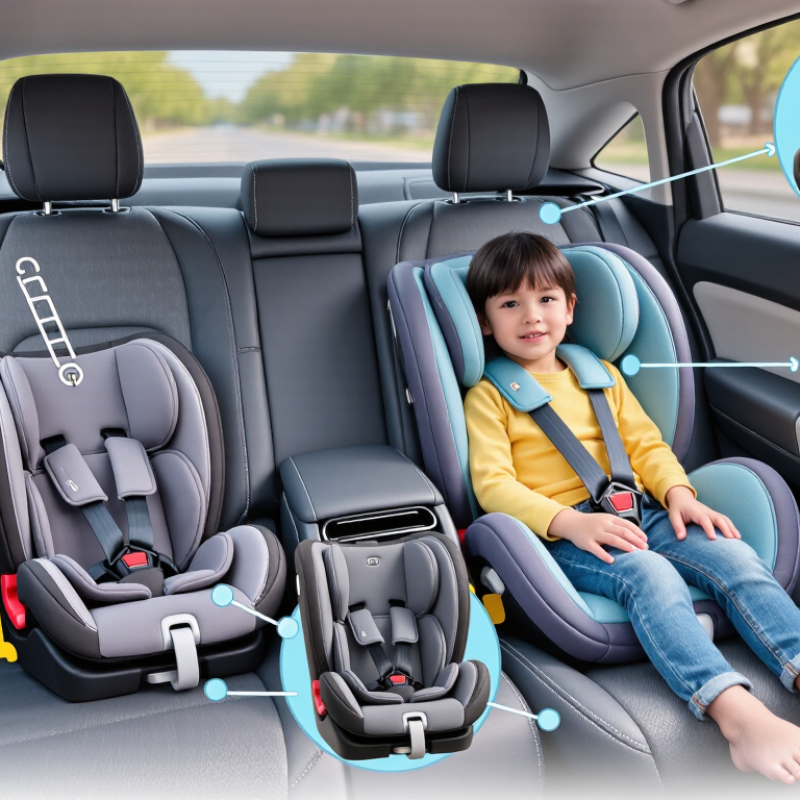
| Lap belt position | The lap belt sits low and snug across the hips and upper thighs. | Use a suitable booster to raise the child so the belt rests on the upper thighs, not the soft abdomen. |
| Shoulder belt position | The shoulder belt crosses the middle of the chest and shoulder. | Choose a booster that positions the belt correctly. Never place the shoulder belt under the arm or behind the back. |
| Back against the vehicle seat | The child can sit with their back against the vehicle seat while the belt stays correctly positioned. | Check the booster’s fit and setup. A high-back booster may help when the vehicle seat lacks adequate head support. |
| Knees at the seat edge | The child’s knees bend naturally at the edge of the vehicle seat without slouching. | A booster may provide the height needed for a more comfortable position and better belt fit. |
| Staying seated correctly | The child can remain upright with the lap and shoulder belts in the right positions for the whole trip. | Continue using a booster until the child can maintain proper seat-belt fit without it. |
| Vehicle belt and seating position | The seating position has both a lap belt and a shoulder belt, and the belt follows the booster’s instructions. | Do not use a booster with a lap-only belt. Check the vehicle and booster manuals for approved seating positions and installation guidance. |
| Booster style and head support | The booster fits the child and vehicle. The child’s head is supported by the booster or the vehicle seat and head restraint, as applicable. | Consider a high-back booster if additional head and upper-body support is needed; follow the booster and vehicle manuals. |
| When to move on from a booster | The adult seat belt fits properly in that vehicle seat without a booster, and the child can maintain that fit throughout the ride. | Keep using the booster if any part of the belt-fit check is not met. Fit can differ between vehicles. |
| Back-seat safety | The child rides in the back seat, which is generally the safest place for children. | Follow vehicle instructions and local child-passenger safety laws; children should generally ride in the back until at least age 13. |
| Helpful reminder: Height alone does not determine whether a child is ready to stop using a booster. Around 4 ft 9 in (145 cm) is a common guideline, but always check the seat-belt fit in the specific vehicle and follow the booster and vehicle manuals. |



 08045479132

 Send Inquiry


 Send Inquiry
 Send SMS

