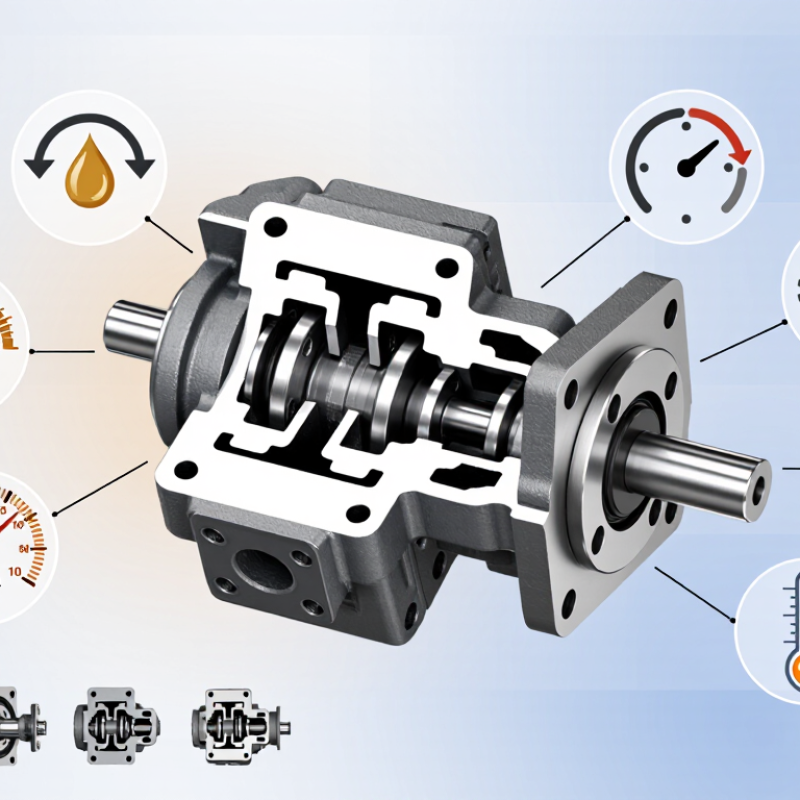
| Hydraulic fluid | Fluid type and material compatibility | Identify the exact fluid, such as mineral hydraulic oil, a water-glycol fluid, or a biodegradable fluid. Seal and internal-material suitability can vary by fluid type. | Compare the fluid specification with the pump’s approved-fluid list and seal material requirements. |
| Viscosity | Viscosity at both cold start and normal operating temperature | Stay within the pump manufacturer’s permitted viscosity range. Oil that is too viscous can restrict inlet flow; oil that is too thin can reduce lubrication and increase leakage. | Use the fluid’s viscosity-temperature data and check the pump’s technical limits for startup and continuous operation. |
| Fluid cleanliness | Required contamination-control level and filtration arrangement | Axial piston pumps have close internal clearances and are sensitive to contamination. The required cleanliness level depends on the pump design and operating conditions. | Check the pump documentation for cleanliness requirements, filter rating, and any guidance on filter location or bypass indicators. |
| Fluid temperature | Minimum startup temperature and maximum continuous temperature | Temperature affects viscosity, lubrication, seal life, and fluid degradation. Confirm limits for the complete operating cycle, not just steady-state conditions. | Compare expected reservoir and inlet temperatures with the pump and fluid manufacturers’ specified limits. |
| Pressure and duty cycle | Continuous, intermittent, and peak system pressure | Select a pump rated for the required pressure and duty cycle. Allow for pressure spikes, relief-valve settings, and load changes; pressure ratings differ by model and operating conditions. | Review the pump pressure limits and compare them with measured or calculated system pressures, including transient peaks. |
| Mounting interface | Flange type, bolt pattern, pilot diameter, and mounting orientation | The pump must fit the drive or housing without forcing alignment. Similar-looking flanges may have different dimensions or standards. | Compare the pump drawing with the mating component drawing and verify the applicable mounting standard and dimensions. |
| Shaft and coupling | Shaft type, diameter, spline or key details, and engagement length | The shaft and coupling must transmit the required torque without binding or excessive loading. Confirm that the coupling is suitable for the pump shaft and installation arrangement. | Check shaft drawings, spline or key specifications, coupling data, and required alignment or engagement tolerances. |
| Rotation direction | Required clockwise or counterclockwise rotation, viewed from the specified end | Rotation conventions depend on the viewing direction and pump configuration. Do not infer direction from the machine layout alone. | Confirm the rotation marking and definition in the pump documentation, then match it to the prime mover. |
| Drive speed and torque | Minimum and maximum shaft speed, available power, and torque capacity | Check the complete operating speed range. Required input power generally increases with pressure and flow, while actual losses depend on pump efficiency and operating conditions. | Use the pump performance data to check the duty point and verify that the motor, engine, shaft, and coupling can handle the load. |
| Displacement and flow | Required flow at the intended shaft speed | For a fixed displacement, theoretical flow is displacement multiplied by rotational speed. Actual flow is lower because of volumetric losses, which vary with pressure, speed, and fluid condition. | Compare the required flow with the pump performance curves at the intended pressure, speed, and fluid viscosity. |
| Inlet and outlet connections | Port size, thread or flange type, location, and allowable inlet conditions | Correct port connections help avoid leaks and inlet restrictions. A restrictive inlet can contribute to noise, poor filling, or cavitation-related damage. | Match port specifications and piping layout to the pump drawing; check inlet pressure or boost-pressure requirements in the documentation. |



 08045479132

 Send Inquiry


 Send Inquiry
 Send SMS

