| Asphalt grade and product properties | Identify the paving grade, viscosity, softening characteristics, and whether the material is polymer-modified or contains other additives. Different products may require different handling temperatures. | Confirm the product’s recommended storage and pumping temperatures with the supplier. Check that the tank, heating system, pumps, valves, and seals are suitable for the product and temperature. |
| Required storage temperature | Conventional paving asphalt is commonly stored at roughly 135–180 °C, depending on grade and handling needs. Polymer-modified and specialty products may have different requirements. | Specify the actual operating range rather than selecting equipment from a generic temperature alone. Use temperature controls and independent high-temperature protection to reduce overheating risk. |
| Daily throughput and storage buffer | Estimate average and peak daily consumption, delivery frequency, and the number of days of inventory needed to cover supply interruptions. | Estimate working volume using: required mass ÷ product density. Then allow for unusable volume and operating fill limits. For example, 200 t of inventory at an assumed density of 1.03 t/m³ is about 194 m³ of product before allowances for headspace and unusable volume. |
| Product density and volume basis | Use the product’s documented density at the relevant reference temperature when converting tonnes to cubic metres. Density changes with temperature. | Size by mass and usable volume, and state the temperature basis for calculations. Do not treat nominal tank capacity as fully usable storage volume. |
| Storage duration and turnover | Determine the expected time between receipt and use, including the longest likely hold period. Some modified or specialty asphalts can be more sensitive to prolonged hot storage. | Plan inventory turnover to suit the grade. Avoid unnecessarily long hot storage, and confirm any maximum holding time or agitation requirement with the product supplier. |
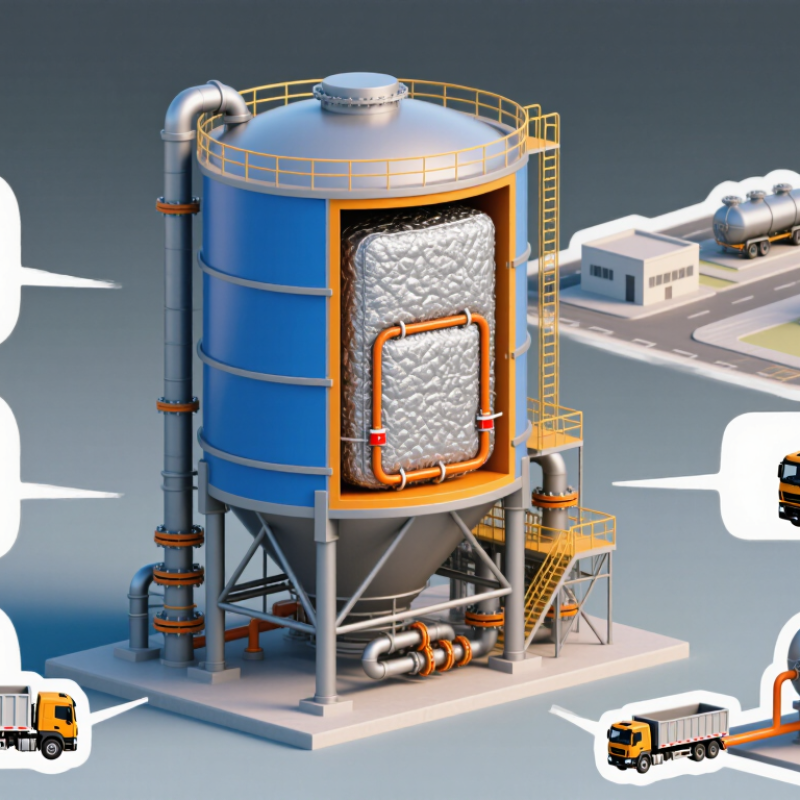
| Heating method | Define the heat source available on site, required heat-up time, operating schedule, and whether continuous temperature maintenance is needed. | Common arrangements include indirect heating with a thermal-fluid coil or an external heating system. Select a system that provides controlled, even heating and is compatible with the asphalt and site utilities. |
| Heat loss and insulation | Consider outdoor design temperatures, wind exposure, tank location, operating hours, and the temperature drop acceptable during standby. | Insulate the tank and hot product lines to reduce heat loss and energy use. Include weather-resistant cladding and suitable access for inspection and maintenance. |
| Tank orientation and site layout | Assess available footprint, foundation conditions, delivery access, pipe routing, maintenance clearances, and local permitting requirements. | Vertical tanks can reduce ground footprint; horizontal tanks may suit sites with height constraints or particular transport and installation needs. Confirm the foundation, access, and installation method for the selected arrangement. |
| Loading, unloading, and pumping | Define vehicle connection points, transfer rates, pump suction conditions, line lengths, and the required delivery temperature at the point of use. | Size pumps and heated or insulated lines for the product’s viscosity and operating temperature. Provide suitable isolation valves, strainers where appropriate, and safe, accessible connection points. |
| Temperature monitoring and control | Identify the locations where temperature must be measured, the normal operating range, alarm limits, and the response to sensor or power failure. | Use appropriately located temperature sensors and a control system that avoids localized overheating. Provide alarms and independent over-temperature protection suited to the installation. |
| Mixing and product consistency | Determine whether the grade requires circulation or agitation to maintain uniformity, particularly during extended storage or when additives are present. | Provide circulation or mixing only where required by the product and process. Confirm that the equipment arrangement supports uniform temperature without creating excessive shear or air entrainment. |
| Safety and environmental controls | Assess hot-surface exposure, burns, overflow, spills, fumes, fire hazards, and the applicable site and regulatory requirements. | Include suitable access platforms, guarding, level indication, overfill prevention, spill containment, emergency procedures, and ventilation as required by the site risk assessment and local codes. |
| Maintenance and inspection | Define inspection access, cleaning needs, expected service life, and how the tank and heating components will be isolated for maintenance. | Allow access to manways, instruments, coils, valves, and critical connections. Select materials and construction details appropriate to the operating temperature, product, and applicable standards. |
| Final design confirmation | Operating temperatures, holding times, density, and equipment requirements vary with product grade, climate, process, and jurisdiction. | Verify the final tank specification with the asphalt supplier, equipment designer, and relevant local authorities before purchase and installation. |



 08045479132

 Send Inquiry


 Send Inquiry
 Send SMS

