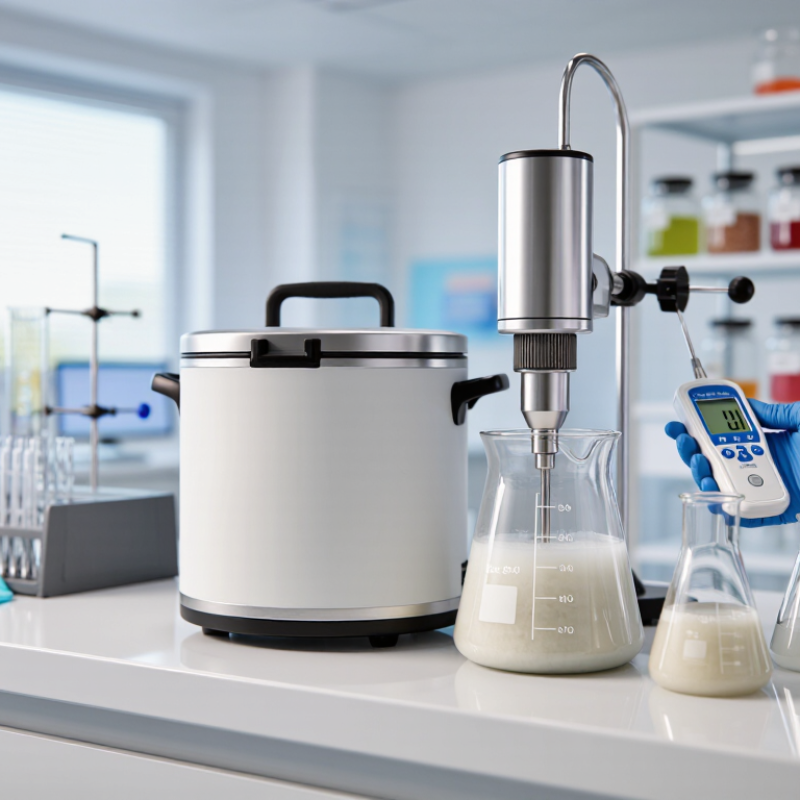
| Basic configuration | A vibrating probe (sonotrode) is immersed directly into a vessel containing the material. | Material is pumped through a treatment chamber, where an immersed probe delivers ultrasound. The probe and flow cell are typically parts of an integrated process setup. |
| Typical operating mode | Batch processing: a measured quantity is treated in a beaker, tank, or other suitable vessel. | Continuous or recirculating processing: material passes through the treatment zone once or in repeated passes. |
| Best suited to | Laboratory development, small-to-medium batches, formulation trials, and applications where recipes change frequently. | Repeated production runs, larger or ongoing workloads, and processes that benefit from controlled material flow and repeatable treatment conditions. |
| Contact with the sample | The probe contacts the sample directly. Probe material, wear, immersion depth, and cleaning procedures should be considered. | The probe contacts material inside the flow cell. Wetted surfaces, seals, and chamber geometry must be compatible with the sample and cleaning method. |
| Process control | Simple to set up, but treatment can vary with vessel geometry, fill volume, probe position, and mixing. | Flow rate, pressure, temperature, and number of passes can be monitored or controlled; consistent results still depend on suitable process settings and system design. |
| Temperature management | Heat may build up during sonication. A cooling bath, jacketed vessel, or pulsed operation may help manage temperature-sensitive samples. | Continuous flow can support process integration, but it does not eliminate heating. Cooling capacity and residence time should be evaluated for the application. |
| Scale-up considerations | Increasing vessel volume alone may not preserve treatment uniformity. Probe placement, delivered energy, and mixing conditions may need reassessment. | Scale-up can involve changes to flow rate, chamber capacity, or parallel treatment paths. Validate performance at the intended throughput rather than relying on volume alone. |
| Cleaning and changeover | The probe can often be removed for cleaning, but the vessel and probe must be cleaned between materials as required by the process. | The flow path and treatment chamber require a suitable cleaning procedure. Consider drainability, disassembly, and the risk of retained material. |
| Main advantages | Direct energy delivery, flexible setup, straightforward sampling, and convenient adjustment during development work. | Well suited to continuous workflows, controlled throughput, and integration with pumps, tanks, or other process equipment. |
| Potential limitations | May require careful positioning and temperature control; treatment uniformity can be sensitive to vessel and batch conditions. | More process equipment and setup may be required. Pumpability, pressure limits, flow behavior, and cleaning requirements can constrain use. |
| Selection questions | Will the batch size fit the vessel and probe? Can temperature and mixing be managed? Is direct probe contact acceptable? | Can the material be pumped reliably? What throughput and number of passes are needed? Can the flow path be cleaned and maintained appropriately? |



 08045479132

 Send Inquiry


 Send Inquiry
 Send SMS

