2026 How to Choose the Best OEM Beans Grinder for Your Business?
Choosing the right OEM Beans Grinder is crucial for businesses in the coffee industry. The global coffee grinder market is expected to reach $1.2 billion by 2026, driven by rising coffee consumption. Many businesses overlook the importance of choosing an OEM partner that aligns with their quality standards. A well-selected OEM Beans Grinder not only enhances coffee flavor but also impacts operational efficiency.
Several factors play a role in selecting an OEM Beans Grinder. Quality of materials, grinding technology, and capacity should be prioritized. For example, high-quality burr grinders tend to provide a more uniform grind than blade grinders. However, cost-effectiveness often complicates decision-making. It’s essential to balance initial investments with long-term benefits.
Businesses must also consider after-sales support and warranty. A reliable OEM partner offers not just products but also ongoing assistance. It’s common for companies to initially underestimate the importance of this, leading to future challenges. An informed choice can make a significant difference in customer satisfaction and brand loyalty. The stakes are high; investing time in your selection will pay off in the long run.
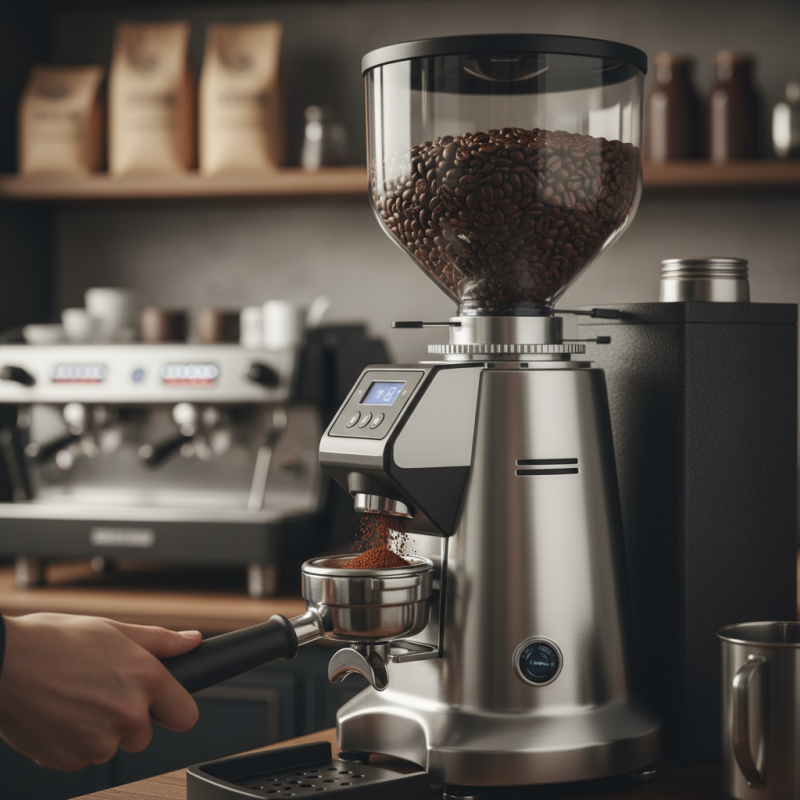
Factors to Consider When Choosing an OEM Beans Grinder for Businesses
When selecting an OEM beans grinder for your business, various factors come into play. Think about the grinder's capacity. Will it meet your daily volume needs? A model that’s too small can slow down operations. Additionally, consider the grind consistency. Different beverages require specific grinds. Having a grinder that can accommodate this is key.
Durability is another crucial factor. Look for materials that withstand heavy use. Stainless steel components are often reliable. But, some grinders wear out faster than expected. Maintenance is important too. Regular cleaning can prolong the life of the grinder, yet many businesses overlook this.
Price shouldn't be the only consideration. If a grinder is inexpensive, it might lack essential features. This can impact the quality of your coffee. It's worth investing in a grinder with a solid warranty. This shows the manufacturer’s confidence in their product. Remember, the right grinder can enhance the beverage quality, ultimately affecting customer satisfaction. Reflecting on this can lead to better business outcomes.
Understanding the Various Grinder Types: Blade vs. Burr Grinders
When selecting an OEM beans grinder for your business, understanding the difference between grinder types is crucial. Blade grinders, often seen as budget-friendly, operate using sharp blades that chop beans haphazardly. This inconsistency can lead to uneven extraction during brewing, compromising flavor. In fact, studies show that brewing methods prefer uniform grind sizes for optimal taste extraction. For instance, the Specialty Coffee Association highlights that burr grinders can significantly enhance flavor profiles due to their consistent grind size.
Burr grinders, on the other hand, offer a superior grinding experience. They crush beans between two revolving surfaces, allowing for uniformity. The Specialty Coffee Association asserts that burr grinders can reduce grind size variability by up to 60%. This precision leads to more reliable and enjoyable coffee quality. While burr grinders may come with a higher upfront cost, their long-term benefits justify the investment. Yet, businesses must consider their specific needs. Depending on the volume of coffee you serve, a less expensive blade grinder might initially seem appealing. However, the potential negative impact on flavor can lead to customer dissatisfaction over time.
Choosing the appropriate grinder type is essential. Keep in mind that the balance between budget and quality will play a significant role in your decision. Reflecting on your business goals and customer expectations will guide you in making the right choice. Aim for a grinder that aligns with your commitment to quality, even if it requires a greater initial investment.
Comparison of Grinder Types: Blade vs. Burr Grinders
Evaluating Grinder Capacity: How Much Coffee Do You Need to Grind Daily?
Choosing the right grinder capacity for your coffee business is crucial. Evaluate your daily needs carefully. Consider how much coffee you sell. If your sales average around 10 to 20 pounds a day, you need a grinder that can handle that volume efficiently.
Capacity affects not only the speed of grinding but also the quality of coffee. A grinder that’s too small may slow down operations. This can lead to customer dissatisfaction. On the other hand, excess capacity may be a waste of resources. Finding the balance is essential.
Tips: Think about peak hours. Do you sell more coffee in the morning rush? You may need a larger grinder during these times. Maintenance is another aspect. Regular cleaning ensures that the grinder performs well. Taking the time to reflect on your needs helps in making an informed decision.
Assessing Grind Consistency and Texture for Different Coffee Brewing Methods
When selecting an OEM beans grinder, evaluating grind consistency and texture is crucial for various brewing methods. For instance, espresso requires a fine grind to create pressure and extraction. Reports indicate that a particle size range of 200 to 400 microns is ideal for this method. If the grind is too coarse, the espresso will taste under-extracted.
On the other hand, French press brewing calls for a coarser grind, often between 800 to 1000 microns. This coarser texture allows for a longer extraction time without over-extraction, which can lead to bitterness. However, achieving the perfect grind size can be challenging. Inconsistent particle sizes cause uneven extraction, and inconsistent grids may lead to a lack of flavor clarity.
Moreover, understanding grind distribution is key. A grinder should produce a uniform distribution to ensure even flavor extraction. Research shows that optimal extraction occurs when 70% of coffee grounds are within the desired size range. Grinders that produce too many fines can hinder this process. Balancing grind consistency with brewing method needs careful consideration. It might require trial and error to refine the perfect grind based on specific beans and brewing techniques.
The Importance of Durability and Maintenance in Commercial Coffee Grinders
When selecting an OEM beans grinder, durability and maintenance emerge as top priorities for commercial operations. A grinder that withstands daily wear and tear is essential. Coffee grinding can generate substantial heat, which may damage inferior machines over time. Regular maintenance is crucial to extend the lifespan of your grinder. Moreover, it ensures consistent performance and quality in your coffee offerings.
Choosing a grinder with easy maintenance features can save valuable time. Some models may require frequent calibration or complicated disassembly. This can frustrate staff and disrupt workflow. Regularly checking burr wear or motor health is vital. If ignored, these issues can lead to costly repairs or replacements.
Pay attention to the material quality of the grinder. Stainless steel components offer durability and resistance to corrosion. However, not all stainless steel is created equal. Some may not endure the rigorous demands of a busy coffee shop. Reflecting on your specific business needs is critical. Consider how much your grinder will be used. An overbuilt grinder may not be necessary. Conversely, underestimating what your grinder can handle can be detrimental. Choose wisely for a reliable long-term investment.



 08045479132
 Send Inquiry

 Send Inquiry
 Send SMS