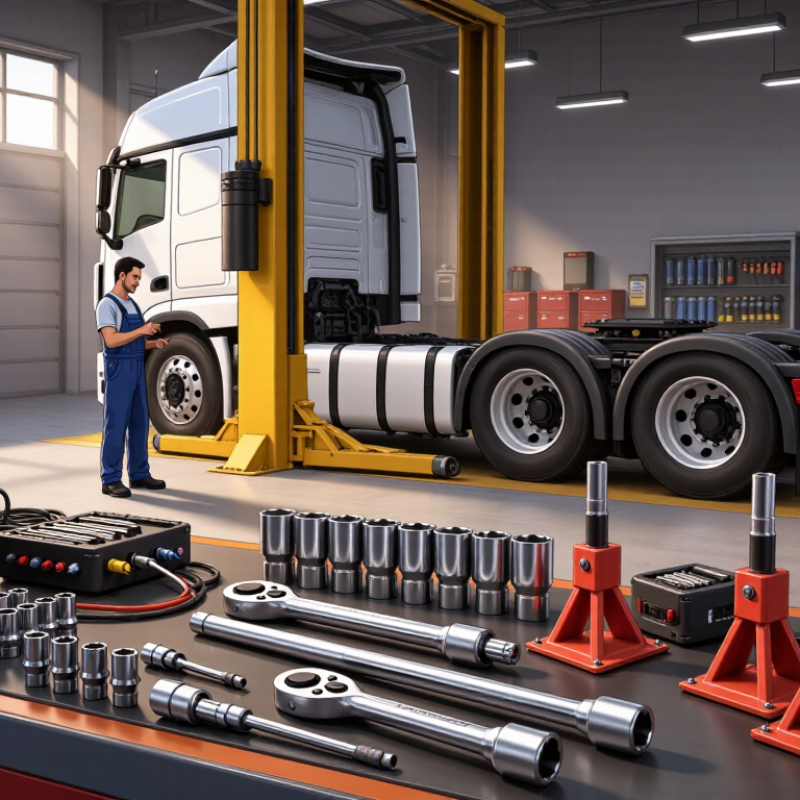
| Heavy-duty socket and spanner set | General repairs, suspension work, and fastener removal or installation. | Check drive sizes, metric or imperial sizing, socket depth, and whether the set covers the fasteners on the vehicles serviced. | Look for clear size markings, strong storage, and impact-rated sockets when used with an impact wrench. Do not use ordinary sockets on impact tools unless rated for that use. | $100–$600+ | A complete, appropriately sized set can reduce repeat purchases. Budget for lost sockets and replacements; avoid paying for sizes that are rarely used. |
| Torque wrench | Applying specified torque to wheels, chassis components, and other critical fasteners. | Match the wrench’s drive size and torque range to the vehicle’s service specifications; a high-capacity wrench may be needed for some heavy-vehicle fasteners. | Choose a clearly readable scale and documented accuracy. Follow storage instructions and arrange periodic calibration according to use and workplace requirements. | $60–$350+ | Calibration and replacement are part of ownership cost. A lower purchase price may not be economical if accuracy cannot be verified or maintained. |
| Impact wrench and air supply | Removing stubborn fasteners and carrying out repetitive workshop work. | For pneumatic tools, check compressor pressure, airflow, hose size, and couplings. For cordless tools, check battery platform, runtime, and access to replacement batteries. | Consider rated torque, weight, vibration, and serviceability. Use impact-rated sockets and follow safe operating practices; do not use an impact wrench as a substitute for final torque measurement. | $100–$700+ for the tool; compressor equipment may add substantially more. | Include batteries or compressor capacity, hoses, couplings, filters, lubrication, and repairs. Existing workshop equipment can significantly reduce the additional cost. |
| Vehicle diagnostic scanner | Reading and clearing fault codes and viewing available live data for engine and other vehicle systems. | Verify support for the specific vehicle makes, model years, engine systems, communication protocols, and functions required. A basic code reader may not access all heavy-vehicle systems. | Check update frequency, coverage documentation, connection reliability, and whether technical support is available. Confirm whether advanced functions require a paid subscription. | $100–$3,000+ depending on coverage and capabilities. | Add software updates, subscriptions, cables, and support fees over the intended ownership period. Confirm recurring charges before purchase. |
| Heavy-duty floor jack or lifting equipment | Raising a vehicle or axle for inspection and repair. | Check rated capacity, minimum and maximum lift height, contact-point design, and suitability for the vehicle and workshop floor. | Use equipment with a clearly stated load rating and inspect it for damage, leaks, and stable operation. Never work under a vehicle supported only by a jack; use suitable support stands or approved lifting equipment. | $250–$1,500+; professional lifting systems can cost much more. | Factor in inspection, maintenance, storage, and any required lifting accessories. Capacity and safe working height matter more than the lowest initial price. |
| Axle stands and wheel chocks | Supporting a raised vehicle and preventing unintended movement during work. | Check the rated capacity and height range for the intended axle or vehicle. Use chocks appropriate to wheel size and workplace surface. | Inspect welds, locking mechanisms, bases, and labels. Use stands in pairs where appropriate and follow the manufacturer’s load instructions. | $80–$400+ for suitable heavy-duty equipment. | Replace damaged equipment promptly. The cost of correctly rated support equipment is essential to safe working, not an optional add-on. |
| Digital multimeter | Electrical troubleshooting, including voltage, resistance, continuity, and selected circuit checks. | Check measurement ranges and functions against the electrical systems being tested. Select suitable leads and probes for the measurement and work environment. | Check the meter’s safety category and voltage ratings for the intended task. Inspect leads for damage and use the correct meter setting before testing. | $30–$300+ | Include replacement leads, batteries, and calibration where required. A suitable safety rating and dependable readings are more valuable than unnecessary features. |
| Battery service and testing equipment | Checking battery condition and charging or maintaining compatible vehicle batteries. | Confirm support for the battery chemistry, voltage, and capacity used in the vehicles serviced. Check charger output and connection type. | Look for reverse-polarity and over-temperature protections where applicable, clear operating instructions, and suitable leads for the intended current. | $50–$600+ | Account for test leads, clamps, maintenance, and replacement units. Choose features based on actual battery types and service volume. |



 08045479132

 Send Inquiry


 Send Inquiry
 Send SMS

