| Primary Construction | Single-use
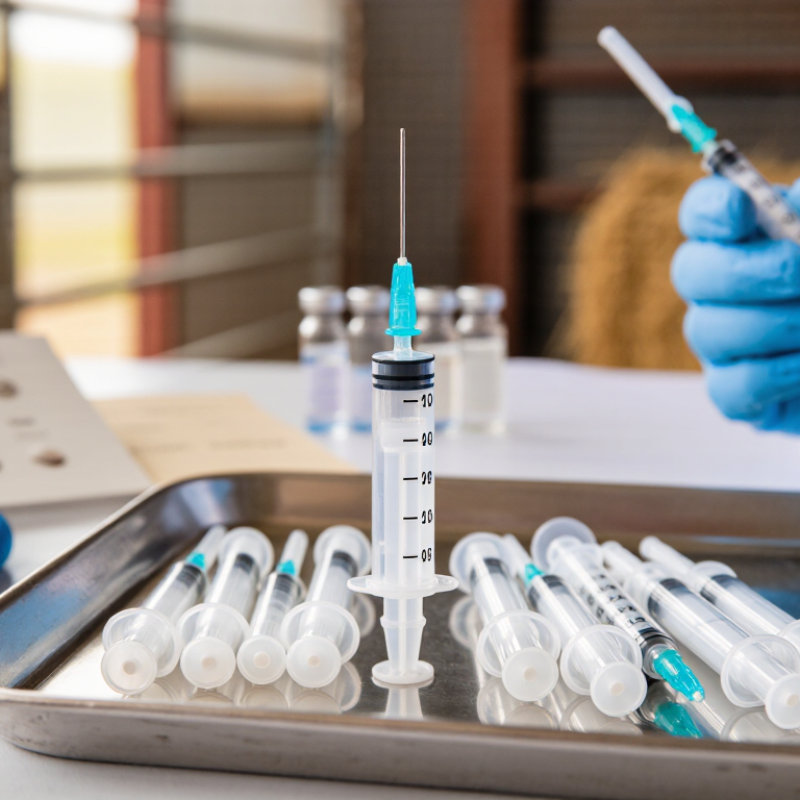
Usually made from sterile plastic with a separate sterile needle or an integrated needle. | Multi-use
Usually made with a durable plastic, metal, or glass barrel and a replaceable or fixed needle. | Choose a design that matches the manufacturer’s stated use and the farm’s cleaning facilities. |
| Common Capacities | Common sizes include 1, 3, 5, 10, 20, 30, 50, and 60 mL, depending on the product line. | Common sizes include approximately 1 to 50 mL, with some specialized applicators offering larger doses. | Use the smallest syringe capacity that can accurately deliver the prescribed dose. |
| Dose Accuracy | Often provides clear graduations and consistent performance when used once and within its intended range. | Can provide precise dosing, but worn plungers, damaged seals, or poor maintenance may affect accuracy. | For small-volume vaccines or medicines, prioritize fine graduations and a low-dead-space design. |
| Sterility | Typically supplied sterile in sealed packaging. Sterility is lost after opening or use. | Must be thoroughly cleaned and sterilized between animals or treatment sessions according to veterinary guidance. | Disposable models are generally more convenient when sterile handling is difficult in the field. |
| Cross-Contamination Risk | Low when the syringe is used once, not reused, and discarded correctly. | Higher if cleaning, disinfection, sterilization, or needle replacement is incomplete. | Use a new sterile syringe and needle whenever the treatment protocol requires single-use equipment. |
| Needle Replacement | The needle is normally discarded with the syringe or replaced immediately after use, depending on the design. | Many models allow the needle to be replaced while the syringe body is retained. | Replace a needle when it becomes dull, bent, contaminated, or damaged. |
| Cleaning and Maintenance | Requires little cleaning because the syringe is discarded after use, but external contamination should still be managed. | Requires prompt rinsing, washing, inspection, drying, and sterilization. Lubricants must be compatible with the syringe. | Reusable equipment is more suitable where a reliable cleaning and sterilization workflow is available. |
| Speed During Herd Work | Fast to deploy because there is no post-use cleaning cycle. | Can be efficient for repeated dosing when a properly maintained automatic or multi-dose applicator is used. | For large groups, select equipment that reduces handling time without compromising dose accuracy or hygiene. |
| Waste Generation | Produces more plastic and sharps waste because the syringe is discarded after use. | Produces less syringe-body waste, but used needles and damaged components still require sharps disposal. | Follow local rules for pharmaceutical waste and place used needles in an approved puncture-resistant container. |
| Long-Term Cost Pattern | Usually has a lower cost per item but requires a new syringe for each applicable use. | Usually has a higher initial purchase cost but may reduce recurring syringe-body purchases when properly maintained. | Compare total cost, including needles, cleaning supplies, sterilization, labor, replacement parts, and disposal. |
| Field Conditions | Practical for remote or mobile work where clean water and sterilization equipment are limited. | Best used in controlled environments with access to cleaning supplies, safe storage, and maintenance tools. | For harsh field conditions, prioritize sealed packaging, durability, clear graduations, and easy disposal. |
| Suitable Treatment Situations | Vaccinations, routine injections, emergency treatment, or any procedure where single-use sterility is required. | Repeated dosing operations, stable farm settings, and applications supported by an approved reusable device. | Always follow the medicine label, veterinary instructions, withdrawal requirements, and equipment instructions. |
| Animal and Dose Matching | Available in sizes suitable for small animals through large livestock; the correct size depends on the prescribed volume. | Available in manual and automatic formats for different livestock and dosing routines. | Match syringe capacity, needle length, needle gauge, and injection method to the animal, route, and medicine. |
| Best Overall Choice | Best for hygiene and convenience
Particularly useful when preventing carryover between animals is the priority. | Best for repeated use and reduced material waste
Most effective when maintenance procedures are consistently followed. | Choose based on risk, workflow, dose, and resources
Neither design is automatically best for every livestock operation. |



 08045479132
 Send Inquiry

 Send Inquiry
 Send SMS