| Permanent product identification | Serial numbers, barcodes, QR codes, logos and traceability marks | Fiber marking laser | Stainless steel, aluminum, carbon steel and many engineering plastics | Approximately 1,064 nm | High marking contrast, repeatability, fast cycle time and stable focus | High | Choose based on material reflectivity, marking depth, field size and required code quality. |
| Fine engraving and detailed graphics | Jewelry engraving, instrument scales, small components and decorative patterns | Short-pulse fiber or ultrafast laser | Precious metals, stainless steel, ceramics and selected polymers | Approximately 1,064 nm; ultrafast systems may use other wavelengths | Small spot size, low heat input, precise motion control and high positional accuracy | High | Shorter pulse duration can reduce heat-affected areas, but equipment cost and process complexity are usually higher. |
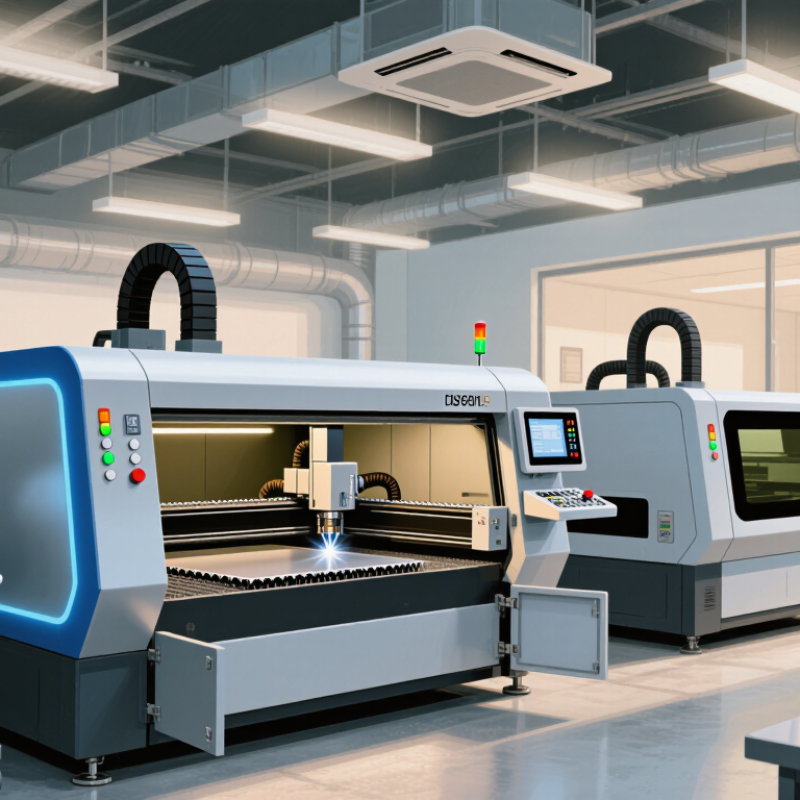
| Sheet-metal cutting | Cutting profiles, brackets, panels and fabricated metal parts | Continuous-wave fiber cutting laser | Mild steel, stainless steel, aluminum, brass and copper | Approximately 1,064 nm | Optical power, cutting speed, beam quality, autofocus and assist-gas control | High | Required power depends strongly on material type, thickness, cut quality, production volume and allowable cycle time. |
| Non-metal cutting and profiling | Cutting signs, packaging components, gaskets, prototypes and interior parts | CO₂ laser | Acrylic, wood, paper, cardboard, leather, fabric and some rubber materials | Approximately 9.3–10.6 µm | Clean edge quality, suitable bed size, extraction capacity and controlled thermal input | High | Material composition must be verified before processing; chlorine-containing plastics can release hazardous gases. |
| Welding and joining | Precision welding of assemblies, housings, tubes and battery-related components | Fiber welding laser | Stainless steel, carbon steel, aluminum, copper and nickel alloys | Approximately 1,064 nm | Stable energy delivery, beam control, shielding gas management and joint fit-up | High | Reflective metals may require specialized process settings, optics and safety controls. |
| Surface cleaning and coating removal | Rust removal, paint stripping, oxide cleaning and mold maintenance | Pulsed fiber cleaning laser | Steel, aluminum, stone, selected coated surfaces and tooling | Approximately 1,064 nm | Adjustable pulse energy, scanning control, low substrate damage and effective fume extraction | Medium | The process window should be tested to remove contamination without changing the base material. |
| Plastic marking and color change | High-contrast marks, melt marking, foaming and component identification | UV, fiber or CO₂ marking laser, depending on polymer formulation | ABS, polycarbonate, nylon, POM and engineered plastics | Approximately 355 nm, 1,064 nm or 9.3–10.6 µm | Material-specific contrast, low heat distortion, fume control and repeatable focus | High | The same polymer family may respond differently because pigments, additives and fillers affect laser absorption. |
| Glass and transparent-material processing | Surface marking, internal marking, drilling and controlled micro-processing | UV or ultrafast laser | Glass, quartz, sapphire and selected transparent polymers | Approximately 355 nm or shorter-pulse infrared systems | Low thermal damage, precise focus, vibration control and suitable pulse duration | Medium | Internal marking and brittle-material processing require application trials to control cracking and optical distortion. |
| High-volume automated production | In-line marking, inspection-linked processing and robotic laser workstations | Integrated fiber, CO₂ or diode laser system | Metals, plastics, wood, packaging and assembled products | Depends on the material and process | High uptime, automation interfaces, rapid loading, process monitoring and service support | High | Evaluate total cycle time, integration effort, preventive maintenance, operator training and production downtime risk. |
| Low-volume prototyping and customized products | Short-run parts, samples, personalization and design verification | Compact fiber, CO₂ or diode laser system | Depends on the product range | Depends on the material and desired effect | Flexible software, quick setup, moderate operating cost and broad material compatibility | Medium | A versatile system may provide better business value than a high-power machine when product mix changes frequently. |
| Laboratory or research development | Process development, parameter testing and material characterization | Adjustable pulsed, ultrafast or tunable laser platform | Metals, ceramics, polymers, glass and experimental materials | Application-dependent | Wide parameter range, interchangeable optics, measurement access and precise control software | Low | Prioritize experimental flexibility and data collection rather than production speed alone. |
| Safe and compliant workplace operation | Enclosed marking, cutting, welding or cleaning workstation | Class 1 enclosed system or appropriately controlled laser workstation | All materials, depending on the process | Process-dependent | Interlocked enclosure, emergency stop, key control, extraction and documented risk assessment | High | Laser classification, protective eyewear, ventilation and operator training should be assessed before purchase and installation. |



 08045479132

 Send Inquiry


 Send Inquiry
 Send SMS

