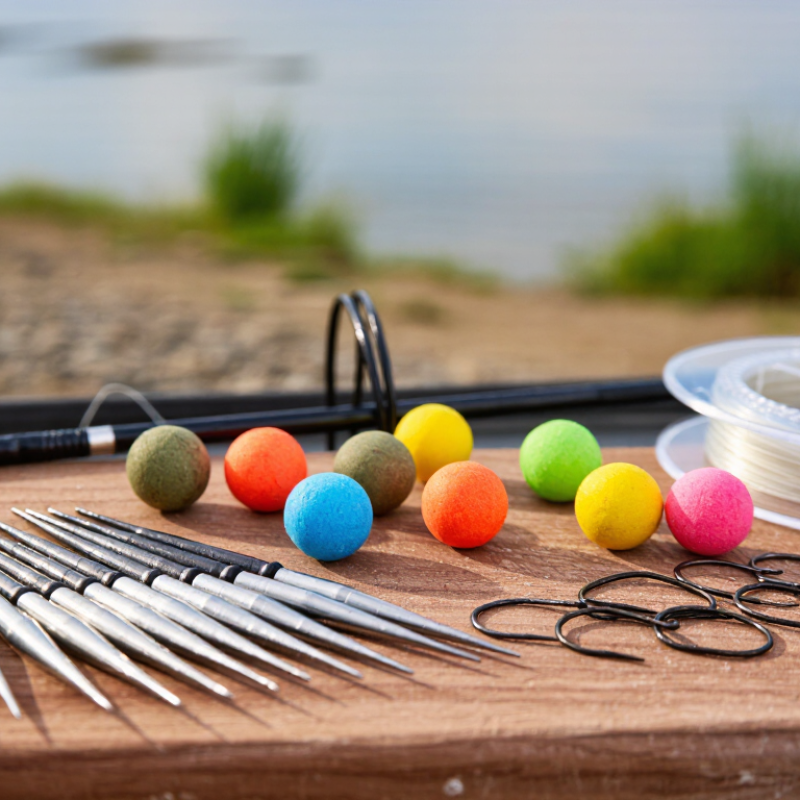
| 1. Match bayonet length to bait size | The spike should enter the bait securely without protruding excessively. | Short bayonets, often around 7–10 mm, suit many small pop-ups and wafters; longer options can suit larger baits. Check the bait’s firmness and thickness. | A suitable length helps keep the bait in place while avoiding unnecessary exposed metal. |
| 2. Choose bait that can hold the spike | Bait firmness, texture, and whether it is drilled or pre-formed. | Firm hookbaits generally hold a bayonet more reliably than soft, crumbly baits. Push the spike in straight and avoid splitting the bait. | Bait that tears or slips can come loose during casting or on the lakebed. |
| 3. Check the complete rig structure | Hook, hooklink, hair or ring, and bayonet attachment. | Look for a secure connection and a hooklink that suits the fishing situation. A bayonet is a bait attachment; it does not replace the hook or hooklink. | Every component needs to work together for reliable presentation and safe fish handling. |
| 4. Match the hook to the bait and target fish | Hook size, pattern, wire strength, and local regulations. | Select a hook that is proportionate to the bait and intended species. There is no single hook size that suits every bayonet rig. | An appropriately sized hook helps preserve bait movement and supports secure hooking. |
| 5. Consider buoyancy and presentation | Whether the bait is a pop-up, wafter, or sinking hookbait. | Test the assembled rig in water. A pop-up should lift as intended, while a wafter should settle gently; the hook and attachment affect the final balance. | Testing confirms how the bait behaves with the actual hook and rig components. |
| 6. Think about casting and bottom conditions | Casting distance, weed, silt, gravel, and the likelihood of bait damage. | Use a secure bait attachment for forceful casts and inspect the rig after contact with snags or heavy weed. Adapt the whole rig to the lakebed. | Conditions can affect bait retention and whether the hookbait is presented cleanly. |
| 7. Inspect and replace worn components | Bent spikes, loose connections, damaged hook points, and weakened hooklinks. | Check the rig before each session and after catching a fish or snagging. Replace damaged parts rather than relying on a compromised connection. | Regular inspection improves reliability and helps prevent tackle failure. |



 08045479132

 Send Inquiry


 Send Inquiry
 Send SMS

