How to Choose Effective Anti-Counterfeit Labels for Your Products?
Choosing effective Anti-Counterfeit Labels for your products is crucial in today’s marketplace. Counterfeiting is a significant threat that affects various industries. It undermines brand integrity and poses risks to consumer safety. Selecting suitable labels requires careful consideration.
Understanding the technology behind Anti-Counterfeit Labels is essential. Some labels use advanced features like QR codes, holograms, or unique serial numbers. This creates a barrier for counterfeiters. However, not all labels offer the same level of security. Businesses should evaluate their specific needs and the potential risks they face.
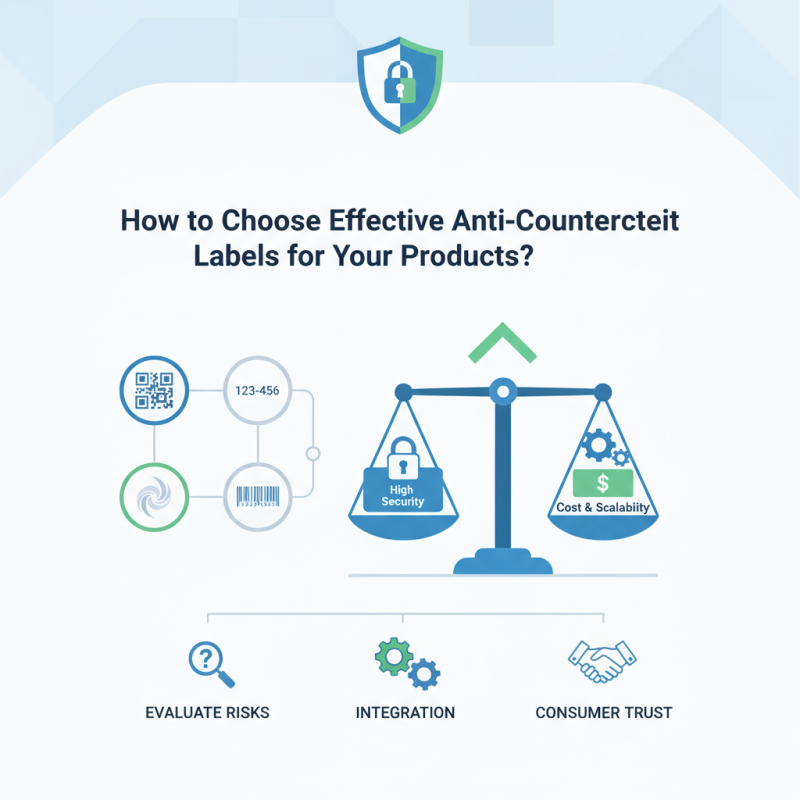
While opting for high-quality Anti-Counterfeit Labels is important, factors like cost and scalability should also be considered. Companies must reflect on how well these labels integrate with their existing processes. Small businesses might struggle with upfront costs. Yet, investing in protection can lead to greater consumer trust and brand loyalty. Balancing effectiveness and affordability requires thoughtful analysis.
Understanding the Importance of Anti-Counterfeit Labels
Anti-counterfeit labels play a crucial role in protecting your products. As counterfeiting rises, consumers face more risks. These labels can enhance trust. They assure customers that they are buying authentic items. Effective labels deter fraud and can lead to brand loyalty. They give consumers peace of mind.
Understanding the importance of these labels is key. A well-designed label communicates authenticity clearly. Use unique designs, QR codes, or holograms to differentiate your products. Complexity can confuse counterfeiters. However, some might still evade detection. Regular updates to your labeling technologies are necessary to stay ahead.
Your choice of anti-counterfeit labels reflects your brand's commitment to quality. Choose materials that withstand wear and tear. Visibility is essential; labels must be hard to remove or replicate. However, these measures are not foolproof. Continuous evaluation and adaptation are vital. Consider customer feedback on label effectiveness and usability.
Identifying Different Types of Anti-Counterfeit Technologies
When selecting anti-counterfeit technologies, understanding the various options is essential. Different technologies serve unique purposes and come with distinct features. For instance, holograms are visually striking and tough to replicate. These labels can deter counterfeiters by making it visually obvious that a product is protected.
Meanwhile, QR codes provide an easy way for customers to verify authenticity. Consumers can scan the code with their smartphones, taking them to a verification page. This tech offers an interactive experience but relies on internet access and honesty in the scanning process.
Another method involves RFID tags, which allow for tracking and secure supply chain management. These tags can often be embedded within labels or packaging. However, the challenge lies in the cost and complexity of integrating this technology into existing systems. Balancing effectiveness and practicality is crucial in this selection process. Each technology has its pros and cons, and understanding them can lead to better decisions for product protection.
Types of Anti-Counterfeit Technologies
Evaluating Label Durability and Security Features
When selecting anti-counterfeit labels, durability and security features are paramount. According to a report from the International Anti-Counterfeiting Coalition, approximately 10% of overall sales revenue can be lost due to counterfeit products. This emphasizes the necessity of robust labeling solutions. Labels should withstand various environmental conditions. For example, exposure to moisture, UV light, and temperature fluctuations can degrade label effectiveness. Studies indicate that 60% of counterfeit goods are found in climates with extreme weather. Thus, assessing a label’s resilience is crucial.
Security features play a vital role in maintaining product integrity. Labels can incorporate advanced technologies such as holograms, QR codes, or micro-printing. A survey by Smithers Pira revealed that businesses adopting these measures saw a 30% reduction in counterfeit incidents. However, implementing high-tech features may not always be feasible for all companies. Evaluating the balance between cost and effectiveness is essential. Not every label will provide the same level of security, and overspending on unnecessary features can lead to budget constraints.
Moreover, the effectiveness of labels often hinges on user awareness. Consumers must understand how to identify genuine products. Sadly, many are uneducated about distinguishing features. Organizations should invest in educational campaigns to raise awareness. This will not only help in combating counterfeit goods but will also enhance consumer trust. Therefore, while focusing on durable and secure labels, consider the broader context of consumer engagement.
Assessing Cost-Effectiveness and Return on Investment
Choosing effective anti-counterfeit labels is crucial for product integrity. Assessing cost-effectiveness and return on investment (ROI) is key in this process. According to recent industry reports, companies lose an estimated $1 trillion annually due to counterfeit goods. Investing in robust labeling strategies can help mitigate these losses. The correct label can improve brand trust and reduce customer complaints, leading to higher sales.
Consider a few tips when selecting your labels. First, evaluate the technology behind the labels. Features like QR codes or holograms can enhance security. A study by the International Anti-Counterfeiting Coalition shows that brands using advanced labels saw a 15% increase in sales. Next, analyze the overall costs. Include production, implementation, and potential losses due to counterfeiting. This comprehensive approach helps to determine a clear ROI.
Finally, assess your target market's reactions. Customer awareness of counterfeiting can influence their purchasing decisions. Labels that communicate security features effectively can reassure consumers. According to a recent survey, 70% of consumers prefer products with visible anti-counterfeit labels, affecting their buying choices. Your label strategy should align with customer expectations, ensuring effectiveness and reliability in the long term.
Ensuring Compliance with Regulatory Standards and Practices
When selecting effective anti-counterfeit labels, organizations must prioritize compliance with regulatory standards. According to a report by the International Trademark Association, counterfeiting costs brands over $450 billion annually. This underscores the importance of utilizing labels that not only deter counterfeit activities but also align with legal requirements. Engaging in thorough research regarding the specific regulations in your industry is crucial. For instance, in pharmaceuticals, compliance with the Drug Supply Chain Security Act (DSCSA) is essential for achieving legitimacy.
Labels employing technology such as QR codes or holograms can enhance authenticity verification. The Anti-Counterfeit Packaging Market has projected significant growth, reflecting a $1.5 billion increase by 2026. However, it is key to recognize that not all technologies meet compliance standards. Some labels might be sophisticated yet fail to meet regulatory guidelines. Evaluating the quality of the selected materials is equally important; they should withstand tampering and effectively convey important information about the product’s origin and safety. Choosing the wrong label can lead to costly penalties and a damaged reputation.
How to Choose Effective Anti-Counterfeit Labels for Your Products? - Ensuring Compliance with Regulatory Standards and Practices
| Label Type | Key Features | Regulatory Compliance | Durability | Cost |
| Holographic Labels | Visual complexity, tamper-evident | ISO 12931 compliant | High durability, resistant to fading | Moderate to high |
| QR Code Labels | Scanable for product verification | Meets GS1 standards | Moderate durability | Low to moderate |
| RFID Tags | Automatic tracking, durable | ISO/IEC 18000 compliant | High durability, water-resistant | High |
| Invisible Ink Labels | Hidden security feature | Complies with security printing standards | Moderate to high | Moderate |



 08045479132
 Send Inquiry

 Send Inquiry
 Send SMS