| Product and dimensions | Confirm equal-leg or unequal-leg angle, leg lengths, thickness, length, and whether the section is hot-rolled or fabricated. State the required units and dimensional tolerances. | EN 10056-1 covers dimensions and tolerances for hot-rolled equal- and unequal-leg angles; EN 10056-2 covers tolerances. ASTM A6/A6M includes general requirements and dimensional tolerances for structural shapes. JIS G 3192 covers dimensions, mass, and tolerances for hot-rolled steel sections. | Can you provide a dimensioned product list and inspection results for the specified section size and production lot? |
| Steel grade and design requirements | Specify the grade required by the project design, governing code, and purchase specification. Check yield strength, tensile strength, elongation, and any toughness requirements against the applicable standard and product thickness. | Common examples include ASTM A36, EN 10025-2 grades such as S275JR and S355JR, and JIS G 3101 grade SS400. | Which exact grade and product standard will appear on the order confirmation and inspection certificate? Can the material meet the project’s thickness-specific requirements? |
| Grade equivalency | Do not treat grade names from different standards as automatically interchangeable. Compare the full requirements, including chemistry, mechanical properties, test conditions, thickness ranges, and impact properties. | ASTM A36, S275JR, S355JR, and SS400 are examples from different specifications and are not direct one-to-one equivalents. | If an alternative grade is proposed, can you provide a documented comparison for approval by the project’s engineer or responsible purchaser? |
| Material test documentation | Request a mill test certificate or material test report that identifies the product standard, grade, heat number, chemical analysis, and mechanical test results. Specify the required certificate type in the purchase contract. | EN 10204 describes types of inspection documents, including 3.1 documents. The contract or applicable product standard determines which documentation is required. | Will each shipment be supported by traceable test documents, and can certificate details be matched to the markings on the delivered bundles? |
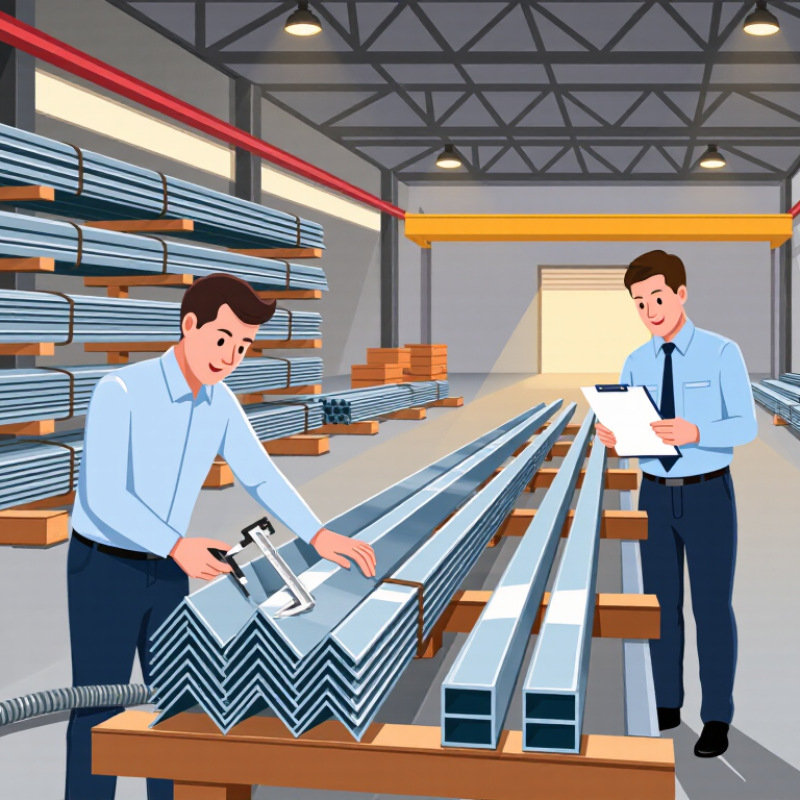
| Dimensional consistency | Check leg dimensions, thickness, length, straightness, squareness, and mass against the order and applicable tolerances. Agree on sampling frequency and acceptance criteria before production. | Use the dimensional and tolerance standard specified for the selected product route, such as EN 10056-1/-2, ASTM A6/A6M, or JIS G 3192. | What measuring equipment and sampling plan are used? Can you share inspection records for recent lots of the same size? |
| Chemical and mechanical consistency | Review heat-by-heat chemistry and mechanical test results. Confirm that testing is performed under the applicable grade standard and that reported results correspond to the supplied material. | Acceptance limits depend on the selected grade, product standard, thickness, and test requirements; use the governing standard rather than a generic grade comparison. | How are nonconforming heats controlled, and can you provide representative certificates from multiple production lots? |
| Surface condition and finish | Define acceptable surface condition, rust level, scale, edge condition, and any requirements for painting, galvanizing, or other coating. Separate coating requirements from the base steel grade. | Surface condition and coating requirements should be stated in the purchase specification; coating standards depend on the selected coating process and project requirements. | How are surface defects assessed and recorded? If coating is required, what coating standard, thickness, and inspection method will be used? |
| Heat and shipment traceability | Ensure bundles or pieces can be linked to the corresponding heat number and material documents throughout handling and delivery. | Traceability requirements should be agreed in the order and aligned with the applicable product standard and project quality plan. | Are markings maintained after bundling or processing, and can delivery documents identify the product size, grade, quantity, and heat number? |
| Supplier quality controls | Assess documented inspection procedures, calibration controls, nonconformance handling, corrective actions, and change control for materials or production processes. | An ISO 9001-certified quality management system can indicate documented management processes, but it does not replace product-specific inspection or compliance evidence. | Can you provide relevant quality procedures or audit evidence and explain how complaints and corrective actions are tracked? |
| Purchase-order clarity | Include section dimensions, grade, product standard and edition, length, quantity, tolerances, certificate requirements, surface condition, packing, marking, and delivery requirements. | Use the latest applicable edition required by the project or contract; do not rely on a grade name alone. | Will all agreed technical requirements be stated in the order confirmation before production or dispatch? |



 08045479132

 Send Inquiry


 Send Inquiry
 Send SMS

