| Single-side drilling machine | One drilling unit works on one panel edge or face at a time; manual, pneumatic, or CNC positioning may be available. | Small-batch cabinet parts, shelf-pin holes, dowel holes, and straightforward edge drilling. | Simple setup, relatively compact footprint, and a practical choice for lower or variable production volumes. | May require repositioning or a second operation to drill the opposite side; output depends heavily on loading and setup time. | Confirm the usable panel range, clamping method, hole-position repeatability, and whether the machine supports the required drilling direction. |
| Double-side drilling machine | Drilling units are arranged to process opposing sides of a panel, either simultaneously or in coordinated operations. | Repeated cabinet and furniture components that need matching holes on both sides. | Can reduce handling and help keep opposing hole patterns aligned when the workpiece is correctly referenced. | Requires suitable panel access and setup; tooling or operating costs may be higher than for a basic single-side machine. | Check whether both sides are drilled simultaneously, the minimum and maximum panel dimensions, and how the machine references the workpiece. |
| Multi-spindle side drilling machine | A drilling head carries multiple spindles at fixed or adjustable spacing; configurations may be manual or CNC-controlled. | Repeated rows of holes, connector patterns, and batch production with consistent spacing. | Several holes can be produced in one cycle, reducing repeated tool movements for suitable patterns. | Fixed spindle spacing can limit flexibility; adjustable or additional tooling may be needed for changing hole patterns. | Match spindle count, spacing range, drill diameter, and pattern layout to actual drawings—not just the maximum number of spindles. |
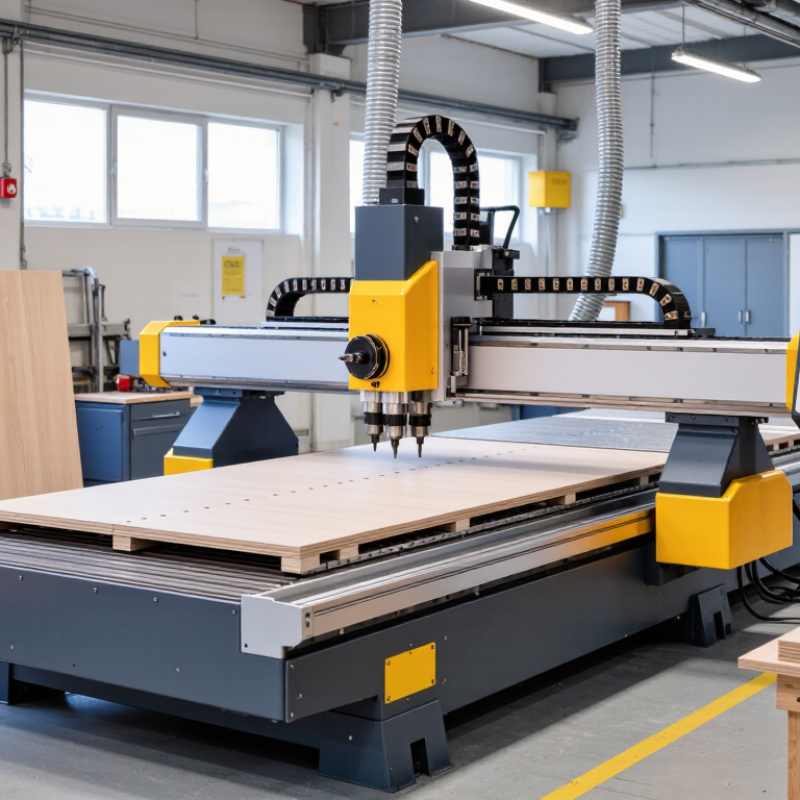
| CNC gantry or moving-head side drilling machine | A controlled drilling head moves along programmed axes; the workpiece is clamped on a table or supported by a positioning system. | Mixed-size panels and jobs with varied hole locations or frequent program changes. | Programmable positioning supports repeatable layouts and can reduce manual measurement between different jobs. | Requires program setup and operator training; actual cycle time depends on travel, clamping, tool changes, and part handling. | Review the number of controlled axes, workpiece referencing method, program workflow, and compatibility with the shop’s design or production files. |
| Combined side-drilling and routing configuration | Drilling is paired with a routing or milling unit, sometimes with multiple tool stations or automatic tool selection. | Parts that need side holes plus compatible slots, notches, or other routed features in one setup. | Can reduce transfers between machines and keep related features referenced from the same setup. | More complex tooling and programming; a combined machine may not match the throughput of dedicated equipment for every operation. | Confirm which operations are supported, the available tool positions, workpiece clearance, and whether the required tools are included. |
| Automatic in-line side drilling system | Side-drilling equipment is integrated with conveyors, automatic loading, or upstream and downstream production stations. | High-volume production with stable part families and repeatable workflows. | Automation can reduce manual handling and support a more continuous production flow. | Needs careful line integration, adequate floor space, and reliable coordination between stations; less suitable for irregular one-off work. | Assess required throughput, infeed and outfeed handling, changeover time, guarding, dust collection, and how faults or jams are managed. |
| Key selection criteria | Compare machine type, work envelope, spindle arrangement, axes, clamping, controls, tooling, and automation as one complete configuration. | Any shop selecting equipment for a defined mix of furniture panels, hole patterns, and production volumes. | A needs-based comparison helps avoid paying for unused capacity or choosing a machine that cannot handle required parts. | Catalog specifications alone may not reflect real cycle time, finish quality, or operator workflow. | Test representative panels and programs. Verify material thickness, edge access, hole diameter and depth, accuracy requirements, safety features, service support, and total installed cost. |



 08045479132

 Send Inquiry


 Send Inquiry
 Send SMS