How to Choose the Best Vintage Shoe Cabinet
Choosing a Vintage Shoe Cabinet means balancing character with everyday function. The right piece should welcome muddy boots, keep narrow hallways calm, and still feel at home beside your existing furniture. Looks matter. So does use.
Begin with measurements. Check the cabinet’s width, depth, and door swing against your entryway. Then consider capacity: a shallow cupboard may suit flats, but bulky shoes need more room. Look closely at the wood, joints, hinges, and drawer runners. A little wear can add charm. Loose joints, persistent odors, or swollen panels deserve closer inspection. Ask about repairs and finishes when the seller has that information.
Furniture designer William Morris offered a useful principle: “Have nothing in your houses that you do not know to be useful, or believe to be beautiful.” His words were not about shoe cabinets, but they frame this choice well. A Vintage Shoe Cabinet should earn its place through both utility and appeal. Compare solid wood, veneer, and painted finishes, and consider ventilation if damp shoes are common. Check whether shelves adjust or can be removed. These details matter more than a perfect photograph.
This guide will explore styles, materials, sizing, condition, and practical buying checks. It will also consider how to care for an older cabinet without erasing its history. There is no single best choice. A cabinet that looks ideal online may feel awkward in a real hallway, and that is worth remembering.
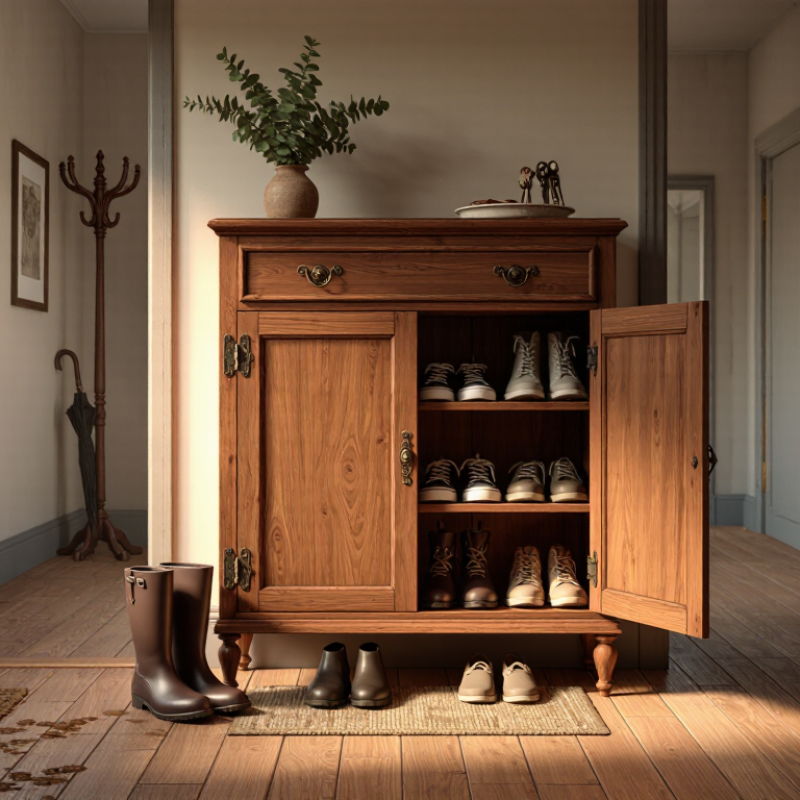
Define Your Storage Needs and Shoe Collection
Before choosing a vintage shoe cabinet, count the pairs you actually wear. Include everyday shoes, boots, slippers, and seasonal pairs stored elsewhere. Leave room for a few additions; a cabinet filled to the edge becomes awkward to use. Start with a count. Measure twice.
Check the depth and height of your largest shoes, not just your trainers. Ankle boots may need taller compartments, while high heels can catch on narrow dividers. Open the doors and measure the space they need, too. A cabinet that blocks a hallway or scrapes a nearby wall will quickly feel like the wrong size. Small details matter.
Think about how your collection changes through the year. If wet shoes go inside, look for a finish that is easy to wipe and allow some airflow; trapped dampness can leave odors. Slatted panels or gaps around the doors may help, though they will not replace drying shoes first. Vintage interiors can be irregular, so inspect shelf spacing and check whether shelves move. One imperfect measurement can spoil the fit. Leave a little spare capacity, and keep the pairs you reach for most at a comfortable height.
How to Choose the Best Vintage Shoe Cabinet – Define Your Storage Needs and Shoe Collection | Planning factor | Example collection or measurement | What to look for in a cabinet | Why it matters |
| Everyday low shoes | 6 pairs of flats, loafers, or low-profile sneakers | Allow roughly 6–8 in (15–20 cm) of vertical clearance per shelf; check the usable shelf width and depth. | Low shoes can often share a shelf, but the number that fits depends on shoe size and cabinet interior dimensions. |
| Heeled shoes | 3 pairs of heels or dress shoes | Look for adjustable shelves or about 7–9 in (18–23 cm) of clearance. | Heel height and shoe shape vary, so adjustable shelf spacing makes the interior easier to configure. |
| Ankle boots | 2 pairs of ankle boots | Plan for approximately 9–12 in (23–30 cm) of vertical clearance, depending on the shaft. | A fixed, closely spaced shelf may not accommodate boots without laying them on their sides. |
| Tall boots | 1 pair of knee-high or tall boots | Measure the boot shaft; consider a tall compartment of around 16–20 in (41–51 cm), or separate boot storage. | Tall boots may need more vertical space than a standard cabinet shelf provides. |
| Total collection | 12 pairs in this example, including different shoe types | Choose a cabinet with enough usable shelf area for 12 pairs, plus a little spare capacity if the collection may grow. | Published capacity is only a guide; bulky shoes and larger sizes can reduce the number that fits comfortably. |
| Available floor space | Example space: 36 in (91 cm) wide × 14 in (36 cm) deep | Measure the full footprint, including handles, doors, and room needed to open them. | A cabinet should fit the intended location without blocking a walkway, doorway, or nearby furniture. |
| Vintage condition and function | Inspect doors, hinges, shelves, joints, and signs of moisture or pests. | Check that shelves are secure, doors open smoothly, and the cabinet sits level; verify any interior dimensions before purchase. | Vintage pieces can differ in construction and condition, so direct inspection helps confirm safe, practical storage. |
Measurements and capacities are planning estimates. Measure your own shoes and the cabinet’s usable interior before buying.
Measure the Space and Select a Suitable Cabinet Size
Measure the space before browsing, not after you fall for a cabinet’s worn finish. Note the maximum width and height, then check the depth available with nearby doors fully open. A cabinet that fits between two walls may still block a closet door or narrow a walking path. Measure twice. Include baseboards, door trim, and any radiator or floor vent that could limit placement.
Think about what the cabinet must hold. Lay out a few pairs of shoes and measure their length and height, including boots if you wear them often. Vintage shelves can be shallow, uneven, or fixed in place, so ask for interior measurements rather than relying on exterior dimensions. Leave a little room for airflow and easy removal. It is tempting to choose the largest cabinet that fits, but bulky furniture can make a small entry feel cramped. I have focused too much on height before; the depth was what caused trouble. Check the route into the room, too, including tight turns and stair landings. A small gap on paper can disappear in real life.
Compare Vintage Styles, Materials, and Construction
Vintage shoe cabinets differ in shape and storage. Mid-century designs often have clean lines and shallow, tilting compartments. Country-style pieces may use paneled doors, turned legs, and warmer finishes. Measure your hallway before choosing; a deep cabinet can obstruct a narrow walkway. Check the compartment height, too, since boots may not fit behind short doors.
Materials affect both appearance and upkeep. Solid wood can be repaired or refinished, but older panels may show movement, scratches, or uneven color. Veneered cabinets can look elegant, though lifting edges deserve a close inspection. Metal handles and hinges should feel secure, not loose or sharply corroded. Construction matters just as much: open each door, test the hinges, and look for wobbling joints or a sagging back panel. A charming finish cannot compensate for unstable shelves. Still, small flaws may be part of the appeal, and perfection is not always realistic.
Tips: Bring your shoe measurements and hallway dimensions when shopping. Ask whether shelves are fixed or adjustable. Check the cabinet’s smell and ventilation; trapped dampness can linger. Take your time. A slightly imperfect cabinet may suit your home better than a pristine piece that barely holds your shoes.
Inspect the Cabinet’s Condition and Storage Features
A vintage shoe cabinet should feel sound, not merely look charming. Open every door and drawer, then check the hinges, handles, and joints for looseness. Press gently on each corner; a rocking frame may need more than a quick repair. Look beneath the cabinet and inside dark corners for cracks, damp patches, or signs of pests. Faded finish and small scratches can be harmless, but swollen wood or a persistent musty smell deserves caution. It is easy to admire the patina and overlook a practical problem.
Check whether the shelves fit the shoes you actually wear. Measure the tallest boots and widest pairs, then compare those dimensions with the cabinet’s openings. Slide-out shelves can help, but test them under light pressure. Doors should open without scraping nearby walls, and the cabinet should leave enough room for shoes to dry. Small vents are useful. A sealed interior may trap odors, especially after wet weather. I would not assume every old shelf is sturdy; some thin boards bend under a full row of shoes.
Tips: Bring a tape measure and a small flashlight. Ask how the cabinet was stored and repaired. Take a photo of any questionable joint, then inspect it again before buying. A little wear is fine; uncertainty about stability is not.
Evaluate Price and Choose the Best Fit for Your Home
A vintage shoe cabinet can look charming online, yet price alone rarely tells you whether it is a sound buy. Compare similar cabinets by material, age, storage capacity, and condition. Solid wood may justify a higher price, but loose joints, swollen panels, or a musty smell can mean extra repair costs. Ask for close-up photos of hinges, drawer bottoms, and the cabinet’s back. Small flaws are normal; hidden damage is different.
Measure the space where it will stand, including the route through doorways and hallways. Check the cabinet’s depth against your shoes, especially if you wear larger sizes or keep boots. A narrow piece may fit a hallway but hold fewer pairs than expected. Measure twice. Also leave room for doors to open without hitting a wall or nearby furniture.
Set a total budget that includes delivery, cleaning, and likely repairs. A low-priced cabinet may need new hardware or careful wood treatment, while a more expensive one may be ready to use. That matters. I would not pay a premium just for a distressed finish; that look can be recreated, and it may hide wear. Ask the seller about odors, wobble, and past repairs, then compare the answers with the asking price. One detail is easy to overlook: older cabinets can be heavier than they appear, so confirm who will carry and position it.
How to Choose the Best Vintage Shoe Cabinet: Evaluate Price and Find the Right Fit
How to use this chart: These estimates assume about 20 cm of usable shelf width per pair, so actual capacity varies with shoe size, cabinet design, and interior dimensions. Before buying, measure the cabinet’s usable width and depth and check that your shoes fit. To compare prices, divide the asking price by estimated total capacity (pairs per shelf × number of usable shelves); also factor in condition and any repair costs.



 08045479132

 Send Inquiry


 Send Inquiry
 Send SMS

