How to Choose the Best Forklift Collision Detection System?
In an ever-evolving industrial landscape, safety remains a top priority. Forklifts are essential for material handling, but their operation poses risks. The risk of collisions can lead to injuries and damage. Therefore, a reliable Forklift Collision Detection System is vital for any warehouse or facility.
Choosing the right system has many complexities. Various options exist, ranging from basic alarms to advanced sensor technologies. Each system has its strengths and weaknesses. It's crucial to understand specific needs before making a decision. For instance, a smaller warehouse may not require the intricate features of a high-tech system, while a larger facility might benefit from them.
Evaluating systems can be challenging. Some may promise high performance but lack real-world reliability. Gathering feedback from industry experts and users can provide valuable insights. Additionally, testing different systems can reveal their practical limitations. Ultimately, making an informed choice can significantly enhance workplace safety and efficiency.
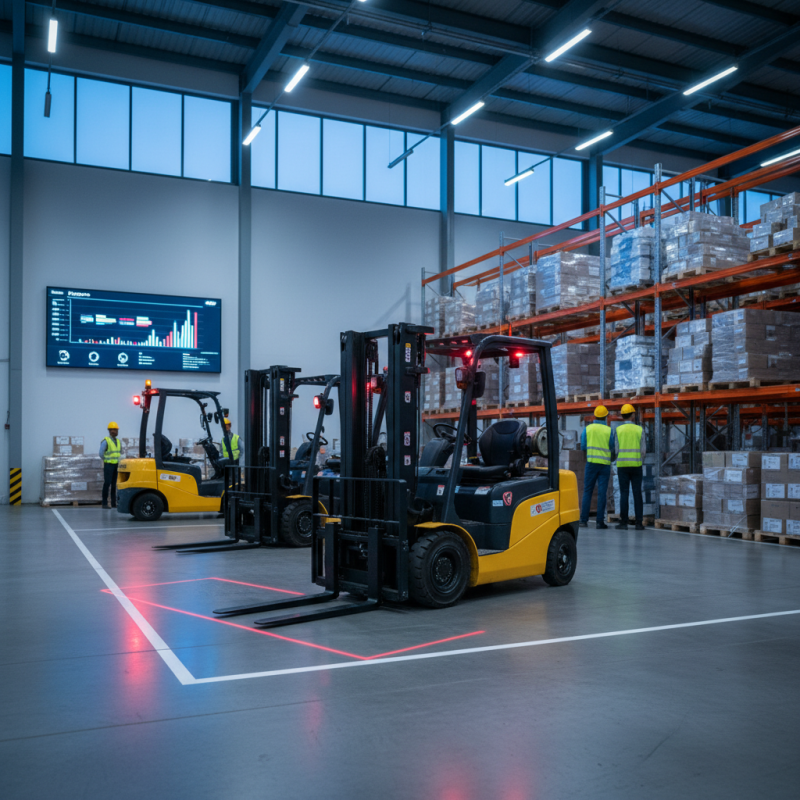
Understanding Forklift Collision Risks and Their Impact
Forklift operations inherently carry significant collision risks. According to a report from the National Institute for Occupational Safety and Health (NIOSH), nearly 100 workers are killed each year in forklift-related incidents. Additionally, these accidents can result in approximately 95,000 injuries annually. Understanding these risks is crucial for improving workplace safety and reducing costly damages.
The impact of forklift collisions is multifaceted. Beyond immediate injuries, organizations face increased insurance premiums and operational downtime. The Occupational Safety and Health Administration (OSHA) emphasizes that effective collision detection systems can mitigate these risks. A study revealed that implementing such systems can lead to a 50% reduction in accidents. This statistic underscores the importance of investing in technology that enhances safety.
However, organizations often overlook potential shortcomings in their current safety measures. A review of data shows that many collision detection systems may not cover all blind spots, leaving workers vulnerable. Inadequate training can also hinder their effectiveness. Reflecting on these issues highlights the need for a holistic approach to forklift safety, combining technology with ongoing education.
Key Features to Look for in Collision Detection Systems
When selecting a forklift collision detection system, key features play a vital role. An effective system should integrate various technologies. Proximity sensors, for example, help detect nearby objects. These sensors can significantly reduce accident rates, which, according to industry studies, account for about 25% of workplace injuries.
A reliable collision detection system also employs real-time monitoring. This feature allows for instant alerts when potential collisions are imminent. Data from the Occupational Safety and Health Administration (OSHA) indicates that such systems can lower incident rates by up to 30%. Furthermore, systems should include predictive analytics. These analytics assess patterns and improve safety measures over time.
Lastly, user-friendliness is crucial. Operators must easily understand alarms and indicators without extensive training. The complexity of some systems can hinder effective use, leading to potential oversights. While advanced features are beneficial, simplicity should never be overlooked. A balance between technology and usability ensures a safer work environment.
Types of Collision Detection Technologies for Forklifts
When considering collision detection technologies for forklifts, it’s essential to understand the various systems available. The most common types include proximity sensors, radar systems, and camera-based solutions. Proximity sensors can be effective, detecting obstacles within a predefined range. They are often more affordable and easy to install. However, these systems may not always detect faster-moving objects.
Radar systems provide a more sophisticated approach. They can track multiple objects in real-time, even in difficult environments. According to a report from the National Institute for Occupational Safety and Health, radar systems can reduce collision incidents by up to 40%. However, they can be complex to integrate and may require additional training for operators.
Camera-based solutions are gaining traction as well. These systems offer visual feedback and can assist operators in navigating more complex environments. However, they often rely on good lighting conditions. A study shows that around 25% of warehouse accidents occur in poorly lit areas. This raises a concern about their reliability in all settings. Each system has its pros and cons, and the choice depends on the specific operational environment and needs.
Evaluating System Reliability and Performance Metrics
When selecting a forklift collision detection system, evaluating reliability and performance metrics is crucial. A system that functions effectively under different conditions demonstrates its reliability. Key factors include the system's ability to detect obstacles in varying lighting and weather conditions. Users should consider systems that utilize multiple sensors to enhance detection accuracy.
Performance metrics such as response time and false positive rates are essential. A system should react swiftly to potential collisions. Long delays could lead to accidents, undermining safety efforts. It's also important to assess how often the system generates false alarms. High rates of false positives can lead to alarm fatigue, causing operators to ignore warnings.
Testing the system in real-world scenarios is advisable. Simulations can be helpful but don't always replicate true conditions. Gathering feedback from operators provides insights into usability and effectiveness. By focusing on these areas, decision-makers can choose a reliable and efficient collision detection system that enhances workplace safety.
Cost-Benefit Analysis of Implementing Collision Detection Systems
When considering a collision detection system for forklifts, a cost-benefit analysis is crucial. The initial investment can seem steep. However, the long-term savings often outweigh these costs. Accidents can lead to significant financial losses. Reducing these incidents will protect both workers and assets.
Tips for assessing costs include analyzing accident history. Calculate potential fines and losses due to downtime. Training workers is essential, but it also incurs costs. Therefore, it's vital to compare these ongoing expenses with collision detection system benefits.
Consider the technology's reliability. Some systems might require frequent updates, adding to costs. Look for solutions that provide consistent performance. Employee feedback on usability is also valuable. This helps identify areas where the system may fall short. Always weigh the overall impact on workplace safety against financial considerations.
Cost-Benefit Analysis of Forklift Collision Detection Systems



 08045479132
 Send Inquiry

 Send Inquiry
 Send SMS