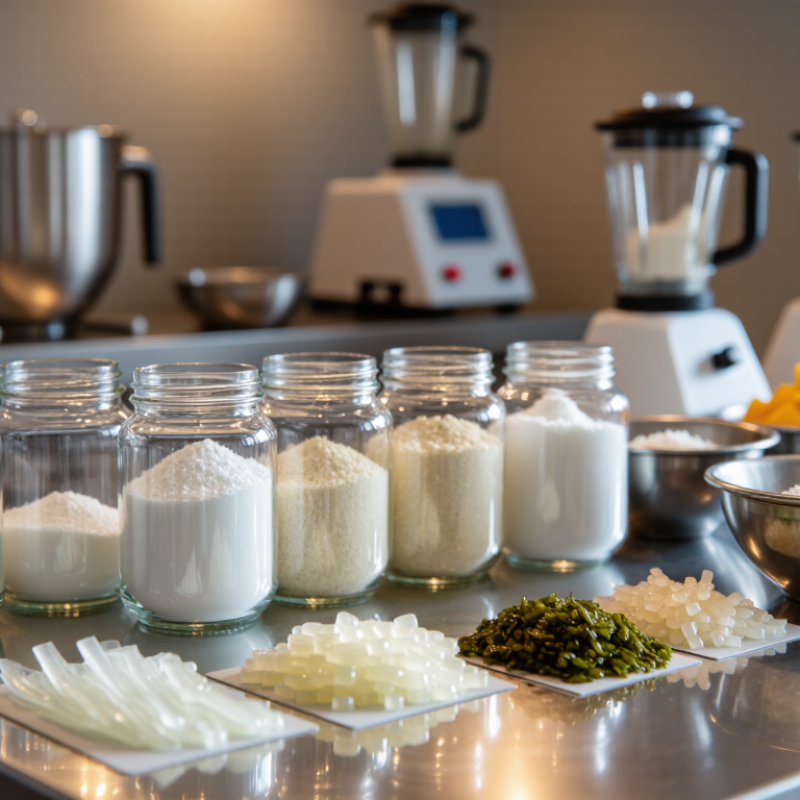
| Product identity | Confirm that “vegan gelatine powder” is a plant-based gelling blend, not animal-derived gelatin. Common plant-derived gelling ingredients include agar, carrageenan, pectin, and konjac gum. | Full ingredient declaration, ingredient specifications, allergen statement, and a written statement on animal-derived ingredients. | Check every ingredient and processing aid against your vegan requirements. Ask the supplier to disclose shared-line use and cross-contact controls. |
| Product specification | Review the grade and application-specific parameters, such as appearance, moisture, gel strength or viscosity, pH, particle size, and recommended use level. | Current technical data sheet with test methods, specification limits, storage conditions, and shelf life. | Compare the stated limits with your product requirements. Test a production-representative sample before approving a bulk order. |
| Batch quality and traceability | Confirm that each shipment can be linked to a production batch and that results are reported against the agreed specification. | Recent batch-specific certificates of analysis (COAs), lot coding example, product recall procedure, and traceability records. | Check that the COA lot number matches the sample or shipment and that results include methods, units, and acceptance limits. |
| Food safety testing | Assess microbiological and chemical risks relevant to the ingredients, intended use, destination market, and buyer specification. | Recent test reports for agreed parameters, such as relevant microorganisms, heavy metals, or other risk-based contaminants. | Where independent testing is needed, use a competent laboratory and confirm that the laboratory’s accreditation scope covers the requested methods and analytes. |
| China regulatory compliance | For products made or sold in China, check applicable food-additive use requirements and food production hygiene requirements. GB 2760-2024 is China’s National Food Safety Standard for the Use of Food Additives; GB 14881-2013 covers general hygiene specifications for food production. | Product compliance statement, ingredient and use-category information, and relevant production-site documentation. | Confirm the current applicable standard, permitted use, and destination-market requirements for the specific formulation and application. |
| Management-system certificates | Check whether the manufacturing site holds relevant food-safety management certification, such as ISO 22000 or FSSC 22000. Certification does not by itself establish that a product is vegan or meets your specification. | Complete certificate showing the legal entity, certified site, scope, certificate number, issue and expiry dates, and certification body. | Verify certificate validity with the certification body or its official registry. Ensure the certified scope covers the actual manufacturing activity and site. |
| Vegan claim controls | Establish how the supplier supports the vegan claim and manages ingredient sourcing, production scheduling, cleaning, and possible cross-contact. | Ingredient-origin declarations, supplier controls, production and cleaning procedures, and any applicable third-party vegan certification. | Review the claim’s scope and issuing organization. Do not treat a halal certificate or a general food-safety certificate as proof of vegan status. |
| Production capacity | Validate capacity for the specific product grade and packaging format, including available monthly output, current commitments, and peak-season constraints. | Product-specific capacity statement, production schedule, equipment details, recent production records, and planned maintenance schedule. | Compare the stated capacity with recent output and your forecast. Confirm whether quoted capacity is installed, practical, or uncommitted capacity. |
| Bulk order readiness | Confirm minimum order quantity, production lead time, packaging options, pallet configuration, and shipment terms for the requested order. | Written quotation, order confirmation, packaging specification, and a lead-time schedule tied to the agreed quantity. | Check that the lead time accounts for production, testing, packing, and dispatch. Agree in writing how delays or specification failures will be handled. |
| Packaging and storage | Verify food-contact suitability where applicable, moisture protection, package integrity, storage conditions, and shelf-life dating. | Packaging material details, packing specification, storage instructions, and shelf-life support information. | Review packaging against transport and warehouse conditions and inspect packaging and lot markings on pre-shipment samples. |
| Commercial and shipment documents | Ensure product identity, quantity, origin, batch information, and shipping details are consistent across the transaction documents. | Pro forma invoice, packing list, commercial invoice, certificate of origin where applicable, and agreed export or import documents. | Match document details to the purchase order and confirm destination-country import and labeling requirements before shipment. |



 08045479132

 Send Inquiry


 Send Inquiry
 Send SMS

