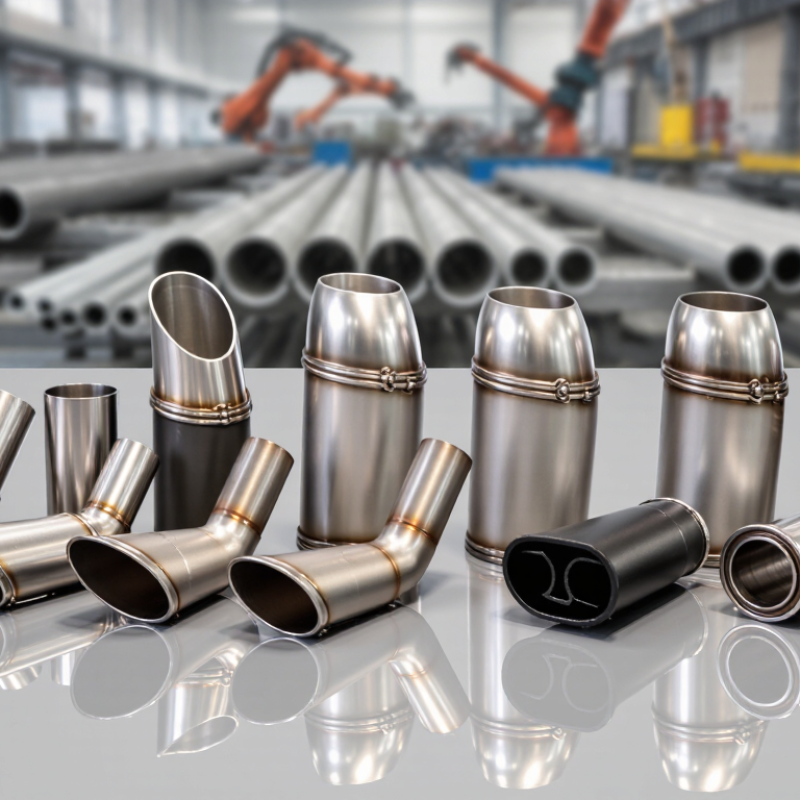
| 1. Product scope | Exhaust tips, tailpipe extensions, decorative outlets, and shaped end sections | Tube cutting, end forming, flaring, bending, and edge finishing | Dimensions, outlet shape, wall thickness, and compatibility with the intended exhaust system |
| 2. Stainless steel options | Common exhaust-grade ferritic stainless steel, such as 409, and corrosion-resistant austenitic stainless steel, such as 304 | Sheet or tube processing, forming, joining, and surface finishing | Grade selection balances corrosion resistance, temperature exposure, appearance, and cost |
| 3. Other metal options | Aluminized steel and carbon steel, depending on product specification and application | Cutting, rolling, stamping, welding, and protective finishing where specified | Coating condition, corrosion exposure, intended service life, and total installed cost |
| 4. Forming and fabrication | Straight, angled, rolled-edge, dual-outlet, and other formed end-pipe designs | Press forming, tube expansion or reduction, mandrel or rotary bending, and welding | Repeatable geometry, clean edges, joint strength, and consistency between production batches |
| 5. Joining methods | Welded assemblies and clamp-on or slip-fit components, according to design | TIG or MIG welding, fixture-based assembly, and post-weld cleaning | Joint integrity, alignment, leak risk, and suitability for the installation method |
| 6. Surface treatment | Polished, brushed, coated, or otherwise finished metal surfaces | Grinding, polishing, passivation where applicable, and coating or plating when specified | Finish uniformity, adhesion, corrosion performance, and resistance to heat and road exposure |
| 7. Fitment and customization | Vehicle-specific replacement parts and made-to-specification outlet components | Drawing review, sample approval, tooling setup, and dimensional inspection | Inlet diameter, outlet projection, clearance, mounting arrangement, and approved drawings |
| 8. Quality control | Incoming metal, formed parts, weldments, and finished exhaust end pipes | Material verification, dimensional checks, visual inspection, and process-based weld checks | Traceable material specifications, documented inspection criteria, and consistent workmanship |
| 9. Production and sourcing model | Standard catalog items, private-label supply, and made-to-order components | In-house fabrication combined, where needed, with external metal, finishing, or packaging suppliers | Supplier control, capacity planning, lead-time clarity, and change management |
| 10. Sales channels and compliance | Domestic aftermarket supply, export orders, and components supplied for vehicle or exhaust-system programs | Order specification review, export packing, documentation, and customer-specific approval processes | Destination-market requirements, product claims, packaging protection, and applicable vehicle noise or emissions rules |



 08045479132

 Send Inquiry


 Send Inquiry
 Send SMS

