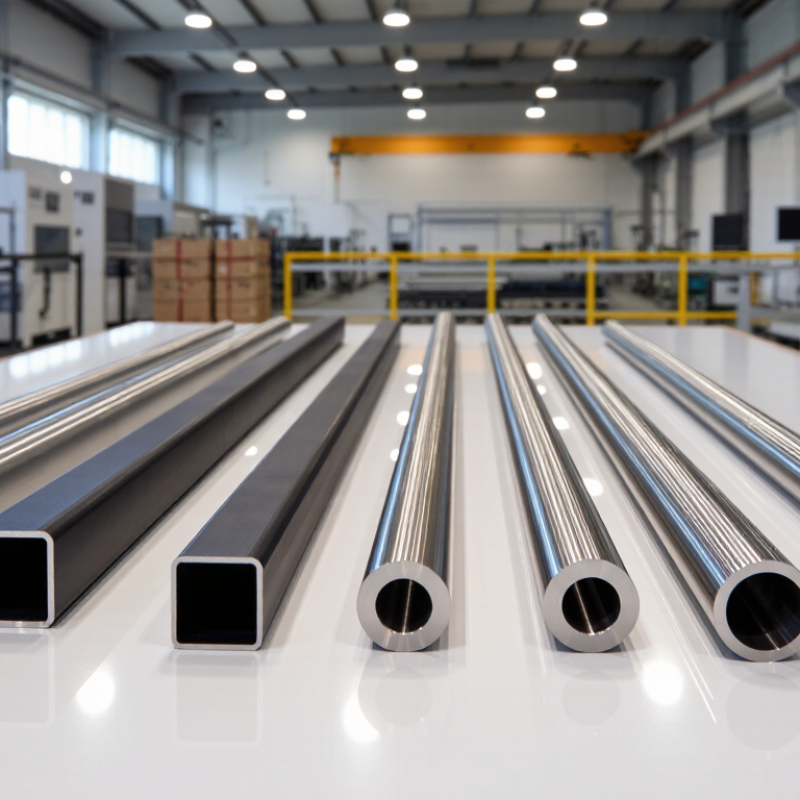
| Main Product Types | Metal balusters are commonly supplied as round, square, twisted, hollow, solid, or decorative profiles for stairs, balconies, terraces, and guardrails. | Confirm whether the order requires individual balusters, complete railing components, or a ready-to-install system. | Decorative profiles and assembled systems generally cost more than standard straight profiles. | Choose a supplier with suitable forming, cutting, welding, and finishing capabilities for the required design. |
| Common Materials | Frequently used materials include carbon steel, stainless steel grades 304 and 316, aluminum, and malleable or cast iron. | Material certificates and grade confirmation may be requested for commercial, coastal, or public projects. | Stainless steel and aluminum usually have a higher material cost than standard carbon steel; 316 stainless steel is typically selected for severe coastal exposure. | Match the material to corrosion exposure, structural requirements, maintenance expectations, and local building regulations. |
| Typical Profile Sizes | Common square or rectangular sections are approximately 12–50 mm across, while round tubes are often specified in approximately 16–50 mm outside diameters. | Exact dimensions should be confirmed by approved drawings because available tooling and local code requirements vary. | Greater wall thickness, larger sections, and solid profiles increase material consumption and shipping weight. | Request dimensional tolerances, wall thickness, straightness requirements, and production samples before mass production. |
| Surface Finishes | Available finishes commonly include brushed or polished stainless steel, powder coating, liquid painting, hot-dip galvanizing, and electroplating. | For outdoor exports, request pretreatment details, coating specifications, and packaging suitable for humidity and sea transport. | Multi-stage pretreatment, premium coating systems, polishing, and special colors increase processing costs. | Verify coating thickness, color reference, adhesion performance, corrosion resistance, and finish consistency. |
| Corrosion Protection | Protection may include stainless steel selection, zinc coating, powder coating, duplex systems, or suitable primer and topcoat combinations. | Coastal and high-humidity projects require more detailed corrosion-control specifications than indoor applications. | Higher corrosion resistance generally raises material, pretreatment, inspection, and finishing costs. | Ask for documented process controls rather than relying only on general claims such as “rustproof.” |
| Customization Capability | Common customizations include length, hole position, base design, ornamental pattern, mounting method, surface finish, and color. | Provide 2D drawings, 3D files, samples, or a dimensioned specification sheet before quotation. | New tooling, prototypes, engineering changes, and low-volume customization can increase unit cost. | Evaluate drawing review, sample approval, revision control, and the supplier’s ability to repeat approved dimensions. |
| Indicative Order Quantities | Small trial orders may range from several dozen pieces, while project orders can involve hundreds or thousands of pieces. | Minimum order quantities depend on material, finish, tooling, packaging, and production-line setup. | Higher quantities generally reduce setup and packaging cost per unit, although material prices remain market-sensitive. | Request a written quotation for sample, trial, and volume quantities so the cost structure is transparent. |
| Indicative Production Lead Time | Standard items may require approximately 15–30 working days; customized or large project orders may require approximately 30–60 working days after drawing approval and deposit. | Lead time normally excludes international transit, customs clearance, holidays, and delays caused by late approvals. | Expedited production, special materials, and additional inspection may involve surcharges. | Obtain a milestone schedule covering drawing approval, sample approval, production, inspection, and dispatch. |
| Packaging for Export | Typical packaging includes protective film, individual sleeves, dividers, cartons, plywood cases, pallets, or reinforced export crates. | Wood packaging used for international shipments may need to comply with ISPM 15 requirements where applicable. | Custom foam, stronger crates, moisture barriers, and lower packing density increase packaging and freight costs. | Review packing photos or a packing specification and confirm protection against scratching, bending, and moisture. |
| Shipping Methods | Ocean freight is generally used for larger or heavier orders; air freight or courier services are more suitable for samples and urgent small shipments. | Compare EXW, FOB, CIF, and DAP quotations carefully because each includes different transport and risk responsibilities. | Freight depends on chargeable weight, volume, destination, fuel costs, port charges, and shipping season. | Confirm the named place under Incoterms, export documentation responsibility, transit estimate, and insurance arrangement. |
| Pricing Factors | Key factors include metal grade, raw-material price, profile size, wall thickness, weight, design complexity, finishing process, quantity, packaging, and delivery terms. | Ask whether the quotation includes tooling, samples, testing, export packing, inland transport, and documentation. | The lowest unit price may not represent the lowest total landed cost. | Compare equivalent specifications using a line-by-line cost breakdown and identical delivery terms. |
| Quality Control | Common checks include material verification, dimensions, weld appearance, surface finish, coating condition, quantity, and packaging integrity. | Third-party inspection can be arranged before shipment when required by the buyer or project contract. | Additional inspection, laboratory testing, and documentation may add cost but reduce delivery and compliance risks. | Request inspection records, defect-handling procedures, corrective-action records, and a pre-shipment inspection option. |
| Testing and Documentation | Depending on the project, documentation may include commercial invoice, packing list, bill of lading, certificate of origin, material certificate, coating report, and inspection report. | Building-code evidence, structural calculations, or test reports may be required by the destination market or project consultant. | Special testing and certification fees are usually quoted separately unless included in the contract. | Confirm document format, issuing authority, language, and submission timing before placing the order. |
| Compliance and Safety | Baluster spacing, guard height, load resistance, anchorage, and handrail configuration are normally controlled by the applicable local building code. | Requirements vary by country, occupancy type, installation location, and whether the railing is residential, commercial, or public. | Engineering review, stronger sections, testing, and additional components can increase project cost. | Have the buyer’s engineer or code consultant approve the design before production begins. |
| Supplier Verification | Useful checks include business registration, factory or workshop capability, production photos, sample quality, export history, and documented quality procedures. | Use verifiable company information and confirm that the contracting entity, receiving bank account, and shipping documents are consistent. | Audits and third-party verification create a small additional cost but can reduce supplier and payment risk. | Prioritize transparent communication, stable specifications, realistic lead times, and traceable commercial documentation. |
| Payment and Contract Terms | International orders commonly use a deposit with the balance due before shipment or against agreed shipping documents; exact terms are negotiable. | Contracts should define specifications, tolerances, approved samples, delivery terms, inspection rights, warranty, and dispute resolution. | Payment security, inspection conditions, and financing terms may influence the quoted price. | Use a purchase contract with clear acceptance criteria rather than relying solely on informal messages or a pro forma invoice. |
| Warranty and After-Sales Support | Support may cover manufacturing defects, finish problems, missing components, replacement parts, and installation guidance. | Warranty duration and exclusions should be stated in writing, especially for outdoor exposure, improper installation, or chemical cleaning. | Extended warranty, spare parts, and replacement shipment arrangements may affect the total contract value. | Evaluate response time, claims procedure, evidence requirements, and the supplier’s ability to provide replacement components. |
| Recommended Buyer Comparison Method | Compare at least three equivalent offers using the same material grade, dimensions, finish, quantity, packaging, Incoterm, and inspection scope. | Separate product price, tooling, packing, inland charges, freight, insurance, duties, taxes, and installation-related costs. | Total landed cost and compliance risk are more meaningful than ex-factory price alone. | Use a weighted score covering quality, compliance, delivery reliability, communication, documentation, and total cost. |
| Data Qualification | The quantities, lead times, dimensions, and cost observations shown above are indicative industry ranges for preliminary sourcing only. Final specifications, prices, compliance requirements, and delivery schedules must be confirmed in a written quotation and approved technical documents. |



 08045479132

 Send Inquiry


 Send Inquiry
 Send SMS

