China Top 10 Airport Flood Lights Manufacturers in 2026
China’s airport infrastructure is expanding, and lighting performance remains a practical safety concern. Airport Flood Lights must illuminate aprons, service roads, cargo areas, and maintenance zones clearly. They also need to perform during rain, dust, coastal humidity, and repeated temperature changes.
This introduction presents a focused review of China’s top 10 Airport Flood Lights manufacturers in 2026. The selection considers manufacturing experience, product engineering, testing practices, export history, and after-sales support. It also examines beam control, glare management, energy efficiency, heat dissipation, ingress protection, and corrosion resistance. These details matter when technicians inspect aircraft beneath harsh white light or guide vehicles across a busy apron at midnight.
Real projects rarely follow a perfect specification. That limitation matters. A strong supplier may offer excellent luminaires but weak documentation. Another may provide competitive pricing while lacking proven airport references. Therefore, this guide avoids relying on advertisements alone. It encourages buyers to verify photometric files, warranty terms, factory capabilities, certifications, and installation records before making decisions. Independent testing and site-specific lighting calculations should remain part of the evaluation.
Performance comes before appearance. A floodlight that looks powerful may create glare, uneven illumination, or difficult maintenance. Experienced airport operators understand this quickly. Small design choices can affect safety, operating costs, and replacement schedules. The manufacturers discussed here are presented as candidates for careful comparison, not automatic recommendations. Readers should still match each product with local climate conditions, airside requirements, electrical systems, and procurement standards. Some conclusions may change as technology develops. That is worth acknowledging.
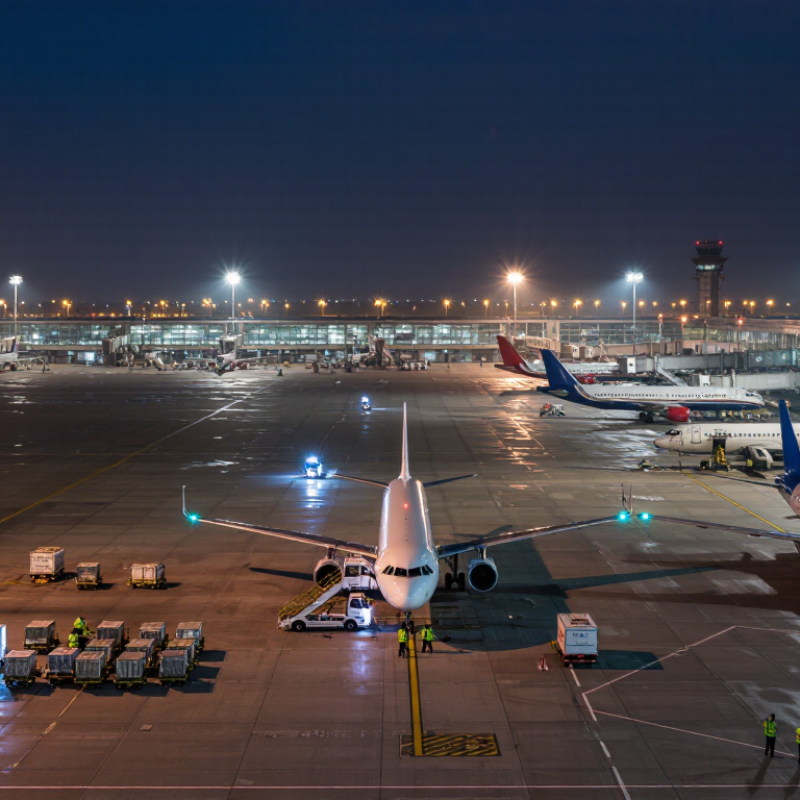
China’s Top 10 Airport Flood Light Manufacturers in 2026: Ranking Framework
China’s Top 10 Airport Flood Light Manufacturers in 2026 should be ranked through evidence, not visibility alone. The framework evaluates airport floodlight performance, manufacturing capability, and project reliability. It gives measurable weight to photometric accuracy, glare control, beam uniformity, and energy efficiency. Each manufacturer should provide recent laboratory reports and field-test records.
The assessment also examines protection ratings, thermal management, corrosion resistance, and service life. Salt spray testing matters near coastal airports. Stable operation at low temperatures matters in northern regions. Product audits should review factory quality controls, component traceability, and batch consistency. Installation records can reveal problems that brochures often hide. Warranty response time and replacement procedures receive practical consideration.
Experience carries significant value. Reviewers should consult lighting engineers, airport maintenance teams, and independent testing specialists. Their feedback may expose uneven illumination across aprons or difficult access for maintenance crews. Commercial capacity also matters, including delivery accuracy and technical support during commissioning. However, no ranking model is perfect. Public data may be incomplete, and field conditions differ between airports. A transparent scoring sheet should show evidence, deductions, and unresolved questions. Lower scores may reflect missing documentation, not poor products. The final Top 10 list should remain adjustable when stronger test results or verified project data become available.
China’s Top 10 Airport Flood Light Manufacturers in 2026: Ranking Framework
A transparent evaluation model based on airport lighting performance, compliance, reliability, efficiency, project experience, and after-sales capability.
The framework uses a 100-point weighting system. Compliance with ICAO-based airport lighting requirements and photometric performance receive the highest priorities, followed by reliability, energy efficiency, airport project experience, and service capability. Final manufacturer rankings should be validated through documented testing, certifications, customer references, and current tender records.
Manufacturer Profiles: Products, Certifications, Export Reach, and Installed Projects
China Top 10 Airport Flood Lights Manufacturers in 2026
The 2026 shortlist should examine more than factory capacity. Each manufacturer profile needs clear product evidence, certifications, export records, and installed airport projects. Airport flood lights should provide high lumen output, low glare, stable color temperature, and IP66 protection. Some suppliers also offer 100,000-hour LED lifetimes, but this figure requires careful testing.
ICAO reported about 4.6 billion air travelers in 2023. That recovery increases pressure on apron lighting, taxiway surroundings, cargo zones, and terminal roads. The ten manufacturers should therefore show compliance with IEC 60598, CE, RoHS, and relevant photometric standards. ISO 9001 supports process control, but it does not prove lighting quality.
Project references should include installation dates, operating climates, pole heights, and maintenance records. Export reach is stronger when suppliers provide local documentation, spare-part systems, and after-sales response times. Some project claims remain difficult to verify. That weakness deserves attention.
Tips: Request LM-79 test reports, real lux maps, and nighttime installation photos. Ask whether glare testing covered aircraft pilot sightlines. A sample should run continuously before purchase. Short trials can expose heat, driver, and sealing problems. According to the International Energy Agency, efficient LED upgrades can significantly reduce lighting electricity demand, but savings depend on controls and operating schedules. Metrics matter more than marketing.
Safety Compliance: ICAO Annex 14, IEC 60598, and 50,000-Hour L70 Life
For a 2026 top-ten comparison, airport floodlights should be judged by safety evidence, not promotional brightness. They must support aircraft movement, service roads, aprons, and emergency access. During evaluation, I look beyond lumen claims. Photometric files, thermal tests, ingress ratings, and maintenance records matter. ICAO Annex 14 provides the operational framework, but it does not replace a project-specific lighting study. That distinction is often missed.
IEC 60598 compliance should be supported by traceable test reports, clear marking, insulation details, and documented production controls. Manufacturers should explain how each floodlight handles vibration, moisture, salt air, and repeated temperature changes.
On an apron, glare is not a minor defect. Bad shielding can distract pilots, drivers, and ground crews.
Useful suppliers offer aiming data, emergency replacement plans, and realistic photometric simulations. Paperwork alone is not enough.
A 50,000-hour L70 rating means projected light output remains near 70 percent under stated conditions. It is not a promise of maintenance-free operation. Ambient heat, driver quality, surge exposure, and cleaning schedules can shorten actual service life.
I prefer manufacturers that disclose test temperature, drive current, failure assumptions, and warranty boundaries. Small details reveal engineering maturity. Still, even strong data deserves questioning. Field results can differ from laboratory models. That uncomfortable gap should shape procurement decisions.
Buyer Comparison: Glare Control, 10 kV Surge Protection, Warranty, and ROI
China Top 10 Airport Flood Lights Manufacturers in 2026
Airport floodlight buyers should compare more than lumen output. On an apron, uncontrolled glare can distract pilots, ground crews, and vehicle operators. Request a full photometric file, beam-angle data, and installation simulations. Check glare near taxiway edges, service roads, and terminal windows. Shielded optics, precise aiming, and low upward light reduce visual discomfort. A brighter fixture is not always a safer fixture.
Surge protection deserves equal attention. Specify tested 10 kV protection, not vague claims such as “industrial grade.” Ask whether the rating applies line-to-line, line-to-earth, or both. Confirm the driver, surge device, and grounding design in the technical documents. Inspect IP66 sealing, cable glands, thermal management, and corrosion resistance for coastal airports. These details often decide maintenance costs after several rainy seasons.
Warranty terms can hide important limits. Compare coverage for the LED module, driver, housing, and photometric depreciation. Ask about replacement time, spare-part availability, and on-site support. A five-year warranty may exclude the component most likely to fail. Read the exclusions carefully. ROI should include energy use, aiming labor, cleaning, downtime, and access equipment. A lower purchase price can become expensive after repeated maintenance. Real projects also expose weaknesses in spreadsheets. Installation quality, dust, and poor grounding can reduce expected returns. Allow room for that uncertainty.
China Top 10 Airport Flood Lights Manufacturers in 2026 - Buyer Comparison: Glare Control, 10 kV Surge Protection, Warranty, and ROI
| Rank | Anonymous Manufacturer | Typical Airport Floodlight Class | Rated Power | System Efficacy | Glare-Control Package | Typical Glare Rating | 10 kV Surge Protection | IP / IK Rating | Control Compatibility | Warranty | Indicative Factory Price | Estimated Annual Energy Saving* | Estimated Payback | 5-Year ROI* | Buyer Score |
| 1 | Manufacturer 01 | High-mast apron and taxiway LED floodlight | 600–1,000 W | 145–165 lm/W | Asymmetric optic, visor, rear shield, low-brightness lens | < 20 cd/klm | Integrated 10 kV / 20 kA SPD | IP66 / IK09 | DALI-2, 0–10 V, Zhaga-ready | 5 years | US$420–780 | US$145–235 | 2.4–3.1 years | 68–92% | 91 |
| 2 | Manufacturer 02 | Apron, stand and perimeter-area LED floodlight | 400–800 W | 140–160 lm/W | Precision asymmetric reflector, adjustable visor | < 22 cd/klm | Replaceable 10 kV / 20 kA SPD | IP66 / IK08 | 0–10 V, DALI, DMX optional | 5 years | US$390–735 | US$125–215 | 2.6–3.3 years | 61–86% | 88 |
| 3 | Manufacturer 03 | High-mast and cargo-apron floodlight | 500–900 W | 138–158 lm/W | Forward-throw optic, external glare shield | < 24 cd/klm | 10 kV / 20 kA SPD, external option | IP66 / IK09 | 0–10 V, DALI optional | 5 years | US$360–690 | US$118–205 | 2.7–3.5 years | 57–82% | 86 |
| 4 | Manufacturer 04 | Taxiway, aircraft-stand and apron floodlight | 300–700 W | 135–155 lm/W | Asymmetric lens, full-cutoff hood, tilt adjustment | < 25 cd/klm | 10 kV / 10 kA SPD | IP66 / IK08 | 0–10 V, DALI optional | 5 years | US$330–640 | US$105–185 | 2.9–3.7 years | 52–76% | 84 |
| 5 | Manufacturer 05 | Apron and logistics-yard LED floodlight | 300–600 W | 132–150 lm/W | Symmetric/asymmetric interchangeable optics, visor | < 28 cd/klm | 10 kV / 10 kA SPD | IP65 / IK08 | 0–10 V, photocell input | 5 years | US$290–570 | US$92–165 | 3.0–3.9 years | 47–70% | 81 |
| 6 | Manufacturer 06 | Perimeter, service-road and apron floodlight | 250–600 W | 130–148 lm/W | Asymmetric lens, optional front shield | < 30 cd/klm | 10 kV / 10 kA SPD | IP66 / IK08 | 0–10 V, DALI optional | 4–5 years | US$270–525 | US$84–150 | 3.1–4.1 years | 43–65% | 79 |
| 7 | Manufacturer 07 | Apron and industrial-airport area floodlight | 240–500 W | 128–145 lm/W | Standard asymmetric optic, optional visor | < 32 cd/klm | 10 kV / 10 kA SPD option | IP65 / IK08 | 0–10 V, relay control | 4–5 years | US$245–480 | US$76–138 | 3.2–4.3 years | 38–59% | 76 |
| 8 | Manufacturer 08 | Apron, parking and airport-road floodlight | 200–450 W | 125–142 lm/W | Asymmetric optic, basic cutoff shield | < 35 cd/klm | 10 kV / 10 kA SPD option | IP65 / IK07 | 0–10 V, photocell input | 4 years | US$220–445 | US$68–125 | 3.4–4.6 years | 33–53% | 73 |
| 9 | Manufacturer 09 | General outdoor and small-airport floodlight | 150–400 W | 120–138 lm/W | Standard lens, optional external visor | < 38 cd/klm | 10 kV SPD option | IP65 / IK07 | 0–10 V, relay control | 3–5 years | US$190–390 | US$55–108 | 3.7–5.0 years | 25–45% | 69 |
| 10 | Manufacturer 10 | Entry-level apron and perimeter floodlight | 120–350 W | 115–135 lm/W | Basic asymmetric optic, optional hood | < 42 cd/klm | 10 kV SPD optional | IP65 / IK07 | 0–10 V optional | 3–5 years | US$165–350 | US$47–95 | 4.0–5.4 years | 18–38% | 65 |
Comparison basis: The figures are normalized reference ranges for China-made outdoor LED airport floodlights in 2026. Actual performance depends on photometric distribution, mounting height, operating hours, ambient temperature, dimming schedule, project quantity, logistics, and site conditions.
ROI assumptions: Replacement of 1,000 W metal-halide or older HID floodlights with LED; 4,000 operating hours per year; 60% average LED power reduction; electricity cost of US$0.10–0.15/kWh; purchase price excludes installation, tax, freight, poles, controls, and civil works. Verify LM-79/LM-80 reports, IEC test documents, photometric files, surge-protection test reports, and warranty terms before procurement.



 08045479132
 Send Inquiry

 Send Inquiry
 Send SMS
