Change Language
Call Us08045479132

China Top 10 Color Carbon Fiber Sheets Manufacturers

China’s carbon-fiber sector is expanding as manufacturers serve aerospace, automotive, wind-energy, and consumer-product markets. MarketsandMarkets estimated the global carbon fiber market at USD 6.3 billion in 2023 and forecast USD 11.9 billion by 2028, a projected annual growth rate of 13.6%. These figures cover carbon fiber broadly, not Color Carbon Fiber Sheets specifically. That distinction matters.

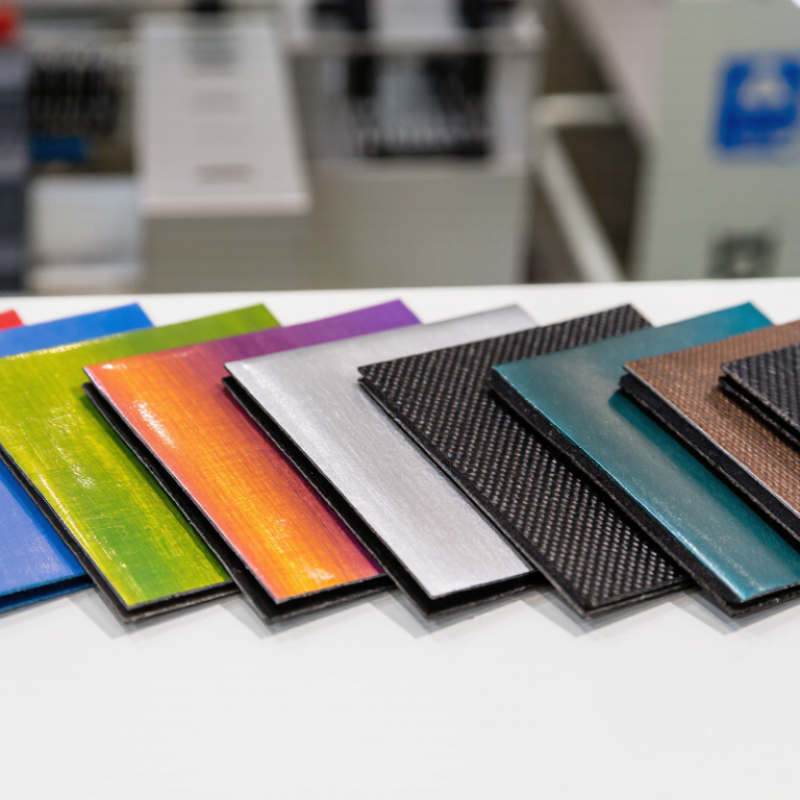
For buyers, a colored surface is only part of the specification. Sheet construction, thickness tolerance, weave alignment, resin consistency, and edge quality affect appearance and performance. A glossy red panel can look striking under showroom lights, yet uneven color or pinholes may become obvious near a window. Small details count.

This guide introduces ten Chinese manufacturers for buyers comparing product ranges and supplier capabilities. Consider asking for current technical data sheets, sample panels, production photographs, and clear explanations of color and finish options. Verify whether a quoted sheet is genuine carbon-fiber composite, a surface-finished panel, or another construction; similar wording can describe different products. Do not treat a polished catalog as proof of consistent production. Supplier information can change, and public product descriptions rarely reveal every quality-control detail. A direct sample review remains useful, though it cannot guarantee a full production order will match. The comparisons ahead are a starting point, not a substitute for technical checks.

China Top 10 Color Carbon Fiber Sheets Manufacturers

What Defines a Color Carbon Fiber Sheet: CFRP Density of About 1.5–1.6 g/cm³

Color carbon fiber sheets combine reinforced polymer with a colored surface or pigmented resin. Their appearance may range from a subtle tint to a bright, glossy finish. A typical CFRP density is about 1.5–1.6 g/cm³, though the exact value depends on fiber type, resin content, and layup. Density describes mass per unit volume; it does not, by itself, prove strength or workmanship. Color layers and coatings can also affect the finished sheet’s weight slightly.

For buyers comparing manufacturers, this range offers a useful reference, not a strict pass-or-fail rule. Ask for a technical data sheet that identifies the tested product and measurement method. Differences in weave, thickness, resin ratio, or trapped air may shift results. A density figure without its test conditions is less informative. That detail is easy to overlook.

Tips: Compare density alongside thickness, flatness, and surface finish. Check a sample under natural and indoor light, since color can appear different. I would also verify the stated weight on a cut piece; estimates can miss small variations.

How Colored CFRP Sheets Are Made: Typical Fiber Volume Fractions of 55–65%

Colored CFRP sheets usually achieve their appearance through a pigmented resin, a colored surface film, or a finished coating. The reinforcement remains carbon fiber. During manufacture, fibers are impregnated with resin, laid into a mold, then consolidated under heat and pressure. A typical target is 55–65% fiber by volume, with the remaining volume largely resin. This is a practical range, not a universal recipe. CMH-17, Volume 3, presents laminate properties alongside material and constituent data, underscoring why fiber content matters to performance. The shade can shift slightly after curing.

Fiber volume fraction affects stiffness, strength, weight, and resin flow. Too little resin may leave dry areas; too much adds weight and can reduce fiber packing. Small details matter. A glossy red sheet and a matte black sheet may use different surface treatments, even when their reinforcement fractions are similar. ASTM D3171 and ISO 14127 describe methods for measuring composite constituent content, helping verify the actual fiber and resin proportions rather than relying on appearance. Not every panel behaves alike. Pigments, layup quality, voids, and cure conditions can influence the final result, so buyers should request measured material data for the specific sheet.

Which Performance Metrics Matter: Tensile Strength, Modulus, UV Stability, and Finish

China Top 10 Color Carbon Fiber Sheets Manufacturers
Which Performance Metrics Matter: Tensile Strength, Modulus, UV Stability, and Finish

Comparing color carbon fiber sheets takes more than checking appearance. Tensile strength indicates how much pulling force a laminate can withstand, while modulus describes its stiffness. Both depend on fiber direction, resin system, thickness, and test method. Ask for test results tied to the actual sheet construction, not a general material description. A stiff panel may still be unsuitable if its load direction differs from your design.

Tips: Check the datasheet. Confirm test conditions. For outdoor use, ask how UV exposure affects color and resin. Look for evidence of testing, and inspect a sample after exposure when possible. Finish matters, too: examine weave alignment, gloss consistency, edge quality, and small surface defects under direct light.

A vivid surface can hide uneven color or tiny pinholes. That is easy to miss in a small catalog image. Compare samples from the same production lot, and view them at several angles. Remember that a smooth finish does not prove strong mechanical performance. Metrics help, but they are not the whole story; real-world fit and manufacturing variation deserve attention as well.

How to Compare China’s Top 10 Manufacturers: 3 Checks for Process, Testing, and Traceability

China’s top 10 color carbon fiber sheet manufacturers should be compared through production records, not polished sample photos. Grand View Research estimated the global carbon fiber market at USD 5.48 billion in 2023 and forecast 11.0% annual growth from 2024 to 2030. That broad market figure signals investment, but it does not prove consistent color-sheet quality. Ask each supplier for the same details: fiber orientation, resin system, pigment method, cure temperature, and thickness tolerance. A glossy face proves little.

Testing should match the sheet’s intended use. Request tensile or flexural results, thickness measurements, and color readings from identified production batches. For outdoor applications, ask whether samples underwent controlled UV exposure, such as testing based on ASTM G154. Compare color change, surface cracking, and gloss retention—not just initial appearance. The test method and acceptance limits matter. A certificate without sample identification leaves questions.

Traceability links results to actual goods. Check whether the report records batch numbers, fiber and resin lots, cure logs, inspection dates, and retained samples. Request one anonymized production record and compare it with the sample label. I would not rank suppliers by paperwork volume alone; records can look complete yet omit the process variation that caused a defect. One gap often remains: color-aging data may not represent the buyer’s lighting or cleaning conditions. Specify those conditions before comparing quotations.

Where Color Carbon Fiber Sheets Are Used: Automotive, Aerospace, and Sporting Goods

Color carbon fiber sheets bring visible texture to automotive interiors, trim, and selected exterior panels. Their colored resin surface can reduce the need for opaque paint, while the woven fibers create a distinctive finish. Yet color is not proof of strength. Buyers still need data on fiber orientation, resin content, UV stability, and impact performance. A glossy panel may look ready for a vehicle, but heat and sunlight can change its appearance over time.

The International Energy Agency’s Global EV Outlook 2024 reports that electric car sales reached nearly 14 million in 2023, about 18% of new-car sales. This growth keeps vehicle mass and efficiency in focus, though the report does not measure carbon-fiber sheet use specifically. In aerospace, Boeing’s 2024 Commercial Market Outlook projects demand for 43,975 new airplanes through 2043. Lightweight composites can support weight reduction, but colored sheets require careful qualification for fire, smoke, structural, and maintenance requirements. Color can add inspection complexity.

Sporting goods offer a more tactile application: bicycle components, racket frames, and protective equipment can use patterned composite surfaces for visual distinction. A 2024 report from the National Sporting Goods Association recorded continued participation across many outdoor and fitness activities, but participation figures do not establish demand for carbon fiber. That distinction matters. Before specifying a colored sheet, manufacturers should test bonding, edge durability, and batch-to-batch color consistency under real use. The finish is only one part of performance.

Back to top