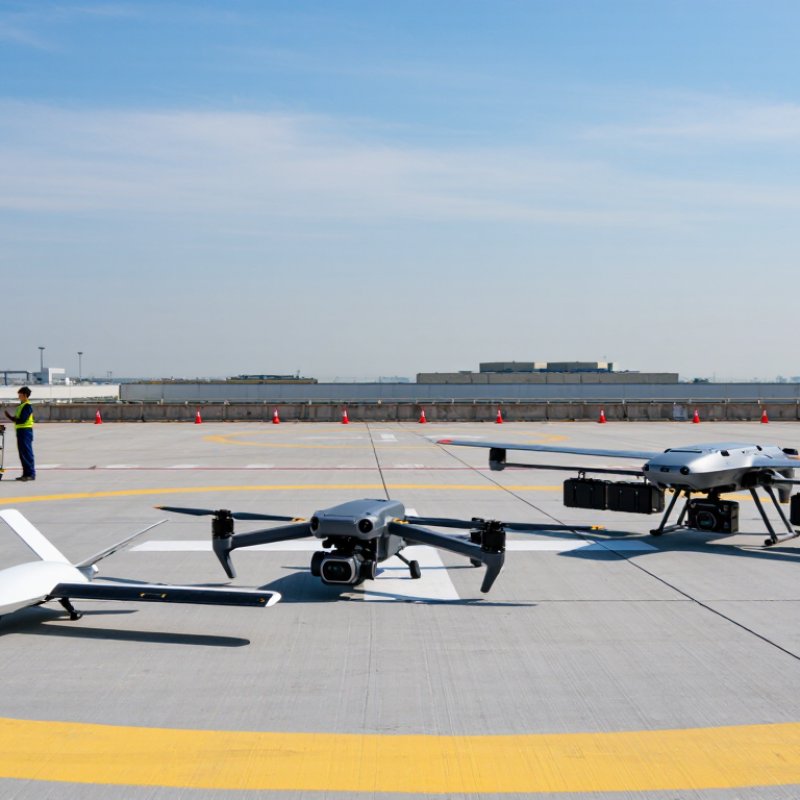
| Multirotor VTOL | Four-, six-, or eight-rotor configuration with vertical lift and hover capability | 1–25 kg | 20–60 minutes | 0.5–10 kg | 2–20 km from the control station, depending on regulations and radio system | Electric battery | US$800–US$15,000 | Inspection, mapping, security patrols, aerial photography, agriculture, and delivery trials | Excellent low-speed control and precise hovering; endurance and payload decrease as operating weight increases |
| Small Fixed-Wing VTOL | Fixed-wing aircraft with separate lift rotors or tilt-rotor propulsion for vertical take-off and landing | 5–25 kg | 1.5–5 hours | 1–5 kg | 50–300 km, subject to battery, airspace, and communications limits | Electric battery, usually with multiple lift motors and one or more cruise motors | US$8,000–US$35,000 | Land surveying, corridor inspection, environmental monitoring, agriculture, and photogrammetry | Longer endurance than a multirotor; requires adequate launch-area planning, flight planning, and recovery procedures |
| Medium Fixed-Wing VTOL | Efficient fixed-wing airframe with dedicated vertical lift system and higher-capacity payload bay | 25–100 kg | 3–12 hours | 5–20 kg | 150–1,000 km theoretical mission distance, depending on fuel, battery, antenna, and local rules | Gasoline engine, hybrid-electric system, or high-capacity battery system | US$35,000–US$120,000 | Large-area surveying, pipeline and power-line inspection, forestry, coastal monitoring, and logistics research | Higher acquisition and maintenance requirements; fuel systems, propulsion integration, and regulatory approval need careful review |
| Hybrid VTOL UAV | Vertical lift rotors combined with a conventional fixed-wing cruise section; lift and cruise systems operate separately | 10–150 kg | 2–10 hours | 2–30 kg | 100–1,000 km, depending on the mission profile and communications architecture | Hybrid-electric, gasoline-electric, or battery-electric propulsion | US$20,000–US$250,000 | Long-range inspection, emergency response, mapping, maritime observation, and remote-area operations | Combines runway-free operation with efficient cruise flight; transition control, redundancy, training, and maintenance are important |
| Tilt-Rotor VTOL | Propellers or nacelles rotate between vertical-lift and forward-flight positions | 10–100 kg | 2–8 hours | 2–20 kg | 100–800 km, subject to configuration, weather, and communications conditions | Electric, gasoline, or hybrid-electric propulsion | US$30,000–US$180,000 | Long-distance inspection, mapping, surveillance, and operations from restricted launch sites | Efficient cruise performance with VTOL capability; transition software, mechanical complexity, and component reliability are critical |
| Heavy-Lift Multirotor VTOL | Eight-rotor or redundant multi-rotor platform designed for high-payload hovering | 25–150 kg | 10–40 minutes | 10–50 kg | 2–15 km for typical working missions | High-voltage electric battery or hybrid-electric propulsion | US$25,000–US$150,000 | Industrial lifting, firefighting support, cargo testing, specialized imaging, and agricultural spraying | Strong hover and lifting performance; battery safety, motor redundancy, ground handling, and local operating permissions are essential |



 08045479132
 Send Inquiry

 Send Inquiry
 Send SMS