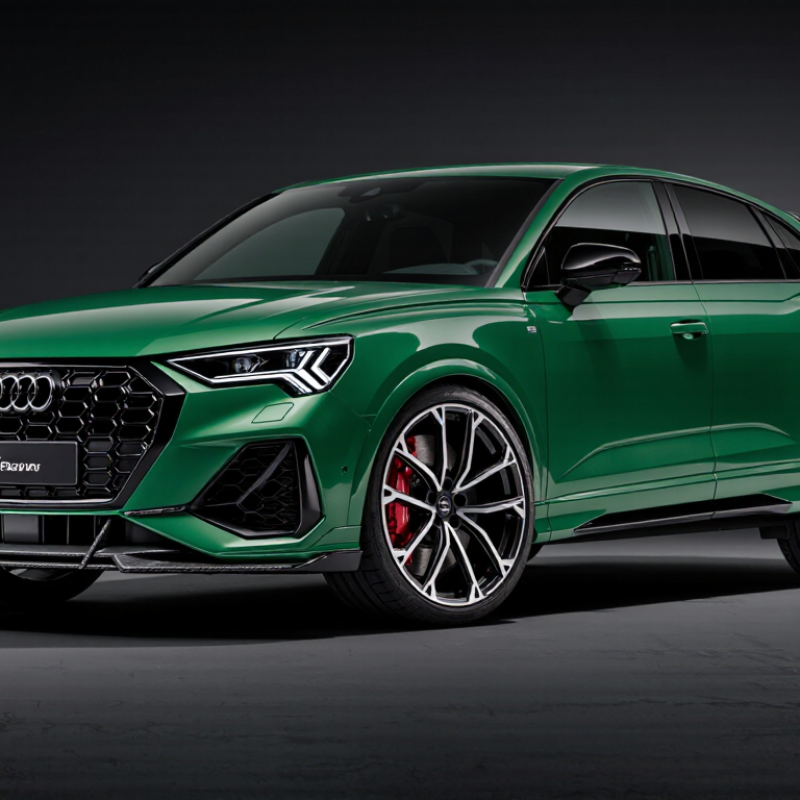
| Front splitter or lower lip | Ground clearance, bumper contours, mounting locations, and exposure to road debris. | ABS, polypropylene (PP), or glass-fiber-reinforced plastic (GFRP). | Injection molding is suited to higher-volume thermoplastic parts; GFRP parts are commonly made using mold-based lay-up. | Check alignment with the bumper, mounting-point consistency, edge finish, and clearance. Confirm fitment for the specific model year and trim. |
| Side skirts | Door and sill clearances, attachment points, vehicle length, and left-to-right symmetry. | ABS, PP, or GFRP. | Thermoplastic parts may be injection molded or thermoformed; composite parts may be laid up in a mold and trimmed. | Test both sides on the intended vehicle configuration; inspect panel gaps, fastener access, and surface consistency. |
| Rear diffuser or lower bumper trim | Rear-bumper geometry, exhaust outlet position, parking-sensor locations, and access to existing fixings. | ABS, PP, or GFRP. | Typically produced by injection molding, thermoforming, or composite lay-up, depending on material and batch size. | Verify exhaust and sensor clearances, secure attachment, and compatibility with the relevant rear-bumper design. |
| Rear spoiler or roof-mounted element | Roof or tailgate shape, visibility, attachment method, and resistance to vibration and weather exposure. | ABS, GFRP, or carbon-fiber-reinforced composite. | Small-batch composite parts are often molded and finished by hand; thermoplastic versions can be formed or injection molded. | Check mounting alignment, fastener security, surface finish, and whether installation requires drilling or other vehicle modification. |
| Digital design and tooling | Vehicle scanning or measured reference surfaces, part boundaries, draft angles, wall thickness, and assembly interfaces. | Not applicable; digital models and production tooling are used. | CAD modeling is commonly followed by prototype review and mold or forming-tool development. | Compare the design against the intended vehicle version and revise the model before committing to production tooling. |
| Prototype and fitment validation | Real-world assembly, tolerances, contact points, and installation sequence. | Prototype material may differ from the final production material. | Prototype parts can be made by CNC machining, 3D printing, vacuum forming, or an early mold sample. | Trial-fit the parts on the target vehicle; check gaps, interference, mounting strength, and repeatability before production approval. |
| Finishing and inspection | Paint or coating compatibility, visible surface quality, edge treatment, and packaging protection. | Material-specific primers, coatings, paint systems, and protective packaging. | Finishing may include trimming, sanding, priming, painting, or clear coating, depending on the material and supplied finish. | Inspect for warping, cracks, uneven finish, sharp edges, missing hardware, and transit damage. Confirm the supplied installation instructions. |



 08045479132

 Send Inquiry


 Send Inquiry
 Send SMS

