| Standard Round Electric Frying Pan | 26–36 cm diameter; approximately 2–5 L cooking capacity | Usually 1,000–1,500 W; commonly adjustable from about 100°C to 240°C | Aluminum body with a non-stick coated interior | Removable thermostat, tempered-glass lid, cool-touch handles, indicator light and detachable power cord | Frying eggs, vegetables, meat, noodles, pancakes and everyday family meals | Verify coating compliance, thermostat accuracy, detachable-control design and local plug configuration |
| Deep Sauté Electric Pan | 28–36 cm diameter; approximately 3–6 L capacity; deeper sides than a standard pan | Usually 1,200–1,800 W; low-to-high heat settings for simmering and frying | Die-cast aluminum or stamped aluminum with a non-stick coating | High side walls, stable base, glass lid, adjustable temperature control and larger cooking volume | Stir-frying, braising, shallow frying, stewing and cooking larger portions | Check wall height, usable base diameter, heat distribution, lid venting and shipping protection |
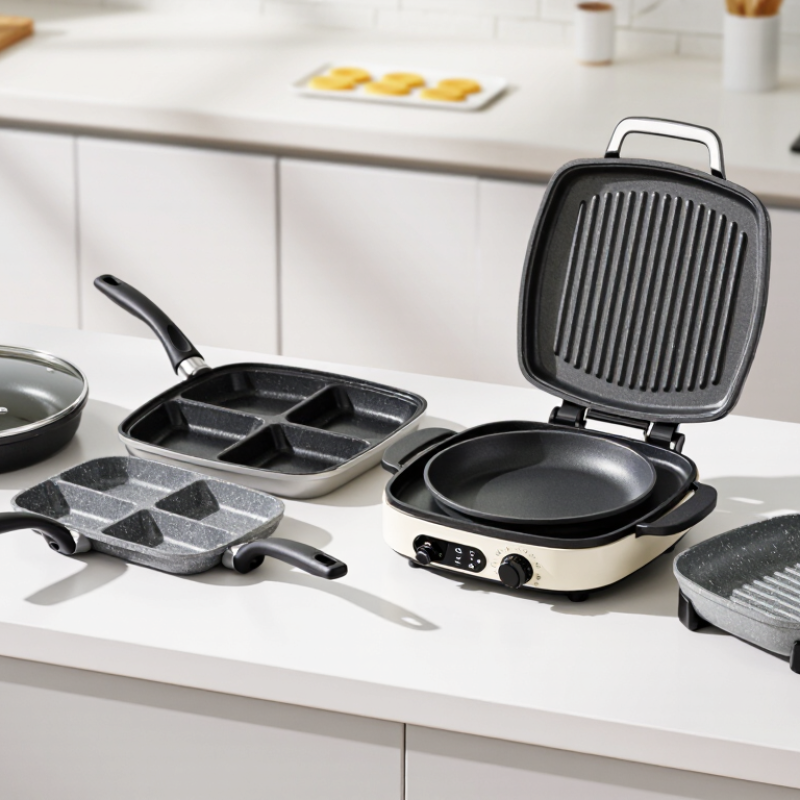
| Divided-Compartment Electric Pan | 28–36 cm overall diameter; commonly 2–4 separate cooking sections | Approximately 1,200–1,800 W; independent or shared temperature control depending on design | Non-stick coated aluminum, often with a molded divider structure | Separate food zones, reduced cross-contact between ingredients, lid options and easy portion control | Breakfast sets, hot pot-style meals, mixed ingredients and simultaneous cooking | Confirm divider sealing, cleaning access, heat balance between sections and whether controls are independent |
| Electric Grill and Griddle Pan | Typical cooking area of 30 × 20 cm to 45 × 30 cm; shallow profile | Commonly 1,200–2,000 W; usually reaches approximately 200°C–240°C | Die-cast aluminum or metal plate with flat, ribbed or reversible cooking surfaces | Large flat surface, grease channel or drip tray, removable plate on some models and adjustable thermostat | Grilling meat, seafood, sandwiches, pancakes and teppanyaki-style cooking | Check plate thickness, temperature recovery, grease drainage, dishwasher guidance and countertop stability |
| Electric Hot Pot and Frying Pan Combo | Approximately 28–36 cm diameter; commonly 3–5 L capacity | Usually 1,300–2,000 W; low simmer to high frying settings | Non-stick coated aluminum or stainless-steel cooking vessel, depending on model | Deep vessel, soup and frying functions, glass lid, removable temperature probe and larger volume | Hot pot, soup, pasta, deep frying and shared-table cooking | Review maximum-fill markings, boil-dry protection, handle strength, drainage design and electrical safety documentation |
| Compact Personal Electric Pan | 16–24 cm diameter; approximately 0.8–2 L capacity | Commonly 600–1,000 W; basic low, medium and high settings | Aluminum or stainless-steel body; non-stick coating is common | Lightweight construction, small footprint, simple controls and quick heating for small portions | Dormitories, offices, single-person households, travel and light meal preparation | Check energy rating, cord length, portability, minimum order packaging and suitability for the target market |
| Stainless-Steel Electric Frying Pan | 26–36 cm diameter; approximately 2–5 L capacity | Generally 1,000–1,800 W; adjustable thermostat on most full-size models | Stainless steel or stainless-steel-clad cooking surface; some models combine aluminum for heat spreading | Higher scratch resistance than coated surfaces, durable body, glass lid and long service life when properly maintained | Searing, browning, stir-frying and buyers seeking a coating-free cooking surface | Confirm steel grade, handle insulation, surface flatness, cleaning instructions and resistance to discoloration |



 08045479132
 Send Inquiry

 Send Inquiry
 Send SMS
