| Farm assessment | Building layout | System layout depends on house length and width, column positions, doors, service areas, and equipment access. | Provide dimensioned drawings, clear internal measurements, and photographs where available. |
| Capacity planning | Bird numbers and housing design | Required capacity should be planned alongside applicable local welfare rules, flock management practices, and available floor area. | Confirm target bird count, production type, applicable regulations, and preferred cage configuration. |
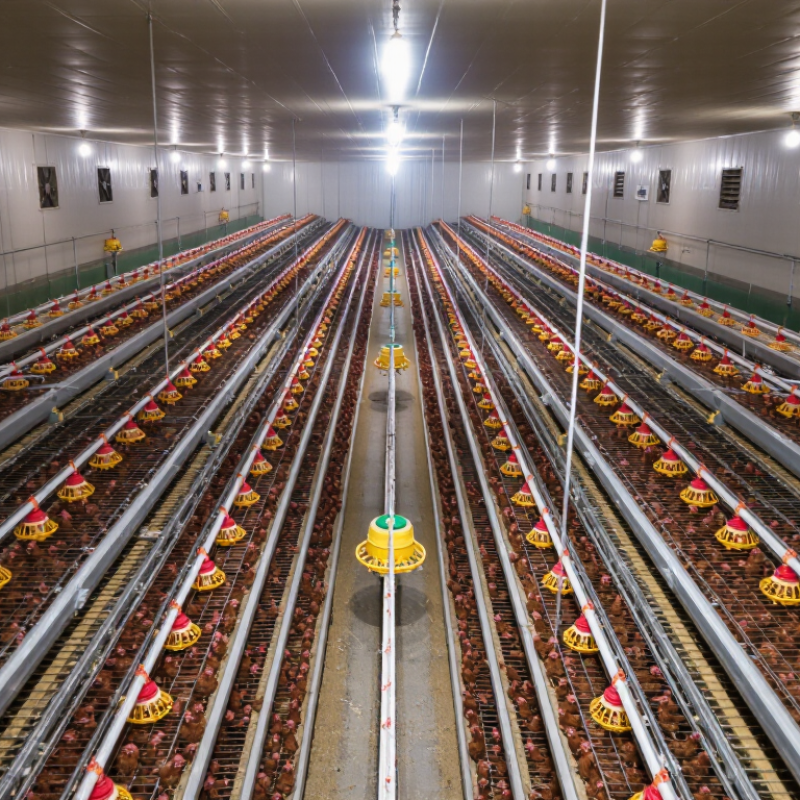
| Equipment selection | Cage configuration | Layer systems may use different tier arrangements and cage dimensions. The selected design affects house layout, access, and maintenance. | Review cage drawings, tier count, aisle widths, and access for inspection and bird handling. |
| Equipment selection | Feeding and watering | Feed delivery and nipple-drinker lines are commonly integrated with layer cage systems; the layout should support routine operation and cleaning. | Specify feed delivery method, water supply details, drinker-line layout, and required control equipment. |
| Equipment selection | Egg collection | Egg belts and collection conveyors can be configured to move eggs toward a collection or packing area. | Confirm conveyor direction, transfer points, packing-room location, and the required level of automation. |
| Equipment selection | Manure handling | Manure belts or other removal arrangements should be coordinated with the building layout and the farm’s handling plan. | Confirm removal frequency, discharge location, belt arrangement, and any planned manure-drying equipment. |
| Quotation and order | Commercial scope | A quotation should identify the included equipment, quantities, technical specifications, packaging, and any excluded items. | Check whether installation, commissioning, freight, taxes, and spare parts are included or quoted separately. |
| Production planning | Delivery schedule | Manufacturing and delivery schedules vary with system configuration, order size, production capacity, and shipping arrangements. | Request a project-specific schedule covering drawing approval, production, dispatch, and estimated transit time. |
| Pre-installation | Site readiness | The house should be prepared with suitable foundations or supports, power and water connections, and clear access for equipment handling. | Review installation drawings and confirm site measurements and utility requirements before equipment arrives. |
| Installation | Assembly and alignment | Installation typically involves assembling and leveling frames, fitting cage components, and aligning feeding, watering, egg, and manure systems. | Agree who is responsible for labor, tools, lifting equipment, installation supervision, and safety procedures. |
| Commissioning | System checks | Before flock placement, test moving equipment and inspect belt tracking, water flow, feed delivery, electrical connections, and safety guards. | Document test results, operator training, adjustments, and any outstanding items. |
| After-sales support | Maintenance and spare parts | Routine inspection and timely replacement of worn components can help maintain reliable operation. | Request maintenance guidance, a recommended spare-parts list, warranty terms, and the process for technical support. |



 08045479132

 Send Inquiry


 Send Inquiry
 Send SMS

