Why Choose Centrifugal Fans for Your Industrial Needs?
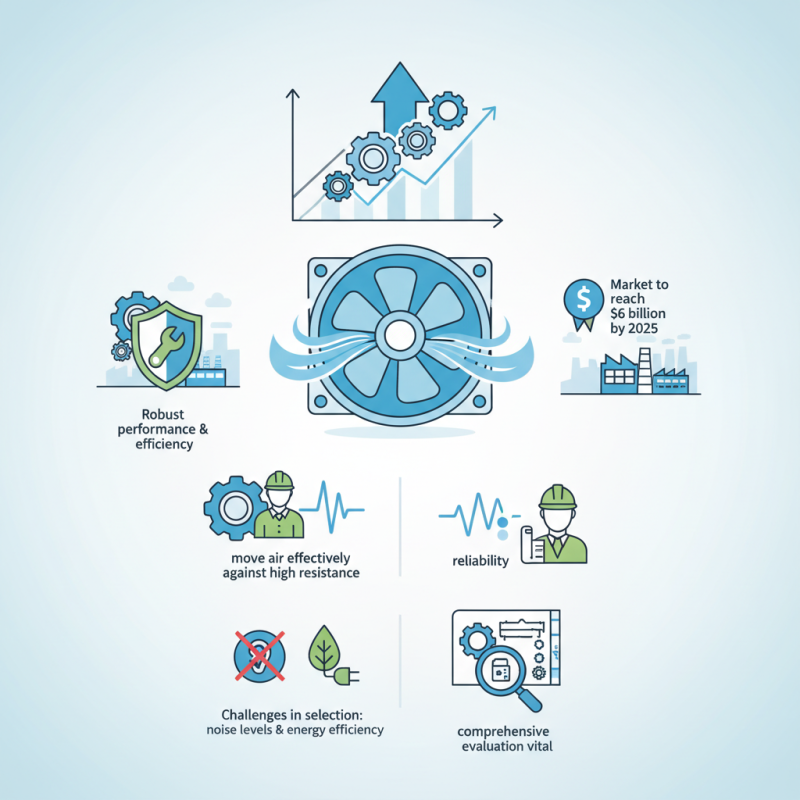
In the ever-evolving landscape of industrial applications, choosing the right ventilation solution is critical. Centrifugal Fans stand out due to their robust performance and efficiency. According to a report by the Industrial Fan Association, the market for centrifugal fans is projected to reach $6 billion by 2025, indicating strong demand. This growth underscores their importance in sectors like manufacturing and HVAC.
Centrifugal fans are known for their ability to move air effectively against high resistance. David Thompson, an industry expert from the Fan Engineering Group, emphasizes their reliability: "Centrifugal fans are crucial for applications requiring consistent airflow under challenging conditions." This statement highlights their role in maintaining optimal operational environments.
While centrifugal fans offer numerous benefits, challenges in selection and maintenance persist. Companies must consider factors like noise levels and energy efficiency. Identifying the right specifications can be complicated, leading to potential oversights. Therefore, a comprehensive evaluation is vital before making an investment in centrifugal fans.
Advantages of Centrifugal Fans Over Other Fan Types in Industry
Centrifugal fans are essential in various industrial applications. They excel in moving large volumes of air with high efficiency. According to the Industrial Fan Association, these fans can achieve an efficiency level of over 70%. This is particularly beneficial in systems requiring consistent airflow for processes such as cooling, ventilation, and dust control.
One notable advantage of centrifugal fans is their ability to handle particulates in the air. Unlike axial fans, they are designed to cope with dust-laden atmospheres without a significant drop in performance. A report by the American Society of Heating, Refrigerating and Air-Conditioning Engineers emphasizes that centrifugal fans maintain pressure stability, allowing for reliable operation under fluctuating conditions. In environments like manufacturing plants, this stability is crucial.
Moreover, centrifugal fans tend to offer quieter operation compared to other fan types. Noise levels are often minimized due to their design. Yet, some industries may overlook this factor, leading to potential employee dissatisfaction. For example, the sound generated by high-speed fans could impact concentration. Balancing performance and noise levels is a challenge that industrial planners must address effectively.
Why Choose Centrifugal Fans for Your Industrial Needs? - Advantages of Centrifugal Fans Over Other Fan Types in Industry
| Feature | Centrifugal Fans | Axial Fans | Blower Fans |
| Airflow Direction | Radial (90-degree turn) | Parallel to axis | Radial or axial |
| Pressure Generation | High static pressure | Low static pressure | Moderate to high |
| Efficiency | High efficiency at varying speeds | Best at constant high volume | Varies based on design |
| Application Versatility | Widely used in diverse industries | Best for ventilating warehouses | Specific to cooling and drying processes |
| Noise Level | Quieter operations | Louder due to blade design | Moderate noise based on speed |
| Maintenance | Low maintenance with robust design | Requires regular checks | Moderate maintenance needs |
Key Applications of Centrifugal Fans in Various Industrial Sectors
Centrifugal fans are integral in various industrial sectors due to their efficiency and versatility. They excel in applications requiring airflow movement at high pressures. Industries like HVAC, chemical processing, and waste management heavily rely on these fans. For instance, in HVAC systems, centrifugal fans regulate indoor air quality. They create consistent airflow, ensuring comfort and safety for occupants.
In chemical processing, they manage ventilation to control harmful substances. This ensures compliance with safety standards while protecting workers' health. In waste management, centrifugal fans effectively transport gases and particles. They play a crucial role in air filtration, helping to maintain a clean environment.
Despite their advantages, choosing the right fan is a complex decision. Factors like airflow requirements, pressure drops, and energy consumption can be overwhelming. Organizations must weigh these elements carefully. This reflection is vital for achieving optimal performance. Tailoring fan selection to specific industrial needs is not just beneficial; it’s necessary for sustainable operations.
Performance Metrics: Airflow, Pressure, and Efficiency of Centrifugal Fans
Centrifugal fans play a vital role in many industrial applications. They are designed to move air efficiently. Performance metrics like airflow, pressure, and efficiency are crucial in evaluating their effectiveness. Understanding these metrics helps in choosing the right fan for specific needs.
Airflow measures the volume of air the fan can move. A higher airflow indicates better ventilation for large spaces. However, in some cases, achieving high airflow may compromise pressure levels. Pressure, on the other hand, refers to the fan's ability to overcome resistance in the system. Balancing these two factors is essential. Efficiency is about how well the fan converts energy into airflow. Higher efficiency reduces operational costs.
Still, achieving optimal performance isn’t straightforward. Environmental factors can affect fan efficiency. Changes in temperature and humidity can lead to variable performance. Continuous monitoring and adjustment may be necessary to maintain standards. Users must also consider noise levels and installation space. Balancing performance with operational demands can be challenging. Through careful planning, industrial operations can find the right centrifugal fan to meet their specific requirements.
Cost Analysis: Long-term Savings with Centrifugal Fan Installation
Centrifugal fans are known for their efficiency and robustness in industrial applications. When considering installation, cost is often a primary concern. However, a closer look at the long-term savings reveals a compelling case. While initial costs may be higher than other types of fans, the energy savings can offset this investment over time. The operational efficiency of centrifugal fans translates to reduced energy consumption, contributing to lower operational costs.
Additionally, maintenance factors play a significant role in cost analysis. Centrifugal fans are generally easier to maintain. Their design allows for quick access to internal components, reducing downtime during maintenance. This streamlined upkeep promotes efficient production cycles. A business can save substantially when equipment runs smoothly without frequent and costly repairs.
Moreover, the lifespan of these fans is notable. Durable construction often extends their operational life beyond many alternatives. Investing in a reliable centrifugal fan can mean fewer replacements and lower long-term expenditures. Yet, potential buyers must assess their specific operational needs carefully. Performance can vary based on application requirements, so it's essential to evaluate all options thoroughly. Balancing initial investments with future savings is crucial for informed decision-making.
Innovations and Trends in Centrifugal Fan Technology for Industrial Use
Centrifugal fans play a vital role in industrial applications. Recent innovations in this technology focus on enhancing performance and efficiency. Modern designs utilize advanced materials that reduce weight while improving durability. These fans can now operate quietly, minimizing noise pollution in industrial settings.
Tips: Regular maintenance is key. A well-maintained fan will last longer. Check for wear and tear frequently. Keep the fan clean to prevent dust buildup.
New trends also highlight energy efficiency. Many centrifugal fans are now designed to consume less power without sacrificing airflow. Variable frequency drives (VFDs) allow users to adjust fan speed based on demand, leading to significant energy savings.
Tip: Invest in smart controls. They can automate adjustments. This reduces human error. Evaluating performance data is essential for optimizing efficiency. Always seek feedback on the fan’s operation.
Trends in Centrifugal Fan Efficiency (2021-2023)



 08045479132
 Send Inquiry

 Send Inquiry
 Send SMS