| Phillips-drive wafer-head machine screw | Phillips recess; machine thread; usually a blunt point | Carbon steel with zinc plating; stainless steel options | Joining metal parts with a tapped hole or a nut, such as enclosures, brackets, and light assemblies | Broad, low-profile head spreads bearing pressure over a wider area than a narrow-head screw; widely available | Requires a prepared threaded hole or nut. Use the correct driver size to reduce cam-out and recess wear. |
| Combination-drive wafer-head machine screw | Typically a Phillips and slotted combination recess; machine thread | Steel with common protective coatings; stainless steel options | General assembly and maintenance where either a compatible Phillips or flat-blade driver may be used | Offers more than one driver option and retains the low-profile, wide-bearing head shape | The recess is not a substitute for choosing a properly fitting driver. Confirm the thread size and pitch match the mating hole. |
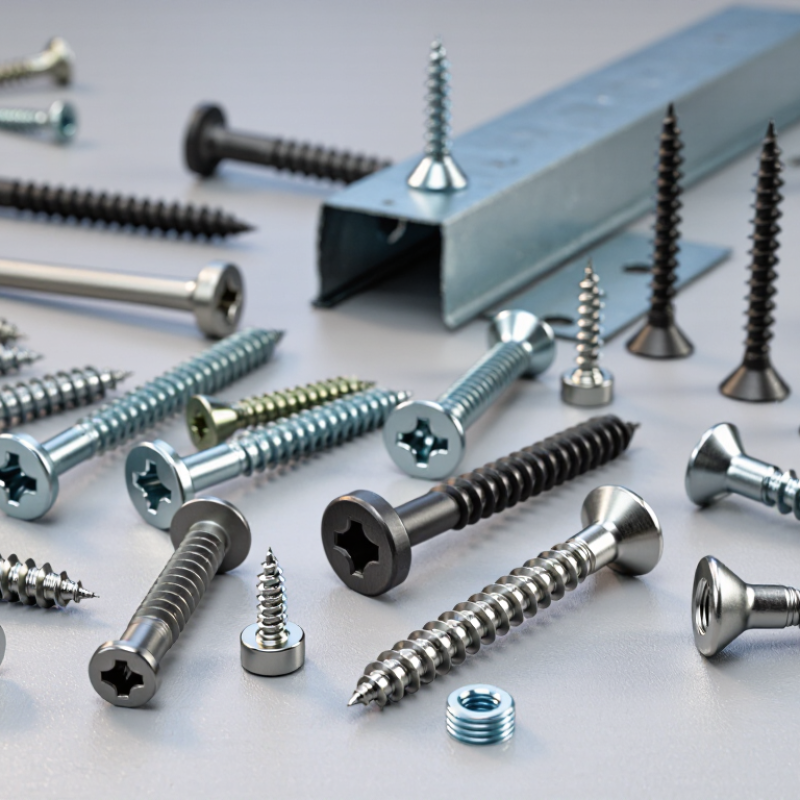
| Torx-drive wafer-head screw | Six-lobe star recess; available in machine-thread and sheet-metal configurations | Carbon steel with plated finishes; stainless steel options | Production or service work where controlled installation and a matching driver are available | The matching six-lobe driver provides good engagement and can help reduce cam-out compared with many conventional cross-recess drives | Requires the correct Torx bit size. Check whether the screw is a machine screw or a self-tapping type before ordering. |
| Self-tapping wafer-head screw | Often Phillips or Torx; sharp or blunt point depending on the design; forms or cuts mating threads | Hardened carbon steel, often with a corrosion-resistant coating; stainless steel variants are available | Attaching thin sheet metal or suitable plastics when a pre-tapped hole is not provided | Can create a mating thread during installation, reducing the need for pre-tapping in compatible materials | “Self-tapping” covers different thread designs. Select a point and thread suited to the material, and use a pilot hole when specified. |
| Self-drilling wafer-head screw | Usually Phillips or Torx; drill-point tip cuts its own pilot hole and threads | Hardened steel with protective coatings; stainless options depend on the design and application | Sheet-metal fastening where the screw’s drilling capacity is suitable for the combined material thickness | Can combine drilling and fastening in one operation, avoiding a separate pilot-drilling step within its rated capacity | Check the manufacturer’s material-thickness and drilling-capacity specifications. It is not suitable for every metal thickness or substrate. |
| Stainless-steel wafer-head screw | Drive and thread vary; commonly available as machine or self-tapping styles | Common grades include 304 for general corrosion resistance and 316 for improved resistance in many chloride-bearing environments | Outdoor, damp, or washdown settings when the selected grade is appropriate for the exposure | Provides corrosion resistance without relying solely on a surface coating | Grade selection depends on the environment. Stainless fasteners can gall during installation; suitable speed, lubrication, and driver fit may help. |
| Security-drive wafer-head screw | May use a pin-in-Torx or another tamper-resistant recess; thread and point vary | Steel with protective finishes; stainless steel versions may be available | Panels, equipment covers, and fixtures where casual removal should be discouraged | Requires a matching security bit, making removal less convenient with ordinary tools | It is a deterrent rather than a high-security barrier. Confirm tool availability and ensure the selected thread suits the substrate. |



 08045479132

 Send Inquiry


 Send Inquiry
 Send SMS

