| Fiberglass | A molded or smooth-skin door, often built around an insulated core. | Generally resists moisture, does not rust, and can be finished to resemble wood grain. Insulated models can help limit heat transfer. | Appearance, insulation, and durability vary by construction and finish. Deep damage may be difficult to repair invisibly. | Main entrances, side doors, and locations exposed to changing weather. | Separates indoor and outdoor spaces, supports weather protection, and can provide privacy and access control. |
| Steel | A steel-skin door, commonly made with an insulated core and a protective coating. | Offers a sturdy surface and is often available as an insulated entry-door option. Smooth finishes can be relatively simple to maintain. | The finish can be scratched or dented, and exposed steel may rust if protective coatings are damaged. Performance depends on the full door-and-frame assembly. | Front, side, and service entrances where a durable, practical door is needed. | Provides a closing barrier, helps control access, and can reduce drafts when correctly fitted and weather-sealed. |
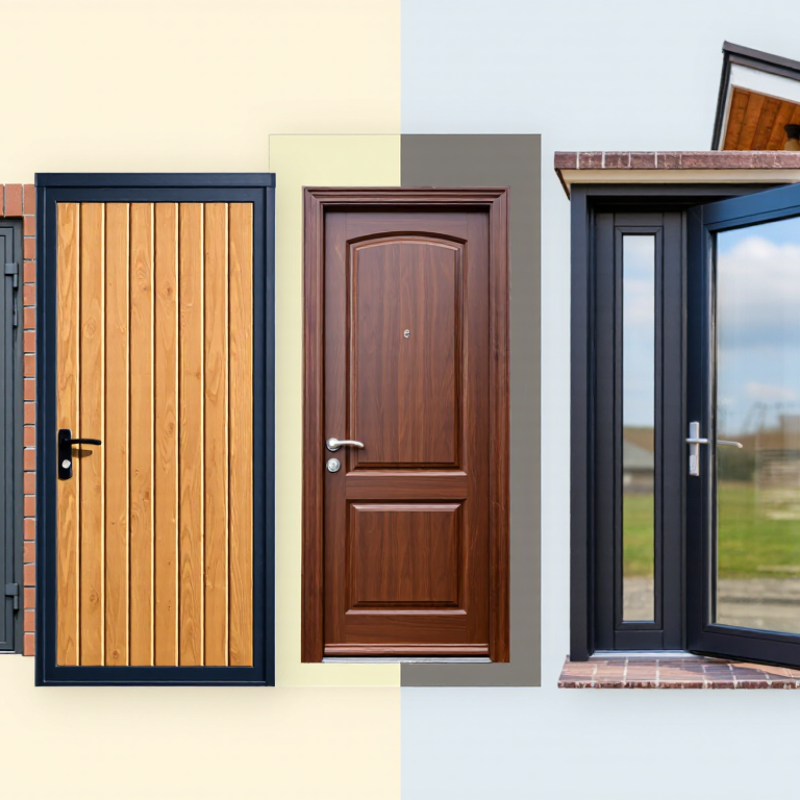
| Solid Wood | A door made primarily from solid timber, with construction varying by species and design. | Offers a natural appearance and can be cut, repaired, or refinished. A substantial door can provide a traditional entrance feel. | May expand or contract with changes in moisture and temperature. Requires suitable finishing and periodic maintenance to help protect it from weather. | Traditional or design-focused entrances, particularly where regular upkeep is acceptable. | Defines an entrance, provides privacy, and can contribute to the architectural character of a home. |
| Wood-Clad | A door combining a wood interior surface with a weather-resistant exterior cladding, depending on the product design. | Can provide a wood appearance indoors while the exterior cladding helps shield the wood from weather exposure. | Materials, joints, and finishes differ across designs. Inspect the exterior surface and maintain it according to its care requirements. | Main entrances where interior wood appearance and exterior weather protection are both priorities. | Creates a secure, weather-separating entrance while supporting interior and exterior design preferences. |
| Aluminum-Framed Glazed | A door with an aluminum frame and one or more glass panels. | Allows daylight into the home and can offer a slim-framed, contemporary appearance. Aluminum does not rot. | Thermal performance depends on frame design, glazing, and any thermal break. Glass choice affects privacy, heat gain, and safety. | Patio, garden, or other entrances where daylight and outdoor views are desired. | Provides passage and weather separation while admitting light; glazing can also preserve views or provide privacy, depending on its type. |
| uPVC | A door made with unplasticized polyvinyl chloride profiles, often incorporating insulated panels or glazing. | Does not rust or rot and typically needs no paint. Multi-chamber profiles and insulated panels are used in some designs. | Strength, finish options, and thermal performance depend on the profile, reinforcement, glazing, and installation. Damaged finishes may be hard to refinish. | Residential entrances and patio doors where low routine maintenance is preferred. | Closes off the building envelope, allows controlled entry, and may provide daylight when fitted with glazing. |
| Composite | A door made from a combination of materials, which may include a reinforced frame, insulating core, and exterior skins. | Can combine structural support, insulation, and weather-resistant surfaces in one assembly. | “Composite” covers different constructions, so material details and tested performance should be checked for each door. | Main entrances where a balance of appearance, insulation, and durability is sought. | Can provide an entrance barrier, weather protection, privacy, and access control; exact performance depends on its construction. |



 08045479132

 Send Inquiry


 Send Inquiry
 Send SMS

