| Manual tabletop platen press | A hand lever or comparable manual mechanism brings a flat platen against the type or printing plate. | Small letterpress jobs such as cards, stationery, labels, and short-run proofs, subject to the press’s chase and print-area limits. | Does not require a powered drive; offers direct operator control and can be suitable for low-volume work. | Check the maximum printing area, platen alignment, impression adjustment, compatible type or plate height, and availability of replacement parts. | Studios, workshops, and printers producing small batches or learning platen presswork. |
| Motorized tabletop platen press | A powered drive cycles the platen; feeding and removing sheets may still require manual operation, depending on the design. | Repeated small-format jobs where a powered press is appropriate and the operator can follow the machine’s safety and feeding procedures. | Reduces the need to operate the press by hand for each cycle and may support a steadier production rhythm. | Confirm power requirements, guarding and emergency-stop provisions, operating instructions, service support, and whether feeding is manual or automated. | Print shops needing powered operation for recurring short-run work. |
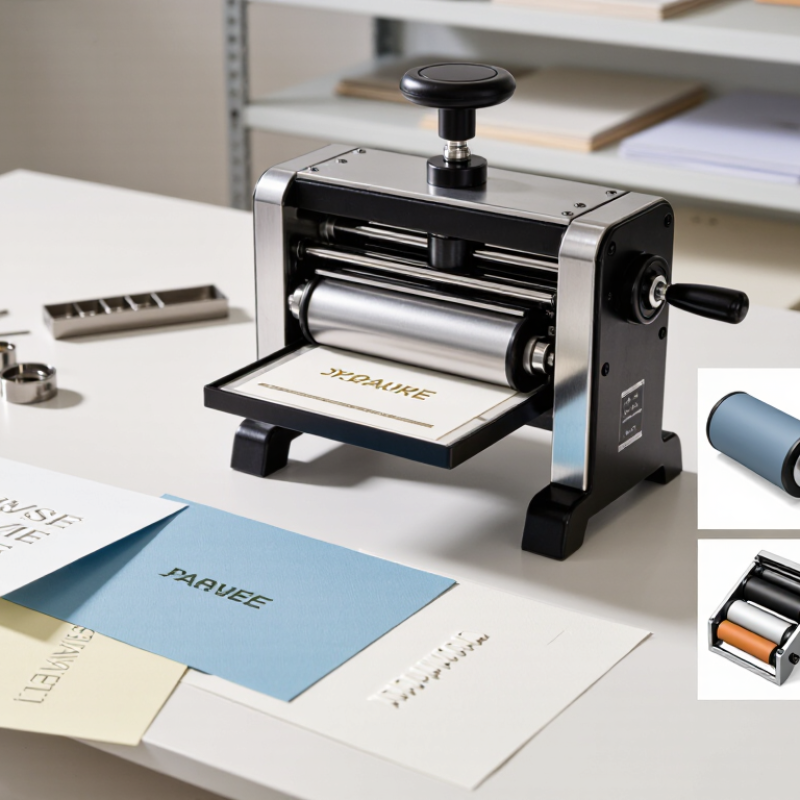
| Tabletop flatbed proof press | Type or a plate is secured on a flat bed, and a roller or pressure mechanism transfers ink to the paper. | Proofing type and relief plates, testing layouts, and making small editions where the press’s format and pressure capacity are sufficient. | Provides a practical way to test ink, type, and impression without setting up a production-size press. | Check bed dimensions, roller condition and adjustment, pressure consistency, and compatibility with the intended paper and plate materials. | Printers and educators focused on proofing, experimentation, or modest-format relief printing. |
| Compact cylinder proof press | A cylinder rolls across a flat bed carrying the type or plate to make an impression on the sheet. | Relief-printing proofs and small-format work; actual capacity depends on the bed, cylinder, and machine construction. | The rolling impression can be useful for proofing and may suit work that benefits from a traveling cylinder rather than a closing platen. | Verify the usable bed area, cylinder condition, pressure adjustment, machine footprint, and whether the model is genuinely sized for tabletop use. | Users who need a compact proofing setup and have confirmed that the model fits their workspace and print requirements. |



 08045479132

 Send Inquiry


 Send Inquiry
 Send SMS

