10 Best Stainless Steel Syringes for Global Buyers?
Choosing reliable Stainless Steel Syringes requires more than comparing prices or polished product photographs. Global buyers must examine construction, application suitability, supplier transparency, and documented quality controls. A syringe used for laboratory sampling may need different performance than one designed for chromatography, dispensing, or industrial testing.
This guide reviews ten strong options for international purchasing decisions. Each product deserves attention for its stainless steel grade, barrel finish, plunger movement, seal design, and connection compatibility. Small details matter. A rough plunger can disturb precise measurements. A weak seal may cause leakage, contamination, or inconsistent results. Buyers should also check capacity ranges, dead volume, cleaning procedures, packaging, and replacement-part availability.
Supplier evidence matters equally. Look for clear technical drawings, batch information, inspection records, and responsive after-sales support. Recognized certifications can help, but certification claims should be verified rather than accepted automatically. Import requirements, labeling rules, and destination-country standards may also affect the final purchase. A low quoted price can become expensive after shipping, customs, rejected samples, or repeated replacement orders.
The ranking is practical, not absolute. Performance may change with temperature, chemicals, frequency of use, and operator technique. Some products may appear excellent but provide limited documentation. That weakness should not be ignored. Real-world purchasing often involves compromises. The best choice is the syringe that matches the intended application, compliance needs, and service expectations with dependable evidence behind it.
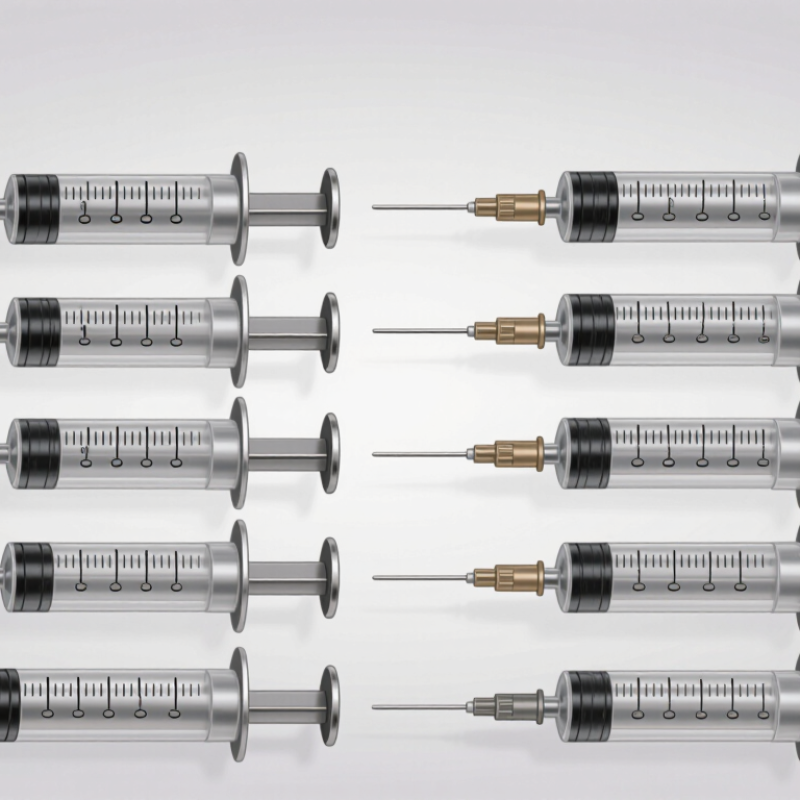
What Stainless Steel Syringes Are and How They Work
Stainless steel syringes are precision tools with a metal barrel, plunger, and calibrated tip. They are designed to measure and transfer liquids accurately. Compared with disposable plastic syringes, they usually resist heat, pressure, and repeated cleaning better. However, performance depends on the alloy, seal material, and manufacturing tolerance.
The plunger creates pressure inside the barrel. Pulling it back draws liquid through the needle or fitting. Pushing it forward moves the liquid through the outlet in a controlled volume. A secure connection helps prevent leaks, while clear graduations support accurate measurement. Some models use a Luer-lock fitting, and others use specialized tips for laboratory or industrial equipment.
In procurement work, I check the syringe’s volume range, dead space, seal compatibility, and sterilization instructions. A stainless steel body alone does not guarantee safe reuse. Some seals cannot tolerate high temperatures or aggressive chemicals. Users should also confirm corrosion resistance, surface finish, and calibration records. Small differences matter.
Cleaning can be difficult around the tip and plunger seal. Residue may remain unseen. For this reason, validated cleaning procedures are important in professional settings. Buyers should request material certificates, dimensional data, and independent quality documentation. Supplier claims deserve verification, especially when products cross borders.
How to Evaluate the 10 Best Stainless Steel Syringes
Evaluating the 10 best stainless steel syringes starts with intended use, not appearance. Check the barrel grade, needle connection, volume markings, and resistance to repeated sterilization. ISO 7886-1:2017 provides useful requirements for syringe performance, including leakage, dead space, and scale readability. A syringe may look precise but still deliver inconsistent volumes. Test several units with a calibrated balance or liquid measurement system. Small errors matter.
Material quality needs closer inspection. Surgical-grade stainless steel should resist corrosion after autoclave cycles, detergent exposure, and drying. Ask suppliers for material certificates, sterilization validation, dimensional inspection records, and batch traceability. WHO’s 2022 Global Report on Infection Prevention and Control reported healthcare-associated infections in about 7 of 100 acute-care patients in high-income settings, and 15 of 100 in low- and middle-income settings. This statistic does not prove that syringes caused those infections. Still, it shows why cleanability and documented processing deserve serious attention. Look for smooth internal surfaces, clear graduations, secure plunger movement, and minimal residual liquid. Test them in real workflow conditions. Finger fatigue, slippery gloves, and poor visibility can expose weaknesses that laboratory checks miss. Price alone is a poor filter. Reliability is harder to see.
Choosing the Right Stainless Steel Syringe for Global Applications
10 Best Stainless Steel Syringes for Global Buyers?
Choosing the Right Stainless Steel Syringe for Global Applications
Global buyers should match syringe design with the working environment. Laboratory dosing, sampling, and industrial fluid transfer each require different specifications. Stainless steel grade matters, especially in humid or chemically demanding locations. A smooth barrel reduces residue buildup. A well-fitted plunger supports steady movement and repeatable dosing. Small details matter.
Check the connection type, volume range, and measurement markings before ordering. Luer-lock fittings can improve security during routine handling. Clear calibration marks help operators avoid reading errors. For repeated use, inspect the seal after cleaning and sterilization. A syringe may look strong but still leak under pressure. Request material certificates, dimensional records, and batch traceability from the supplier. These documents support quality checks across borders.
Packaging also deserves attention. Moisture-resistant protection helps during long-distance shipping and storage. Buyers should confirm sterilization methods, shelf-life data, and regional compliance requirements. Standards differ between countries, and translated documents may be necessary. Do not rely only on polished product images. Ask for sample testing, especially when fluid viscosity or temperature changes. A practical evaluation may reveal stiff movement, unclear markings, or awkward cleaning access. Some specifications are easy to overlook. That is where avoidable costs begin. Reliable suppliers should answer technical questions clearly, without promising more than their test data supports.



 08045479132

 Send Inquiry


 Send Inquiry
 Send SMS

