Best Microscope Camera for Clear Images and Easy Use?
The choice of a Microscope Camera plays a vital role in scientific research and education. A recent report by MarketsandMarkets indicates that the global microscope camera market is expected to reach $400 million by 2025. This data highlights the growing importance and demand for high-quality imaging solutions in various fields.
When selecting a Microscope Camera, clarity and ease of use are crucial. Many researchers face challenges with complex software and inadequate imaging quality. In fact, over 30% of users express dissatisfaction due to these issues. A user-friendly camera enhances productivity and improves research outcomes.
Recognizing the need for reliable tools, it's essential to consider both specifications and user feedback. Advanced features must be balanced with usability. While some options provide excellent image clarity, they may be hard to operate. Making the right choice requires careful evaluation of various models and their unique benefits.
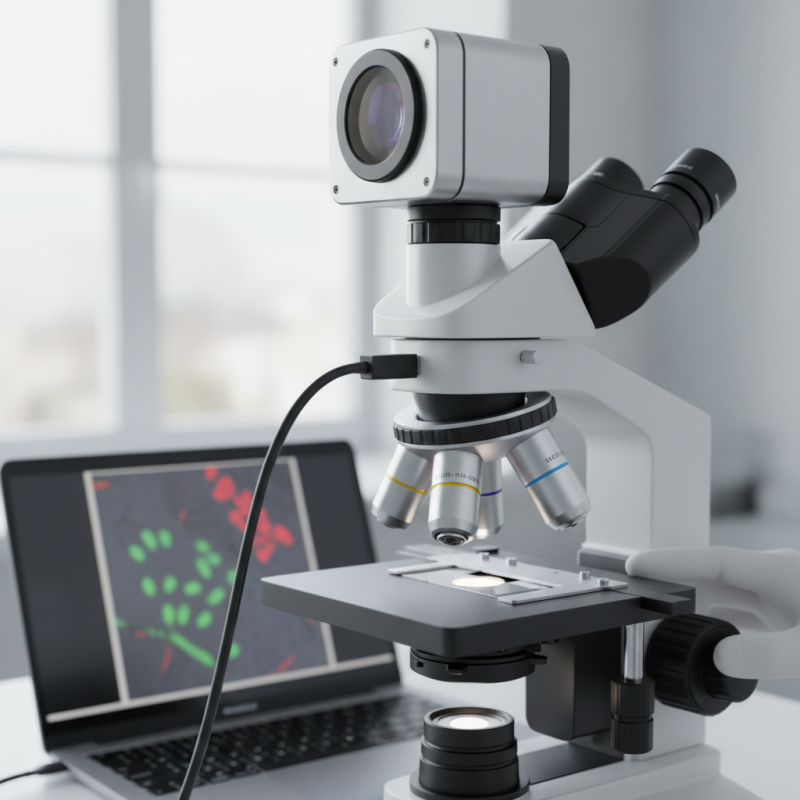
Overview of Microscope Cameras and Their Applications
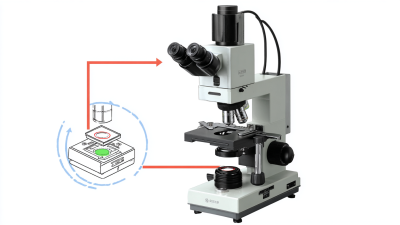
Microscope cameras play a crucial role in scientific research and education. They enable users to capture clear images of specimens, making analysis easier and more effective. According to a recent report by Market Research Future, the microscope camera market is projected to grow significantly, driven by advancements in digital imaging technology.
These cameras are used in diverse fields, including biology, materials science, and manufacturing. A study from the Journal of Microscopy highlighted that digital microscopes can increase productivity by up to 30% in laboratory settings. Users appreciate the ability to share images instantly, facilitating collaboration among researchers. However, not all microscope cameras provide the same clarity or ease of use.
When selecting a microscope camera, consider resolution and compatibility with your microscope. High-resolution images enhance detail, aiding in precise analysis. It's also important to check software support for capturing and analyzing images.
Tip: Always test a camera with your microscope before purchase.
Another critical aspect is lighting. Poor lighting can obscure details, even with a top-quality camera. Experimenting with different lighting techniques can yield better results, revealing hidden features in specimens.
Remember, having the right tools is essential, but understanding how to use them effectively is equally important.
Key Features to Consider When Choosing a Microscope Camera
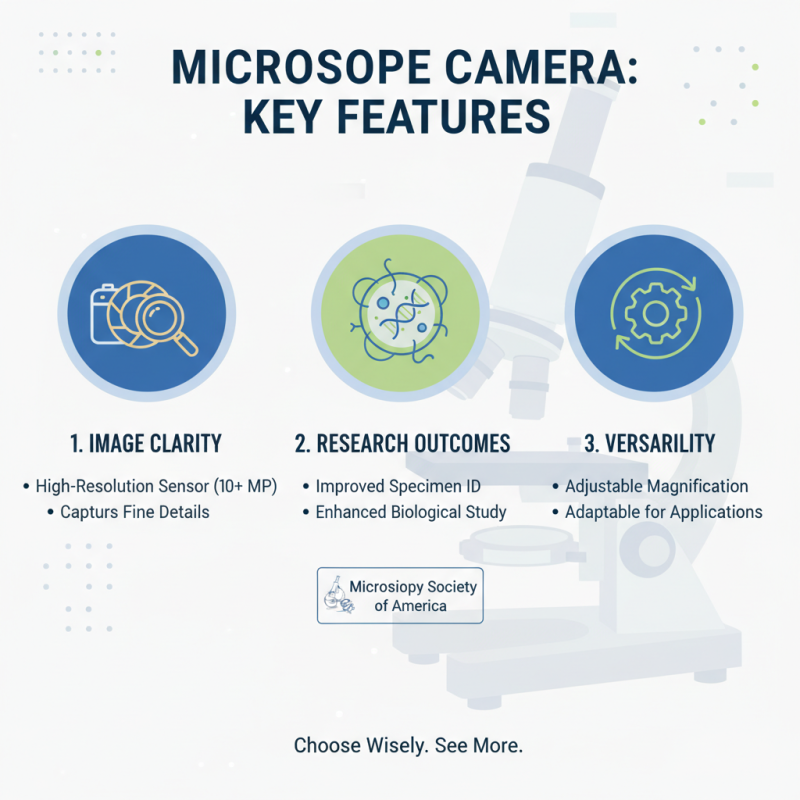
When selecting a microscope camera, clarity of images is crucial. High-resolution sensors, like those with 10 megapixels or more, can capture intricate details. A report by the Microscopy Society of America emphasizes that resolution enhances identification of biological specimens, improving research outcomes. A camera with adjustable magnification settings also offers versatility for different applications.
User-friendly software is another key feature. Intuitive interfaces allow both beginners and experts to navigate easily. Research indicates that over 70% of researchers prefer software that simplifies image capture and editing. Look for cameras that support various file formats for seamless integration into existing workflows.
Moreover, consider the compatibility of the camera with different microscope models. Many technicians encounter challenges due to incompatible systems. Access to comprehensive technical support can alleviate frustration. A study showed that 65% of users value responsive customer service when facing installation issues. Clear guidelines and tutorials can enhance user experience.
Top Microscope Cameras for Exceptional Imaging Quality
When choosing the top microscope cameras, clarity and ease of use are paramount. These cameras play a crucial role in various fields, including education, research, and quality control in industries. A good microscope camera captures detailed images, revealing structures that the naked eye cannot see. This can significantly enhance understanding and analysis.
Look for models that offer high resolution and user-friendly interfaces. A camera with adjustable settings allows for better adaptability to different specimens. Additionally, a seamless connection to computers or mobile devices can streamline the workflow. Many users appreciate integrated software that simplifies image editing.
However, not all options are perfect. Some cameras may struggle in low-light conditions, affecting image quality. Additionally, complicated setups can lead to frustration, especially for those new to microscopy. It's essential to review user feedback and product specifications carefully. Each camera has its pros and cons, making it vital to choose one that fits your specific needs and expertise.
Best Microscope Camera for Clear Images and Easy Use
| Camera Model |
Max Resolution |
Sensor Type |
Connectivity |
User Rating |
Price Range |
| Model A |
12 MP |
CMOS |
USB 2.0 |
4.5/5 |
$150 - $200 |
| Model B |
18 MP |
CMOS |
Wi-Fi |
4.7/5 |
$200 - $300 |
| Model C |
5 MP |
CCD |
USB 3.0 |
4.0/5 |
$100 - $150 |
| Model D |
20 MP |
CMOS |
USB-C |
4.8/5 |
$300 - $400 |
| Model E |
8 MP |
CCD |
HDMI |
4.3/5 |
$120 - $180 |
User-Friendly Microscope Cameras for Beginners and Hobbyists
When choosing a microscope camera, ease of use is crucial for beginners and hobbyists. Ideal cameras provide clear images without the need for extensive technical knowledge. Look for models that easily attach to various microscopes, allowing for quick setup. A user-friendly interface helps beginners navigate settings smoothly.
Tips for a successful start: Ensure your microscope camera has adjustable settings. This feature allows you to experiment and improve your imagery skills. Keep the camera's manual handy; it’s a valuable resource for troubleshooting. Using a stable platform when capturing images will greatly enhance clarity.
Consider the importance of lighting as well. Natural light works well, but sometimes, additional light sources are necessary. Overexposure can blur details, so adjusting brightness is key. Regular cleaning of lenses will keep images sharper.
You may face challenges initially. It might take time to understand the camera’s functionalities. Experimenting is essential in mastering the equipment. Enjoy the learning process, as every minor setback can lead to greater understanding and improved results.
Best Microscope Cameras for Beginners and Hobbyists
Maintenance and Troubleshooting Tips for Microscope Cameras
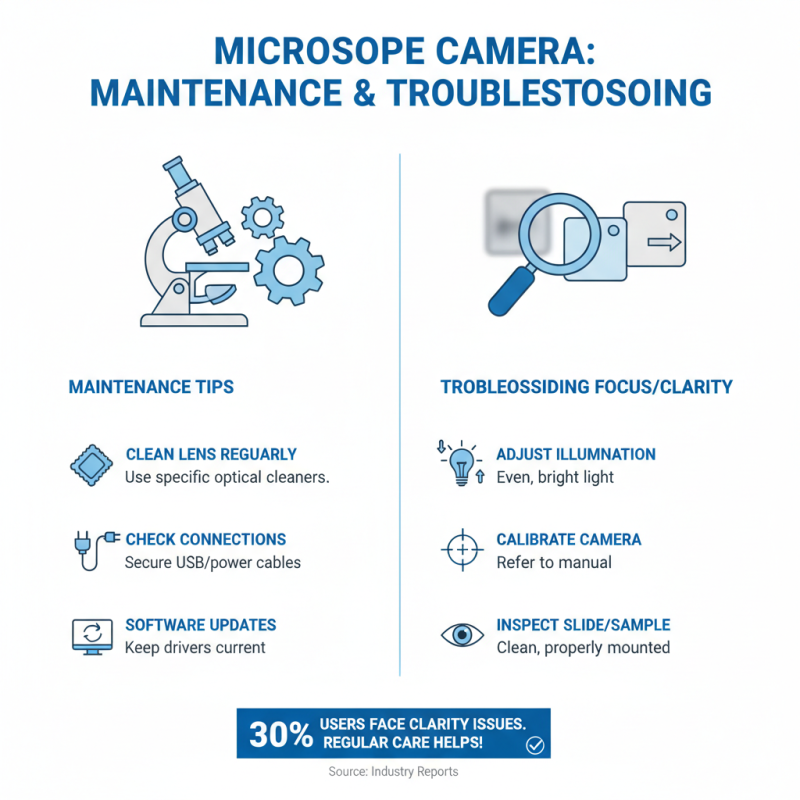
Microscope cameras are essential tools for capturing high-quality images in various scientific fields. However, maintaining these devices can be challenging. According to recent industry reports, approximately 30% of users experience issues with image clarity and focus. Regular maintenance can help prevent these problems.
To ensure optimal performance, regularly clean the camera lens and the microscope's optical components. Dust and smudges can significantly degrade image quality. Use a microfiber cloth and lens cleaner specifically designed for optical equipment. This simple step can dramatically enhance clarity, allowing you to capture stunning images with precision.
Additionally, troubleshooting connectivity issues is common. Many users report difficulties in establishing a stable connection between the camera and computer. Ensuring that drivers are up-to-date can resolve many of these issues. Networking problems can lead to frustrating delays in research. Keeping software updated is not just a recommendation; it’s necessary for seamless operation. By addressing these aspects proactively, users can significantly reduce interruptions and enhance their overall experience with microscope cameras.



 08045479132


 Send Inquiry

 Send Inquiry
 Send SMS