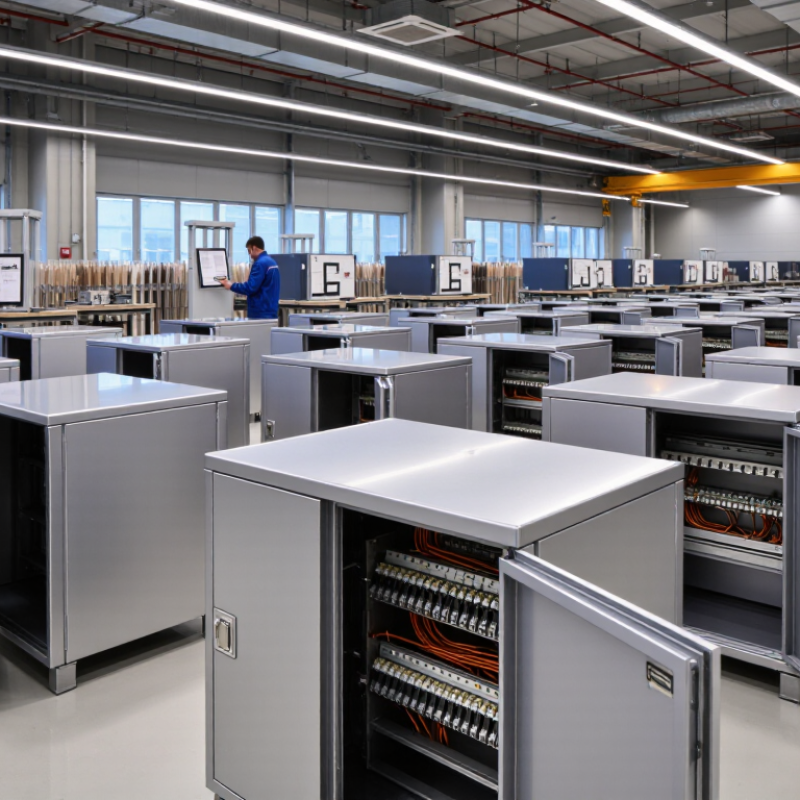
| What it is | A metal distribution box is an enclosure that houses and protects electrical distribution components, such as circuit breakers, busbars, and terminals. | Confirm whether the product is an empty enclosure or a complete, wired assembly. Their applicable specifications and responsibilities differ. |
| Common enclosure materials | Common options include coated carbon steel, stainless steel, and aluminum. Material choice affects strength, weight, corrosion resistance, and cost. | Match the material and finish to the installation environment. Specify the steel grade or stainless-steel grade where relevant, along with the coating requirements. |
| Enclosure construction | Design features may include a hinged or removable door, mounting plate, cable-entry openings, seals, and provisions for protective earthing. | Check dimensions, mounting method, door clearance, cable-entry position, internal usable space, and whether the layout suits the intended components. |
| Ingress protection | IP codes classify protection against access to hazardous parts and the entry of solids and water. For example, IP54 is dust-protected and protected against water splashes; IP65 is dust-tight and protected against water jets. | Specify the required IP rating for the complete installed enclosure. Cable glands, door seals, cut-outs, and installation can affect the achieved protection. |
| Impact protection | IK codes classify the degree of protection provided by an enclosure against mechanical impact under specified test conditions. | If impact resistance matters, state the required IK code and request supporting test information for the applicable enclosure configuration. |
| Applicable standards | IEC 60529 covers IP classification; IEC 62208 addresses empty enclosures for low-voltage switchgear and controlgear assemblies; IEC 61439 covers low-voltage switchgear and controlgear assemblies. Relevant national adoptions may also apply. | Identify which standards apply to the product and the destination market. Do not assume that an empty enclosure has been assessed as a complete electrical assembly. |
| Manufacturing checks | Relevant quality checks can include dimensional inspection, coating inspection, door and seal fit, weld inspection, and verification of openings and mounting features. | Agree on inspection criteria, drawings, tolerances, sampling, and documentation before production. Request test records that relate to the specified product. |
| Corrosion protection | Protection may come from the base material, surface preparation, and a suitable coating or finish. Performance depends on the environment and the coating system. | Describe the expected indoor or outdoor conditions and any exposure to moisture, chemicals, or salt. Specify the finish and test method where needed. |
| Customization | Common customizations include enclosure dimensions, color, mounting plates, cut-outs, cable-entry arrangements, and accessory provisions. | Provide approved drawings and define who is responsible for the design, component fit, sealing, and any compliance checks after customization. |
| Supplier evaluation | Useful evaluation factors include relevant production experience, process controls, inspection capability, drawing support, and export documentation experience. | Compare suppliers against the same technical specification and request representative samples, quality documents, and clear lead-time and packaging details. |



 08045479132

 Send Inquiry


 Send Inquiry
 Send SMS

