| Manual recline | A lever or body-weight release operates the reclining mechanism. | Usually offers a limited set of recline positions; adjustment is not typically as fine as with powered controls. | Does not need an electrical outlet. Allow the clearance specified by the manufacturer for the footrest and back. | Buyers who want a straightforward sofa without powered controls. | Requires physical effort, and the available positions depend on the design. |
| Power recline | An electric motor moves the footrest and backrest using a switch or control panel. | Typically allows gradual adjustment while the control is held, making it easier to find a preferred position. | Needs a power source unless the model supports a compatible battery pack. Plan for cable routing and outlet access. | People who prefer button-operated adjustment or want more control over reclining. | Relies on electrical components and may need a nearby outlet or an approved battery option. |
| Wall-hugger design | The seat moves forward as it reclines, reducing the space needed behind the sofa compared with many conventional designs. | Can make reclining more practical in a room where the sofa sits near a wall; movement and comfort still depend on the model. | May be manual or powered. “Wall-hugger” does not mean zero clearance; follow the stated installation measurements. | Rooms with limited space behind the sofa. | Still needs room in front for the footrest and space for the seat to travel forward. |
| Power-adjustable headrest | A separate motor adjusts the headrest angle independently on models that include this feature. | Can help adjust head and neck support for different seated or reclined positions; fit varies by user and sofa geometry. | Requires electrical power on powered models. Check whether each seat has its own control. | Viewers or readers who want adjustable upper-body support. | Adds controls and moving parts; confirm the headrest range suits the intended users. |
| Power-adjustable lumbar support | An internal powered support changes the pressure or position around the lower-back area on equipped models. | Offers more adjustment than fixed lumbar padding, but personal comfort depends on body shape and the support range. | Needs power. Check whether lumbar adjustment works independently of the recline mechanism. | Buyers who want to fine-tune lower-back support rather than rely only on fixed cushioning. | An optional feature, not a substitute for checking seat depth, cushion firmness, and overall fit. |
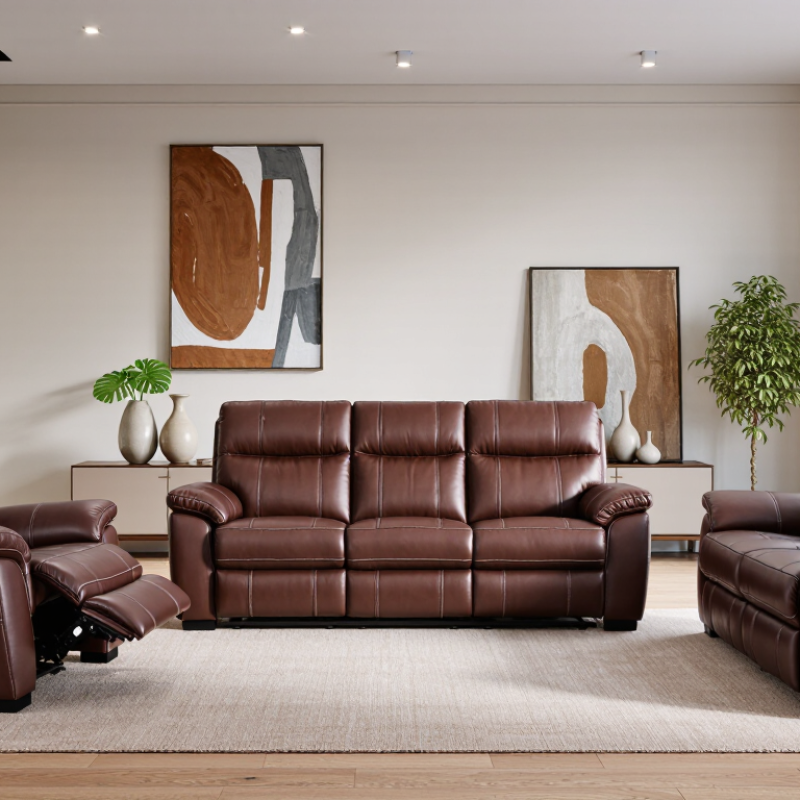
| Leather upholstery and cushioning | Upholstery type and cushion construction are separate from the reclining mechanism. Products may use different leather grades or leather on selected surfaces with other materials elsewhere. | Seat firmness, cushion fill, seat depth, and back shape affect comfort. Leather feel and care requirements vary by finish and construction. | No special power requirement. Review the upholstery description and care instructions for the specific sofa. | Anyone comparing long-term care, feel, and seating support. | “Leather” alone does not specify which surfaces are leather or how the cushions will feel; check the full materials and dimensions. |



 08045479132

 Send Inquiry


 Send Inquiry
 Send SMS

