Change Language
Call Us08045479132

What Is the Best Jewelry Equipment to Buy in 2026?

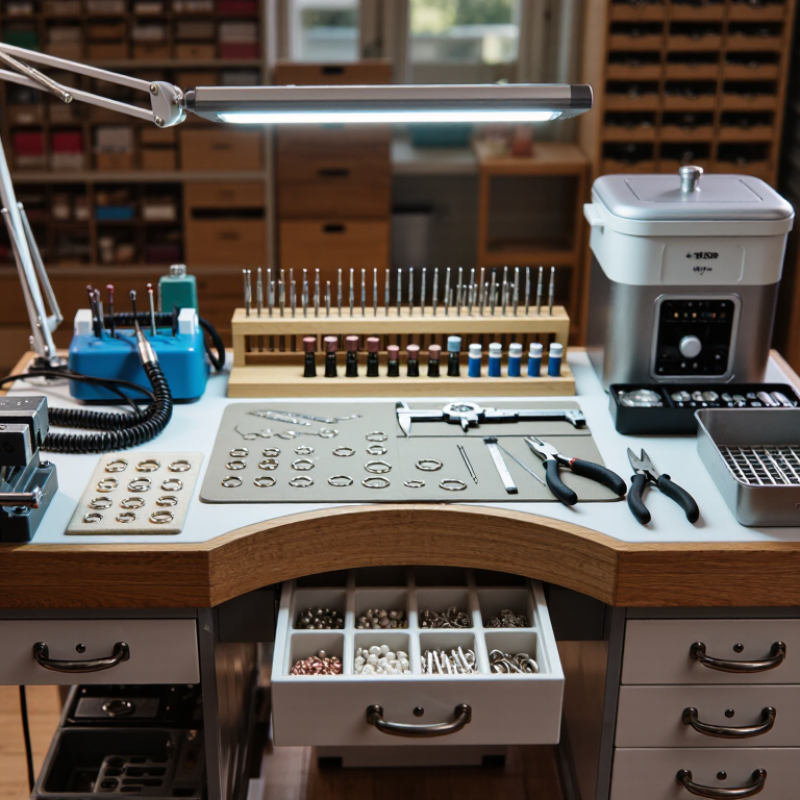
Choosing the best Jewelry Equipment in 2026 is less about buying the newest machine and more about matching tools to real work. A bench jeweler making rings has different needs from a hobbyist assembling beads or a repair specialist handling delicate settings. Start with the tasks you perform most often, the materials you use, and the space available on your workbench. Small details matter. A stable bench, bright adjustable lighting, and comfortable hand tools can improve daily work more than an expensive machine.

For many makers, useful investments include a quality flex-shaft tool, reliable digital calipers, jeweler’s saws, files, and well-fitting pliers. A cleaner or polishing machine may help when production needs justify the cost, but check its capacity, maintenance requirements, and manufacturer support first. Look closely at replacement parts and warranty terms. A low purchase price can become less attractive when a motor, chuck, or accessory is difficult to replace. Safety also deserves attention: choose equipment with clear instructions, suitable guards, and workspace requirements you can actually meet.

There is no universal best setup. Budget, skill level, and workload change the answer, and product specifications alone cannot predict how a tool will feel after hours at the bench. If possible, handle similar tools before buying, or begin with a modest setup and record what slows you down. I would not assume that a larger machine automatically means better results. Some purchases may need reconsideration once your projects change. This guide will compare practical equipment categories, explain what to check before spending, and help you build a setup that fits your craft rather than a trend.

What Is the Best Jewelry Equipment to Buy in 2026?

How to Define Your Jewelry-Making Needs and Budget in 2026

What Is the Best Jewelry Equipment to Buy in 2026?

How to Define Your Jewelry-Making Needs and Budget in 2026

Before comparing tools, decide what you plan to make. Beads, wire designs, and metal fabrication require different setups. Write down three projects you genuinely want to complete, such as a pair of earrings, a ring, or a pendant. Then list the tools each project needs. A bench pin, hand files, pliers, and a saw frame may suit basic metalwork. More complex work can require specialized equipment, workspace, and training.

Set a total budget, not just a shopping limit. Include consumables, replacement blades, storage, safety glasses, and any needed ventilation. Prices vary, so compare specifications and check that tools suit the materials and scale of your work. A precise budget can still be wrong if it ignores small recurring costs. It is easy to overestimate what you will use; leave room to revise your plan after a few projects.

Tips: Start with one project category and buy tools for its next clear step. Keep a simple list of purchases and what you used. If a tool stays untouched, pause before adding another. Safety matters: choose suitable eye protection, and learn safe operating practices before using heat or powered equipment.

Which Essential Hand Tools Should Beginners Buy First?

For a beginner’s jewelry bench, buy control before variety. Start with smooth-jaw chain-nose pliers, round-nose pliers, and flush cutters. Add a jeweler’s saw, spare blades, a bench pin, and a small set of needle files. These tools cover basic wire shaping, cutting, and edge cleanup without filling a drawer with rarely used equipment. A steel ruler and safety glasses are practical, too. Keep it simple.

Tool choices depend on the work. For wire-wrapped pieces, pliers matter most; for sawing sheet metal, a saw and bench pin become essential. The U.S. Bureau of Labor Statistics’ 2023–33 occupational outlook projects a 5% decline in employment for jewelers and precious stone and metal workers, with about 1,500 openings each year. That figure is labor-market context, not a buying forecast, but it underlines why durable, versatile skills—and tools that support practice—are sensible investments.

Tips: Choose pliers with comfortable handles and aligned jaws; test them on scrap wire before working on a finished piece. Buy files in a few useful shapes, not a large set. I’d resist purchasing every tool at once. It can feel limiting, and beginners may still discover a missing tool mid-project. Note what slowed you down, then add equipment to solve that specific problem.

When Are Specialized Machines Worth the Investment?

A specialized jewelry machine is worth buying when it solves a repeated production problem, not merely because it promises faster work. Track how often a task occurs, how many minutes it takes, and where mistakes appear. A laser welder, casting system, or precision engraving machine may reduce rework, but only if your team has enough suitable jobs to keep it busy. That matters.

Compare the full operating cost with the labor and scrap you expect to save. Include installation, ventilation, training, routine maintenance, consumables, and downtime. Check whether the machine fits your bench layout and workflow. A small workshop may gain little from high capacity if orders remain irregular. It is easy to focus on the purchase price and overlook setup time. I would treat projected savings as estimates, then verify them against actual shop records.

Tips: Request a practical demonstration using materials and designs similar to yours. Ask about maintenance intervals, operator training, and repair support before committing. Test before buying. Keep the old workflow available during the learning period; early results can be slower than expected, and that is not always a sign the equipment was a poor choice.

What Is the Best Jewelry Equipment to Buy in 2026? — When Are Specialized Machines Worth the Investment?
Equipment Typical New-Equipment Cost (USD) What It Is Used For When the Investment Makes Sense Key Considerations
Jeweler’s bench and hand-tool setup $500–$3,000 Routine bench work such as sawing, filing, forming, soldering, and setting. For nearly every workshop; a well-organized bench and reliable hand tools support a wide range of jobs. Start with tools suited to the work you do most. Add specialized tools as recurring jobs justify them.
Flexible-shaft rotary tool $150–$600 Drilling, grinding, sanding, carving, and polishing small components. Worth buying for regular fabrication or repair work where a handheld rotary tool is too limiting. Choose compatible handpieces and accessories; use suitable eye protection and dust control.
Ultrasonic cleaner $100–$1,000 Removing residues from many finished pieces and small components. Useful for frequent cleaning, especially in repair or production workflows. Not suitable for every gemstone, setting, treatment, or construction. Check the item’s cleaning requirements first.
Polishing motor with dust collection $500–$3,500 Buffing and finishing metal surfaces while collecting polishing dust. A strong candidate when polishing is a regular in-house task or outside finishing causes delays. Allow for ventilation, appropriate filters, maintenance, and safe handling of collected metal-bearing dust.
Vacuum or centrifugal casting setup $1,500–$8,000 Casting metal jewelry from prepared molds, commonly using the lost-wax process. Consider it when casting demand is steady, turnaround matters, and the workshop can manage the full process. Equipment is only part of the cost: budget for a burnout kiln, molds, consumables, training, ventilation, and safe foundry practices.
Jewelry-focused resin 3D printer $1,000–$6,000 Printing detailed patterns or prototypes for design review and investment casting. Worthwhile when custom designs or repeated pattern production are frequent enough to reduce outsourcing and lead time. Confirm resin and printer compatibility with the casting process. Include washing, curing, ventilation, and material costs.
Laser welder $8,000–$30,000 Localized joining and repair work, including work near heat-sensitive areas when suitable. Most compelling for repair shops or production teams with a consistent volume of precise welding jobs. Requires training and appropriate eye and workplace safety controls. Confirm that the intended metals and job types are suitable.
Small CNC engraving or milling machine $5,000–$35,000 Repeatable engraving, cutting, or machining of designs, depending on machine capability. Consider it when repeat orders, detailed personalization, or in-house production can keep the machine meaningfully utilized. Check software, tooling, work area, materials, maintenance, and operator training; these affect total cost and output.
CAD workstation and jewelry-design software $1,500–$6,000, plus software costs Creating, modifying, and preparing digital models for customer approval or manufacturing. Useful when custom design work is frequent or digital files are part of the regular production process. Account for training time, software subscriptions or licenses, file preparation, and compatibility with manufacturing partners.
Professional gemstone-setting microscope $800–$4,000 Magnified viewing for precise setting, inspection, and fine repair work. Worth considering for regular stone-setting or detailed repair work where improved visibility supports accuracy. Include stable mounting, suitable lighting, ergonomic positioning, and a working distance that fits the bench.
Cost figures are broad planning estimates for new equipment in 2026, in USD; actual prices vary by specifications, region, installation, and included accessories. Before purchasing, compare the total cost of ownership with outsourcing, expected workload, training, consumables, safety requirements, and service needs.

How to Compare Equipment for Accuracy, Safety, and Durability

When comparing jewelry equipment in 2026, ask for repeatability data, not just a headline accuracy figure. Test a scale with reference weights, or inspect a microscope’s focus across the full working area. Record several readings; consistency matters. Small test. Big signal. For powered tools, check vibration, speed control, guarding, and whether dust extraction fits your bench. The U.S. Bureau of Labor Statistics reported 2.6 million nonfatal workplace injuries and illnesses across private industry in 2023. That figure is not jewelry-specific, but it makes practical safety features worth checking. Ask to see the manual and locate the emergency stop before buying.

Durability is easier to judge through serviceability than appearance. Look for replaceable wear parts, clear maintenance intervals, and a local repair option. The Circularity Gap Report 2024 estimates that only 6.9% of materials used globally come from recycled sources, a reminder that extending equipment life can reduce replacement demand. Compare warranty terms, but read exclusions closely. A long warranty may not cover routine wear. It is easy to overvalue a polished casing; bearings, switches, and spare-part access tell you more. Weigh total upkeep against the purchase price, and leave room for doubt: a short demonstration cannot reveal years of workshop use.

How to Plan Equipment Upgrades and Ongoing Maintenance

Plan equipment upgrades around production bottlenecks, not catalog trends. Track repair frequency, job delays, and finishing defects for each machine. A laser welder may shorten repair work, while a reliable polishing motor may matter more if finishing queues keep growing. Compare the full cost: purchase, installation, operator training, consumables, and service. Record current performance before replacing anything; otherwise, improvement is hard to verify.

The U.S. Department of Energy’s Operations & Maintenance Best Practices Guide reports potential energy savings of 5–20% from effective maintenance. That benchmark covers facilities broadly, not jewelry benches alone. Treat it as context, not a promise. Set a quarterly review for calibration, electrical cords, ventilation, and dust collection. Keep service records beside the equipment, including dates, symptoms, and parts changed.

Small warning: estimates drift. Plans change.

Tips: Before each shift, inspect machine guards, cables, filters, and unusual vibration. Follow the equipment manual for cleaning and service intervals. Keep one spare for parts that repeatedly stop production, but avoid stocking everything. A handwritten log can work; it is also easy to neglect. Revisit the upgrade plan when repair costs or delivery delays change.

Back to top