Change Language
Call Us08045479132

10 Best Handheld Portable UV Lamps for Buyers?

Choosing a Handheld Portable Uv Lamp takes more than comparing brightness, battery life, or price. Buyers also need to know what wavelength the device emits and what it is designed to do. “UV lamp” can describe very different products, including inspection lights and germicidal devices. The distinction matters.

The World Health Organization’s UV radiation fact sheet explains that ultraviolet exposure can harm skin and eyes. The U.S. Food and Drug Administration’s guidance on UV-C lamps also warns that some devices can injure users after direct exposure. These are practical concerns, not fine-print details. NIOSH’s 2009 guidance, Environmental Control for Tuberculosis: Basic Upper-Room Ultraviolet Germicidal Irradiation Guidelines, discusses how effectiveness depends on factors such as exposure and installation. Its setting differs from handheld use, so its findings should not be transferred blindly.

This guide compares ten portable models by intended application, published wavelength, output information, power source, controls, and safety instructions. It also considers the details buyers notice in real use: a narrow beam, a short charging cable, or a button that is awkward to hold. Product specifications can be incomplete, and marketing claims are not independent test results. That is easy to overlook. No handheld lamp should be treated as a guaranteed substitute for cleaning or other established precautions. Read the manufacturer’s instructions, avoid direct eye or skin exposure, and check whether performance claims include credible testing. The best choice is the one whose documented capabilities match your task—and whose limitations are plainly stated.

10 Best Handheld Portable UV Lamps for Buyers?

Understanding Handheld Portable UV Lamps and Their Uses

Handheld portable UV lamps emit ultraviolet light for specific inspection or treatment tasks. Their usefulness depends on wavelength, output, beam shape, and working distance. UV-A models can make fluorescent minerals, security markings, or certain stains easier to see. A 365-nanometer lamp often produces less visible violet glow than a 395-nanometer lamp, though results vary by material. Wavelength matters. A bright-looking beam does not necessarily reveal more detail, so test it on the surface you plan to inspect.

Some handheld units are marketed for disinfection, but UV-C performance depends on exposure time, distance, and unobstructed coverage. Shadows still matter. A lamp cannot reliably treat areas its light does not reach, and a quick pass is not proof of effective disinfection. UV-C can injure eyes and skin, so avoid direct exposure and follow the device’s safety instructions. Check its stated wavelength and intended use rather than relying on broad claims. It is easy to assume that one portable lamp suits every job; in practice, choosing the wrong wavelength can leave you with little more than a purple glow. Keep the lens clean, and consider whether the work area can be safely controlled.

Key Features to Compare Before Buying a UV Lamp

When comparing handheld UV lamps, check the emitted wavelength, measured output, beam coverage, and safety controls. The International Commission on Illumination (CIE) defines UV-C as 100–280 nanometers; many germicidal systems use 254 nm. A wavelength label alone does not prove a lamp will disinfect a particular surface. Ask for independent test results and the conditions used, including distance, exposure time, and target material. Small details matter. A glossy phone case and a textured keyboard may receive different exposure.

Compare irradiance at the stated working distance, not just electrical wattage. International Ultraviolet Association guidance describes UV dose as irradiance multiplied by exposure time, so a weak beam may require longer exposure. Check whether the beam covers an entire object or leaves shadowed edges. Also review battery runtime, charging time, and whether output changes as the battery drains. I would treat impressive percentage claims cautiously when test conditions are missing.

Safety deserves equal weight. CIE’s 2020 position statement warns that UV-C exposure can harm eyes and skin. Look for clear operating instructions, a shield or automatic shutoff, and photobiological safety information assessed against IEC 62471. Never assume a compact lamp is safe to point at people, pets, or reflective surfaces. A few seconds can be easy to underestimate.

Ten Handheld Portable UV Lamps for Different Buyer Needs

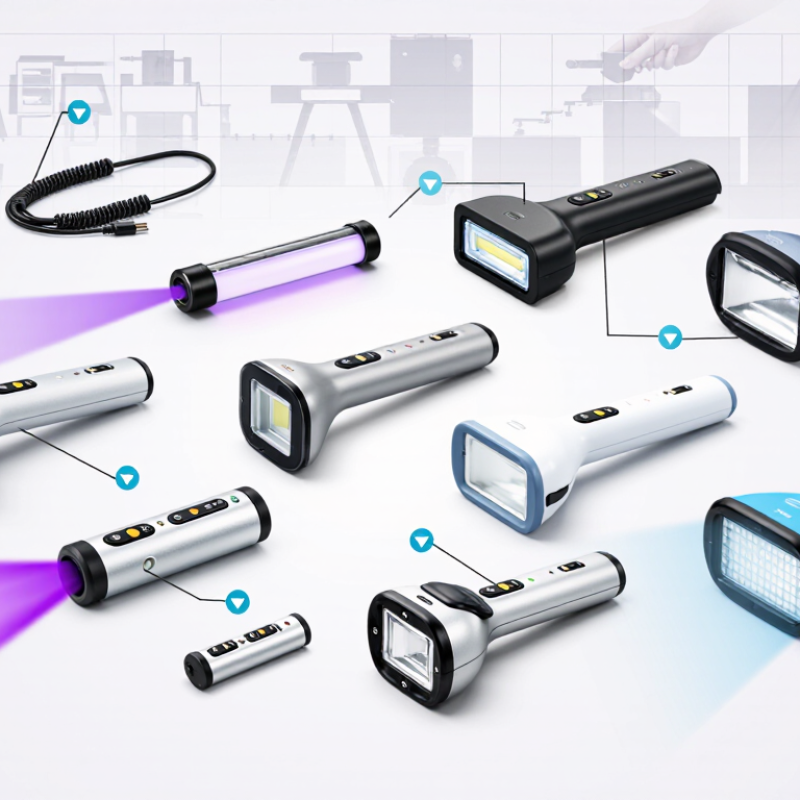
Choosing among ten handheld portable UV lamps begins with the job, not the brightest-looking beam. Travelers may prefer a lightweight model with USB charging, while homeowners often want a simple lamp for checking spills or fluorescent marks. Pet owners can use UV light to locate possible stains, though it cannot confirm their source. Mineral collectors may need a specific wavelength to reveal fluorescence. Small details matter.

Leak-detection users should match the lamp to their fluorescent dye, and resin makers should check that its wavelength suits their material. Document inspectors may value even illumination, while repair technicians often need a focused beam for close work. Outdoor users benefit from a durable casing and a clear battery indicator.

Cleaning professionals considering UV-C need extra caution: exposure can injure eyes and skin, and shadows or distance can limit disinfection. Choose protective features and follow the manufacturer’s instructions; never shine UV-C at people or animals.

A high output rating alone proves little. Check wavelength, beam coverage, runtime, and independent test information where available. It is easy to overlook one of these details. Not a guarantee.

Comparing UV Output, Battery Life, Size, and Price

A handheld UV lamp is only useful when its output matches the job. Check the wavelength and measured irradiance, not just a large number on the package. For germicidal use, confirm the maker provides test data and states the measuring distance. A lamp that performs well at close range may lose effectiveness quickly across a tabletop. UVA and UVC are not interchangeable. The distinction matters.

Battery life deserves a practical check. Runtime often drops at the highest setting, so look for figures tied to actual output levels. A compact lamp slips into a drawer, but a tiny handle can feel awkward during repeated use. Compare charging time, battery replacement options, and total price—not only the checkout cost. I’d be cautious of impressive claims without test conditions; they leave too much guesswork.

Tips: Keep UV sources away from eyes and exposed skin, and follow the device’s safety instructions. Check whether it has a timer or shielding. Compare weight in your hand, too. A few grams can matter on longer jobs.

10 Handheld Portable UV-C Lamp Configurations Compared

Battery life vs. UV output at 10 cm; bubble size represents indicative price.

Values are illustrative estimates for representative handheld 254 nm UV-C lamp configurations, not verified measurements or ranked products. Actual irradiance depends on the lamp, measurement method, and distance; compare specifications measured under the same conditions. UV-C can injure eyes and skin—never expose people or animals directly.

Safe Operation, Care, and Limitations of Portable UV Lamps

Portable UV lamps vary in wavelength, output, and intended use. Check the device label and manual before switching it on. UV-C models can damage eyes and skin, even during brief exposure. Never aim a lamp at people or pets, and do not use it on skin or food unless its instructions explicitly allow that application. Not a magic wand.

Use the lamp only in the specified setting, at the recommended distance and for the stated time. Leave the area while it operates if the manual requires an empty room. Keep doors closed, and use any supplied timer or shutoff feature. Protective glasses are not a substitute for avoiding direct exposure. Shadows matter: folds, dust, and objects can block UV, so treated surfaces may still carry microbes. UV light also does not remove dirt.

Unplug the unit before cleaning or moving it, and let a hot lamp cool fully. Wipe the exterior with a dry, soft cloth; keep liquids away from electrical parts. Replace damaged covers or bulbs only as the manufacturer directs. UV can fade fabrics and weaken some plastics over time. Portable lamps cannot guarantee disinfection; results depend on wavelength, dose, distance, and surface exposure. That uncertainty is easy to underestimate in a cluttered room. Follow the manual, and choose ordinary cleaning when UV is unsuitable.

10 Best Handheld Portable UV Lamps for Buyers? — Safe Operation, Care, and Limitations of Portable UV Lamps

A task-based comparison of common handheld UV lamp types. “Best” depends on the intended use; wavelength, output, beam coverage, and safety features vary by device. These categories are not endorsements of specific products.

No. Lamp type Typical wavelength Common intended use Key limitation Safe operation and care
1 Long-wave UV inspection lamp UVA, commonly around 365 nm Fluorescence inspection of materials, markings, and some contaminants. Fluorescence is not proof of identity, cleanliness, or safety; results depend on the material and ambient light. Avoid looking directly into the beam. Use UV-rated eye protection when exposure is possible, and keep the lens clean.
2 395 nm inspection lamp UVA / near-violet, commonly around 395 nm General fluorescence checks, hobby use, and some visible-reactive materials. Often produces more visible violet light than a 365 nm lamp, which can reduce contrast for some fluorescence tasks. Do not treat visible light as evidence that UV exposure is harmless. Follow the device’s exposure guidance and avoid eye exposure.
3 Wood’s lamp Usually long-wave UVA, near 365 nm Close-range examination of fluorescence in skin or other materials by trained users. Fluorescence alone cannot diagnose a condition; clinical interpretation may require other tests. Use only as directed by a qualified professional for medical examination. Protect eyes and clean the unit according to its instructions.
4 Portable UVB phototherapy device UVB, commonly narrowband near 311–313 nm Prescribed phototherapy for selected skin conditions under medical supervision. Incorrect exposure can cause burns, eye injury, or other harm. It is not a general-purpose inspection or wellness lamp. Use only with a clinician’s treatment plan, prescribed dose, and eye protection. Do not self-adjust exposure times.
5 Handheld nail-curing UV/LED lamp Often UVA and violet output around 365–405 nm Curing compatible gel nail products, when the product and lamp are designed to work together. Curing depends on the gel formulation, wavelength, and exposure; incomplete curing may not be apparent by sight. Follow the gel maker’s curing directions, minimize skin exposure, and do not stare at the light source.
6 Fluorescent leak-detection lamp Often UVA around 365–395 nm Locating compatible fluorescent leak-detection dyes in automotive, HVAC, or plumbing checks. Only dyes formulated for the system will fluoresce reliably; residue and surface conditions can affect visibility. Use the correct dye and inspection procedure. Prevent eye exposure and clean the lamp surface with a suitable, non-abrasive method.
7 Mineral and geology inspection lamp UVA, commonly around 365 nm or 395 nm Viewing visible fluorescence in selected minerals and specimens. Not all minerals fluoresce, and fluorescence can vary with wavelength, specimen composition, and surface condition. Use eye protection appropriate to the lamp’s UV output. Keep the beam directed at the specimen, not at people.
8 Document and security-feature inspection lamp Usually UVA, commonly around 365 nm Checking UV-responsive features on certain documents, labels, or security materials. Not every genuine document has the same UV features; a UV check alone cannot establish authenticity. Use as one inspection aid alongside other checks. Avoid prolonged direct viewing of the source and protect the lamp from impact.
9 Portable 254 nm UVC germicidal lamp UVC, commonly around 254 nm for low-pressure mercury sources Specialized, controlled disinfection applications on suitable, directly exposed surfaces. Effectiveness depends on delivered dose, distance, exposure time, surface cleanliness, and line of sight. Shadows block direct exposure; it does not reliably disinfect air or hidden surfaces by itself. Never expose people or animals. Operate only in a controlled, unoccupied area and follow the device instructions. Check whether the source can generate ozone.
10 Portable UVC LED disinfection lamp UVC, commonly in the 265–280 nm range Targeted UVC exposure of compatible surfaces in controlled settings. Output and coverage differ widely among devices; a short exposure or sweeping motion does not guarantee a disinfecting dose. Keep the beam away from skin and eyes, including reflected exposure. Use only as instructed in an unoccupied, controlled area; never use on the body.

Important limitation: UV lamps are not interchangeable. UVA, UVB, and UVC have different uses and hazards. UV exposure can injure eyes and skin, and UVC disinfection is not guaranteed by a device’s appearance or label alone. Follow the manufacturer’s instructions, use appropriate protective measures, and seek professional guidance for medical or disinfection applications.

Back to top