Best Handheld Gas Monitor for Accurate Readings and Safety?
In today's industrial landscape, safety remains paramount. Effective monitoring of gas levels is crucial to prevent hazardous situations. A reliable Handheld Gas Monitor can provide accurate readings essential for maintaining safety standards. According to the National Institute for Occupational Safety and Health (NIOSH), approximately 6,000 incidents related to hazardous gas exposure occur annually in the workplace. A tool that can effectively measure gas concentrations is not just an accessory; it is a vital necessity.
Many industries, such as oil and gas, chemical manufacturing, and construction, heavily rely on precise gas detection. The global market for gas detection equipment is projected to reach $4.3 billion by 2026, illustrating the growing importance of these instruments. With advancements in technology, modern Handheld Gas Monitors are designed to be user-friendly and efficient. However, user training is often overlooked, leading to potentially fatal misinterpretations of data.
Investing in a high-quality Handheld Gas Monitor and ensuring proper usage can significantly mitigate risks. Reviews and empirical data show that regular calibration and maintenance elevate the reliability of these devices. Yet, despite these tools' advantages, complacency in gas monitoring continues to be a concern. It is essential to recognize that technology alone cannot guarantee safety; diligence in operation and awareness of environmental changes are equally critical.
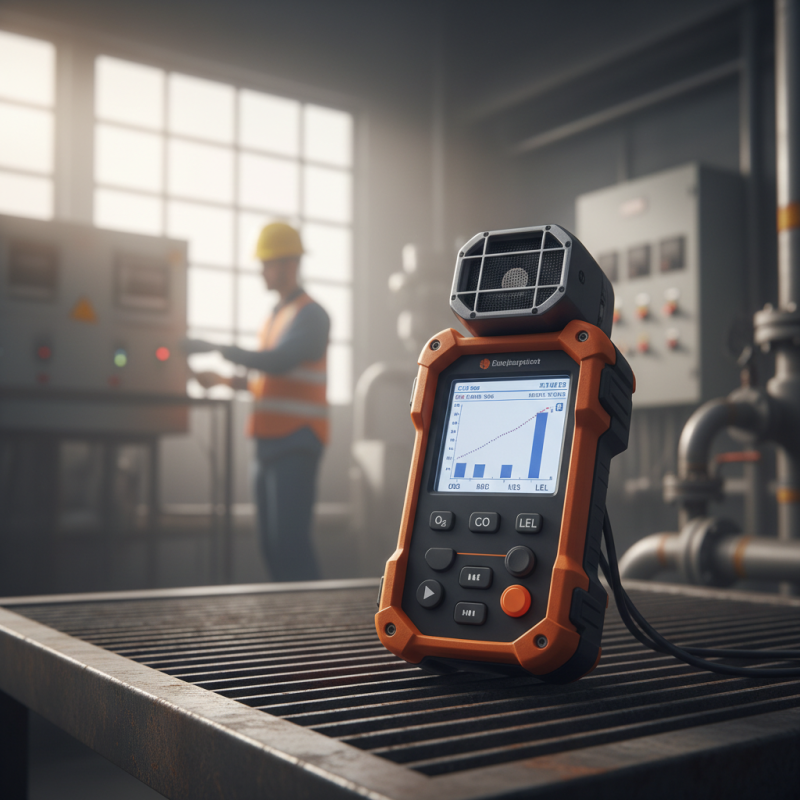
Understanding Handheld Gas Monitors: Key Features and Functionality
Handheld gas monitors are essential tools for safety in various environments. They measure gas concentrations and help in identifying hazards. When selecting a monitor, consider factors such as sensitivity, response time, and calibration. A good monitor can detect multiple gases, offering versatility in different applications.
Ease of use is another critical feature. Monitors should have clear displays and intuitive buttons. Visual and audible alarms enhance safety by alerting users quickly. Users should ensure the batteries remain charged and perform regular maintenance. This ensures accuracy and reliability over time.
While handheld gas monitors are valuable, they are not infallible. Users may misinterpret readings if they don’t understand the units of measurement. Moreover, environmental factors can affect their performance. Regular training and familiarization with the device are necessary to prevent mishaps. Knowledge and upkeep are vital for user safety.
Best Handheld Gas Monitor for Accurate Readings and Safety
| Feature | Description | Importance | Typical Range |
| Detection Capability | Ability to detect multiple gases including CO, CO2, and CH4. | Critical for safety in various environments. | 0-1000 ppm |
| Response Time | Time taken to register a gas concentration after exposure. | Short response time is vital for immediate hazard detection. | Less than 15 seconds |
| Calibration | Frequency required to ensure accuracy of readings. | Regular calibration ensures reliable safety measures. | Every 6 months |
| Battery Life | Duration the monitor can operate on a single charge. | Long battery life is essential for fieldwork and flexibility. | Up to 24 hours |
| Display | Type of display used for showing readings and alerts. | Clear display aids in quick decision making. | LCD with backlight |
| Durability | Ability to withstand environmental conditions and impacts. | Important for use in rugged settings. | IP67 rated |
Types of Gases Detected by Handheld Gas Monitors
Handheld gas monitors are essential tools for safety in various work environments. They detect multiple gases to ensure the safety of workers and the integrity of the worksite. Commonly detected gases include carbon monoxide, hydrogen sulfide, methane, and volatile organic compounds (VOCs). Each of these gases can pose significant health risks. Exposure to carbon monoxide can lead to poisoning, while hydrogen sulfide is lethal in high concentrations. Understanding the types of gases your monitor can detect is crucial.
Tips: Always check the calibration of your gas monitor before use. An improperly calibrated device can provide misleading readings. Regular calibration ensures accuracy in detecting harmful gases.
In addition to basic detection, some monitors can assess oxygen levels, which is vital in confined spaces. They measure the percentage of oxygen to help prevent asphyxiation. It's important to know the limitations of the device. Not all monitors cover every possible gas, so choose one suited to your specific environment.
Tips: Read the user manual thoroughly. Not all devices operate in the same manner, and understanding your tool enhances safety. Don’t hesitate to consult experts if you’re unsure about gas detection best practices.
Factors to Consider When Choosing a Handheld Gas Monitor
When selecting a handheld gas monitor, several critical factors come into play. Accuracy is paramount. Look for devices that provide precise readings across different gas types. A monitor with a high response time is essential for detecting gas leaks quickly. Consider the calibrations as well. Some models require frequent recalibration, which can be a hassle in the field.
Portability is another important aspect. A lightweight design ensures easy handling, especially in tight spaces. Battery life can greatly affect usability. Long-lasting batteries minimize downtime, allowing users to rely on the monitor throughout their work.
User interface matters too. A clear display and intuitive controls enhance accessibility. Consider whether the device offers alarms or alerts for hazardous readings. While these features add value, make sure they are straightforward to understand. Reliability is key in critical situations, so select a product that shows consistency in performance, even when conditions change.
Best Handheld Gas Monitors: Accuracy and Safety Comparison
Top Brands and Models of Handheld Gas Monitors in the Market
Handheld gas monitors have become essential tools for ensuring safety in various industries. These devices help detect harmful gases like carbon monoxide and methane, providing real-time data to prevent potential hazardous situations. According to industry research, about 1 in 5 workplace accidents involve harmful gases, highlighting the urgent need for reliable monitoring solutions.
Several top brands and models stand out in the market. These monitors are valued for their accuracy and portability. Features such as multi-gas detection capabilities and rugged designs make them suitable for different environments. Studies indicate that devices with a fast response time are crucial for effective safety management.
While many handheld gas monitors promise reliability, users should remain vigilant. Calibration and maintenance are critical for accuracy. Some models may not perform well under extreme conditions. It is essential for users to evaluate their environment before making a selection. Overall, the right choice can greatly enhance workplace safety and contribute to a proactive health and safety culture.
Safety Standards and Calibration for Handheld Gas Monitors
Handheld gas monitors are crucial for ensuring workplace safety. However, their effectiveness largely hinges on adherence to safety standards and regular calibration. According to a report from the National Institute for Occupational Safety and Health (NIOSH), over 270,000 workers suffer from gas exposure annually. That statistic emphasizes the need for reliable monitoring tools.
Ensuring compliance with industry standards like OSHA and ISO can significantly enhance safety protocols. These organizations set benchmarks that handheld gas monitors must meet to detect hazardous gases accurately. For instance, a well-calibrated monitor can typically detect gas concentrations at parts per million (ppm). Regular calibration checks are essential for maintaining accuracy. A mismatched calibration can lead to false readings, endangering lives.
While technology continues to advance, not all models perform equally. Some devices may struggle with multi-gas detection or react slower to changes. Recent studies reveal that roughly 15% of monitors fail to meet expected accuracy levels due to irregular maintenance. This discrepancy raises questions about reliability. Understanding these limitations is critical for users to ensure their safety during exposure to potential hazards. Regular training on proper usage and maintenance is as vital as the equipment itself.



 08045479132
 Send Inquiry

 Send Inquiry
 Send SMS