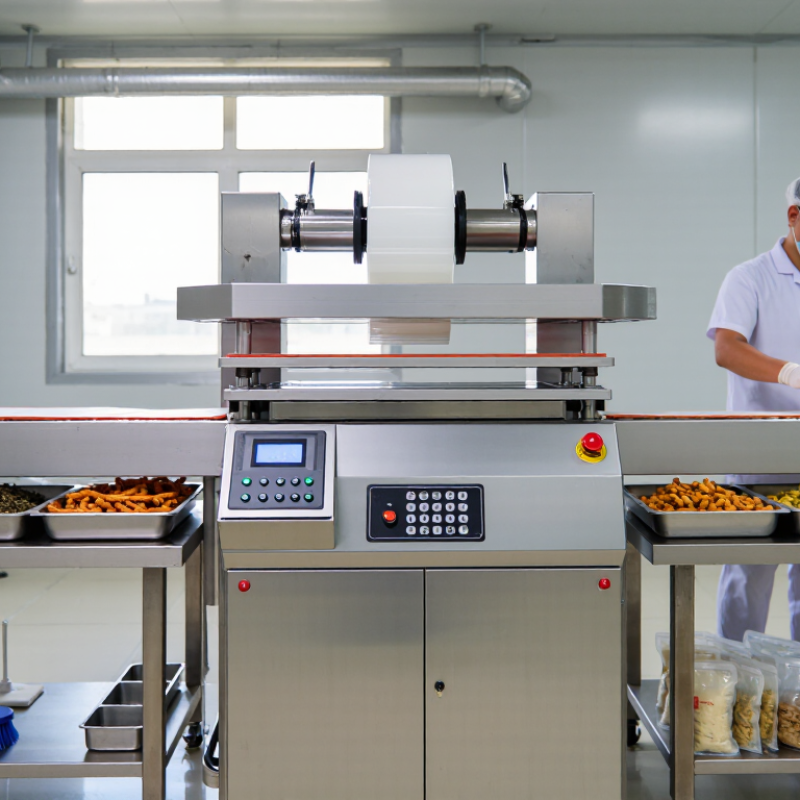
| Chamber Vacuum Sealer | Meat, seafood, cheese, coffee, and other products packed in vacuum pouches. Can handle moist products more readily than external-suction systems, subject to liquid control and pouch suitability. | About 100–600 pouches/hour for many single-chamber setups; pouch size, number of pouches per cycle, and cycle time strongly affect output. | Vacuum is drawn inside the chamber before the pouch is heat-sealed. Produces consistent vacuum packs when vacuum level, seal temperature, and dwell time are correctly set. | About 1.5–3 kW | About RMB 2–16 | Electricity, vacuum-pump oil and servicing where applicable, sealing-bar parts, and labor for loading and unloading. Packaging pouches are a separate material cost. | Choose for small-to-medium batches, varied pouch sizes, or products that benefit from vacuum packaging. |
| Continuous Belt Vacuum Sealer | Higher-volume vacuum pouch packing for meat, seafood, prepared foods, and similar products in compatible heat-sealable pouches. | About 1,000–5,000 pouches/hour, depending on conveyor speed, pouch dimensions, product handling, and operator or line configuration. | Continuous evacuation and sealing support repeatable seals at higher output. Product loading and correct pouch positioning are important for seal consistency. | About 4–12 kW | About RMB 1–10 | Electricity, vacuum-pump maintenance, belts and sealing components, and any labor or conveying equipment needed to keep the machine fed. | Choose when production volume is high enough to justify continuous operation and a more integrated workflow. |
| Tray Sealer | Ready meals, fresh foods, produce, and portioned products in compatible trays with lidding film. | About 600–3,000 trays/hour for many semi-automatic and automatic configurations; tooling cavities and loading speed are major factors. | Heat-seals lidding film to a tray flange. Modified-atmosphere packaging is available only on configurations equipped for gas flushing and requires suitable film and process control. | About 2–8 kW | About RMB 1–11 | Electricity, tray and lidding-film use, tooling changes, sealing-plate upkeep, and gas costs if modified-atmosphere packaging is used. | Choose for rigid trays, retail-ready presentation, or a need to seal multiple portions in a standardized format. |
| Continuous Band Sealer | Dry foods, snacks, grains, powders, and other products in compatible pre-made bags. Not a vacuum sealer unless combined with a separate vacuum process. | About 1,000–5,000 bags/hour, depending on bag width, conveyor speed, product flow, and operator handling. | Uses heated sealing belts to create a continuous top seal. Seal strength depends on bag material, temperature, pressure, speed, and clean seal areas. | About 0.3–1 kW | About RMB 0.05–0.80 | Electricity, heating elements and belt replacement, and labor for feeding and checking bags. Film or bags are normally a larger variable cost than electricity. | Choose for economical, high-speed top sealing when vacuum packaging is not required. |



 08045479132

 Send Inquiry


 Send Inquiry
 Send SMS

