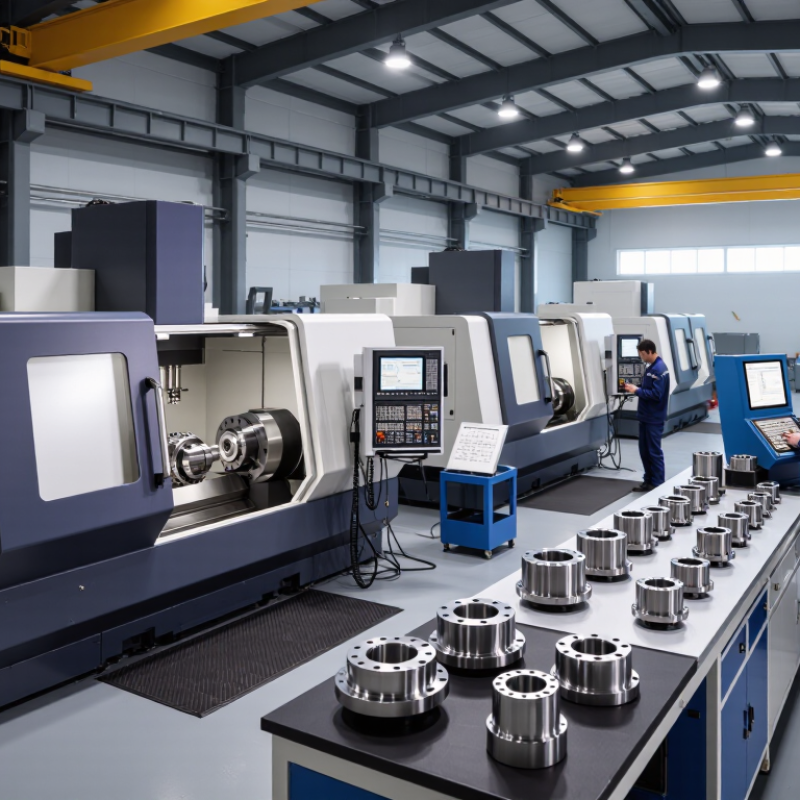
| Machining Process | The supplier should offer the required process, such as CNC milling, CNC turning, Swiss turning, 5-axis machining, or EDM. | The correct process affects geometry, surface quality, production efficiency, and achievable tolerances. | Machine list, sample parts, process capability information, and an application-specific quotation. |
| Dimensional Tolerance | A general CNC tolerance around ±0.05 mm is common for many parts; tighter tolerances such as ±0.01 mm require suitable equipment, inspection, and process control. | Unnecessary ultra-tight tolerances increase machining time, inspection requirements, and cost. | Tolerance capability by material and feature size, inspection reports, and a drawing review before production. |
| Material Capability | The manufacturer should have documented experience with the specified material, such as aluminum, stainless steel, carbon steel, brass, titanium, engineering plastics, or tool steel. | Different materials require different cutting tools, speeds, feeds, coolants, and handling procedures. | Material certificates, lot traceability, approved material specifications, and test documentation when required. |
| Surface Finish | Surface requirements should be specified by measurable roughness values, such as Ra, together with any cosmetic acceptance criteria. | Surface finish influences appearance, friction, sealing, wear resistance, and coating adhesion. | Surface-roughness records, approved samples, finishing process details, and inspection methods. |
| Secondary Operations | Useful services may include anodizing, plating, passivation, powder coating, heat treatment, laser marking, assembly, and deburring. | A coordinated supply chain can reduce handling, transport, communication, and quality risks. | Approved-process list, finish specifications, coating thickness records, color standards, and subcontractor controls. |
| Quality Management | An ISO 9001-certified quality management system is a useful baseline, but certification alone does not guarantee part quality. | Documented procedures support repeatability, corrective action, and controlled production. | Current certificate, scope of certification, quality plan, nonconformance process, and recent audit or inspection records. |
| Inspection Equipment | The supplier should use calibrated tools appropriate to the part, such as CMM equipment, height gauges, optical measurement systems, micrometers, and gauges. | Inspection capability must match the drawing tolerances and critical characteristics. | Calibration certificates, inspection equipment list, sample dimensional reports, and measurement-system controls. |
| Prototype and Production Capacity | The supplier should be able to support the required quantity, from one-off prototypes and small batches to repeat production. | A supplier suitable for prototypes may not have the planning, tooling, or capacity needed for volume production. | Monthly capacity estimate, current lead-time assumptions, production schedule, and contingency planning. |
| Lead Time | Lead time should be quoted separately for engineering review, prototyping, machining, finishing, inspection, and shipping. | A clear schedule makes it easier to identify delays caused by materials, subcontracted finishes, or export logistics. | Milestone-based schedule, material availability, production start date, inspection date, and shipping terms. |
| Cost Transparency | The quotation should identify machining, material, tooling, finishing, inspection, packaging, shipping, and applicable taxes or fees. | The lowest initial price may not be the lowest total cost if rework, inspection, delays, or logistics are excluded. | Itemized quotation, payment terms, tooling ownership, revision policy, and clarification of shipping responsibilities. |
| Communication and Engineering Support | The supplier should provide drawing review, manufacturability feedback, prompt technical communication, and controlled handling of revisions. | Early engineering feedback can prevent design errors, avoidable cost, and production delays. | Design-for-manufacturing comments, designated technical contact, revision records, and response-time expectations. |
| Export Packaging and Logistics | Packaging should protect precision surfaces and separate finished parts from moisture, impact, contamination, and corrosion during transport. | Proper packaging reduces damage and preserves dimensional and cosmetic quality after inspection. | Packaging specification, corrosion-protection method, shipping documents, Incoterms, and tracking procedure. |



 08045479132

 Send Inquiry


 Send Inquiry
 Send SMS

