| ISO 9001 quality management | Current certificate and certification-body details | Confirm the certificate is valid, covers the relevant manufacturing site, and includes an applicable scope. ISO 9001 addresses quality-management systems; it does not certify a specific phone holder or guarantee product performance. | Treat certification as supporting evidence, then assess production controls, inspection records, and corrective-action procedures. |
| IATF 16949 automotive quality management | Current certificate, site address, scope, and relevant customer-specific requirements | Check that the certified site and scope are relevant to the supplied product and manufacturing activity. IATF 16949 is an automotive quality-management-system standard; it is not automatically required for every aftermarket accessory supplier. | Confirm whether the buyer or end customer requires it, and distinguish a certificate held by the actual production site from one held by another entity. |
| Qi wireless charging certification | Qi certification details for the exact wireless charging model | Search the Wireless Power Consortium’s product database and match the listed product and manufacturer details to the offered model. Qi certification applies to wireless-power products, not to a non-charging phone holder as a whole. | Do not rely only on a general “Qi compatible” claim; request model-specific evidence and confirm that the supplied version matches the listing. |
| Factory and production capability | Factory address, production-flow overview, equipment list, and recent production records | Establish whether the supplier manufactures the product, uses subcontractors, or performs only assembly or trading. Verify that the stated site matches the facility being assessed. | Map each key process—such as molding, assembly, charging-module integration, and final inspection—to the responsible site. |
| Product safety and electrical checks | Applicable test reports, component specifications, and risk-assessment records for charging models | Confirm that reports identify the tested model and configuration. Applicable requirements depend on the product design and destination market; a test report for a different model may not support the offered product. | Review protection features and test coverage relevant to the design, including temperature, electrical behavior, and abnormal-use conditions where applicable. |
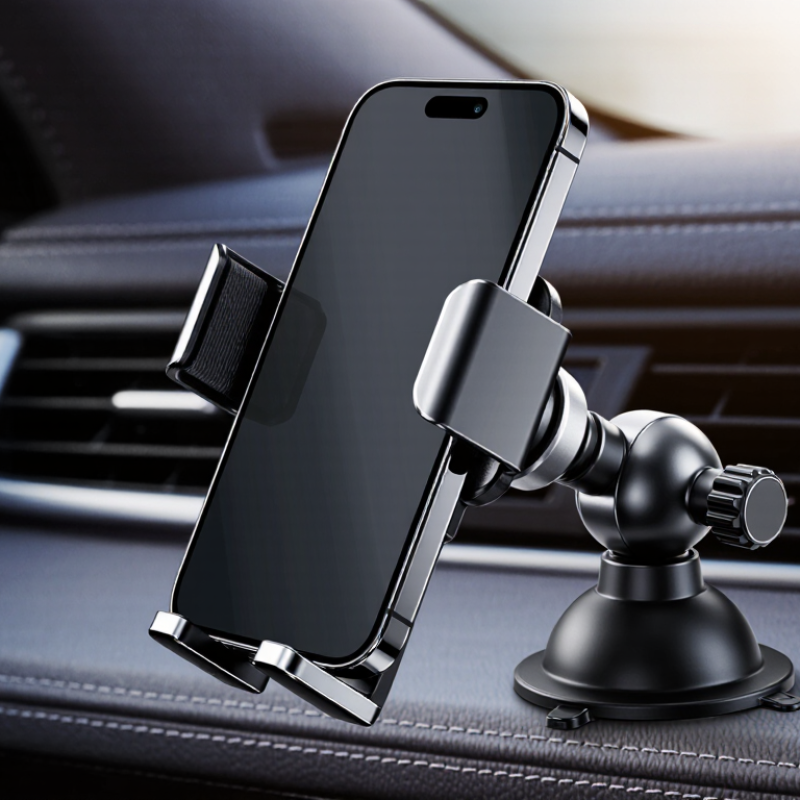
| Mechanical durability and vehicle use | Test plans and results for retention, vibration, adjustment cycles, and mount attachment | Check the tested mounting method, phone-size range, test conditions, and acceptance criteria. Results should correspond to the product configuration being quoted. | Compare documented results with the intended vehicle environment and use case; request a sample for independent evaluation where appropriate. |
| Incoming, in-process, and final inspection | Inspection checklists, defect records, and sample inspection reports | Look for documented checks at relevant stages, defined acceptance criteria, traceable results, and a process for handling nonconforming parts. | Verify that inspection covers the product’s critical features, such as locking, adjustment, attachment, finish, and charging function when included. |
| Change control and traceability | Component and revision records, lot identification, and change-notification procedure | Determine how changes to materials, components, tooling, software, or production location are reviewed and communicated. | Require written approval for changes that could affect fit, function, quality, certification status, or agreed specifications. |
| Supplier selection decision | Completed document review, sample evaluation, and factory-audit findings | Assess certificate relevance and validity alongside product-specific evidence, production controls, and the supplier’s ability to meet the intended market requirements. | Approve only after discrepancies are resolved and the exact product, site, specifications, and evidence are aligned. |



 08045479132

 Send Inquiry


 Send Inquiry
 Send SMS

