What Are the Benefits of Multi-Source Biostimulants?
The agricultural sector continuously seeks innovative solutions to enhance crop productivity. Among these advancements, the MULTI-SOURCE BIOSTIMULANTS SERIES stands out. These biostimulants combine various natural inputs, offering synergistic benefits for plants. They improve nutrient uptake, enhance soil health, and boost resilience against stresses.
Farmers are increasingly adopting these products. Research shows that plants treated with multi-source biostimulants exhibit improved growth rates. This could lead to higher yields and better quality produce. The diversity in sources allows for tailored applications, addressing specific soil and crop needs. Yet, not all biostimulants deliver the same results.
It is crucial to evaluate the quality and efficacy of different products within the MULTI-SOURCE BIOSTIMULANTS SERIES. Some may contain less effective constituents, leading to disappointing outcomes. This complexity reminds us that while biostimulants can enhance agricultural practices, careful selection and application are vital.
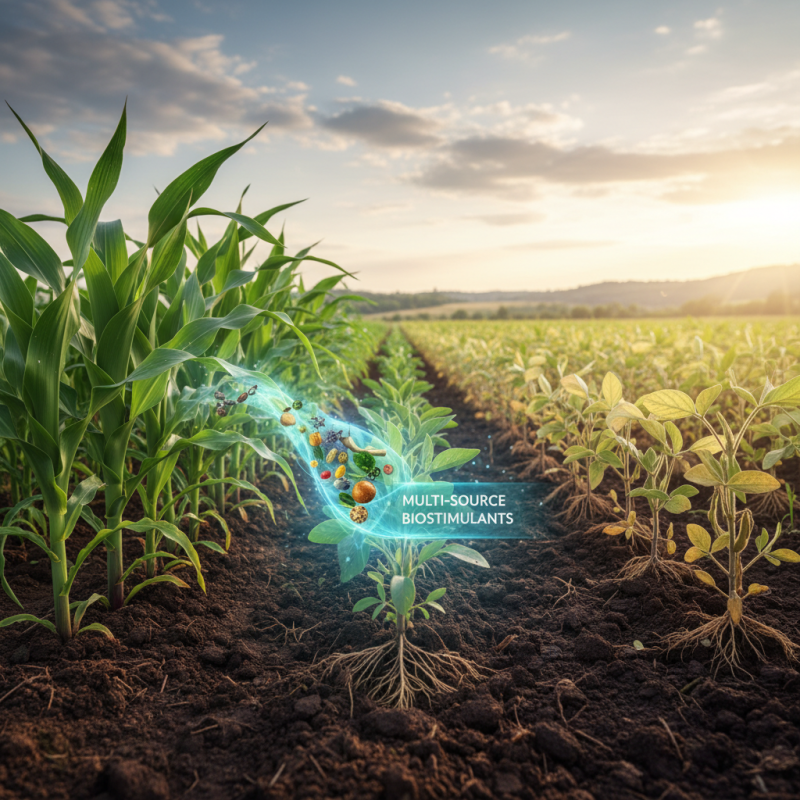
Understanding Multi-Source Biostimulants in Agriculture
Multi-source biostimulants have emerged as a valuable tool in modern agriculture. These products combine various natural sources, including plant extracts, microorganisms, and humic substances. By enriching the soil and enhancing plant health, they encourage greater resilience against pests and diseases. Farmers increasingly recognize the effectiveness of these biostimulants in improving crop yield and quality.
The composition of multi-source biostimulants offers unique advantages. Different components work synergistically to provide comprehensive support. For instance, certain microbial strains can improve nutrient availability, while humic substances contribute to soil structure. Such interactions can lead to healthier crops and more sustainable farming practices. However, understanding how these ingredients interact requires further investigation.
Challenges persist in the utilization of multi-source biostimulants. Farmers must consider factors like application rates and timing. Adapting these products to specific environmental conditions is crucial. Research is ongoing to optimize their use and maximize benefits. Gaining insights into these dynamics can enhance overall agricultural productivity.
What Are the Benefits of Multi-Source Biostimulants?
| Benefit | Description | Example Application |
| Improved Nutrient Uptake | Enhances the availability of nutrients in the soil, facilitating better absorption by plants. | Use in conjunction with fertilizer applications to maximize nutrient efficiency. |
| Stress Resilience | Increases plant tolerance to abiotic stresses such as drought and salinity. | Applying biostimulants during dry seasons to help plants cope with reduced water availability. |
| Soil Health Improvement | Promotes microbial activity and improves soil structure, leading to healthier ecosystems. | Integrating into crop rotation practices to enhance soil biology. |
| Enhanced Root Development | Stimulates root growth, allowing plants to access more water and nutrients. | Application during early growth stages to encourage stronger root systems. |
| Increased Yield and Quality | Enhances overall crop yield and quality, leading to better market value. | Using biostimulants on high-value crops to boost produce quality. |
Key Components of Multi-Source Biostimulants and Their Roles
Multi-source biostimulants are increasingly gaining attention in agriculture. They combine various natural compounds that enhance plant growth and health. The primary components include humic substances, amino acids, and beneficial microorganisms. Each of these plays a unique role in plant development.
Humic substances improve soil structure and nutrient availability. They help retain moisture in the soil, which is crucial during dry periods. Amino acids are the building blocks of proteins. They support stress response and promote cell division. On the other hand, microorganisms enhance nutrient uptake and can suppress soil-borne diseases. Their interaction with plants creates a balanced ecosystem that fosters healthy growth.
However, challenges exist in the formulation and application of these biostimulants. The effectiveness may vary depending on soil types and climate conditions. Some farmers may be hesitant to adopt new practices. Education on their benefits is crucial. Understanding the science behind multi-source biostimulants can lead to better crop yields. Balancing traditional methods with innovative solutions could be a game changer in sustainable agriculture.
How Multi-Source Biostimulants Enhance Plant Growth and Resilience
Multi-source biostimulants are transforming agriculture by enhancing plant growth and resilience in various ways. These products, made from diverse organic and inorganic substances, stimulate beneficial biological processes in plants. According to a report by the International Biostimulants Industry Consortium, the global biostimulant market is expected to reach $4.5 billion by 2027, showcasing growing interest in sustainable agriculture practices.
Plants treated with multi-source biostimulants show improved root development and nutrient uptake. Research indicates that plants can increase yields by up to 15% when using these biostimulants. Enhanced stress tolerance is another critical benefit. A study published in Plant and Soil highlighted that crops treated with specific biostimulants displayed up to 30% higher resistance to drought conditions. This resilience is vital as climate change continues to challenge agricultural productivity.
However, the use of biostimulants is not without challenges. Farmers must understand the correct formulations and application rates to avoid potential negative results. Over-application can lead to nutrient imbalances, impacting plant health. As research continues, the nuanced effects of multi-source biostimulants need careful evaluation to maximize their benefits while minimizing risks.
Environmental Benefits of Using Multi-Source Biostimulants in Cultivation
Multi-source biostimulants offer significant environmental benefits in agriculture. They enhance soil health by promoting microbial activity. Healthy soil supports nutrient cycling. This leads to better crop yields with minimal chemical fertilizers.
These biostimulants can improve water retention in sandy soils. They help reduce erosion on sloped terrains. Farmers may notice that plants grown with biostimulants require less irrigation. This conserves water resources, which is crucial amid climate change.
**Tips:** Experiment with different formulations to see which works best for your soil type. Monitor your crops’ response and adjust applications accordingly. Remember, balancing biostimulants with traditional practices can lead to optimal results. Adjust your approach as needed; this is a learning process.
Benefits of Multi-Source Biostimulants in Cultivation
Comparative Effectiveness of Single vs. Multi-Source Biostimulants
The comparative effectiveness of single-source versus multi-source biostimulants has become a focal point in agricultural research. Studies reveal that multi-source biostimulants often demonstrate superior benefits, enhancing plant growth and resilience. For instance, research from the Journal of Applied Soil Ecology indicates that plants treated with multi-source biostimulants showed up to a 30% increase in root biomass compared to their single-source counterparts.
Multiple sources can provide a diverse array of nutrients, which helps plants adapt to stressors. A report from the European Journal of Agronomy found that crops exposed to multi-source biostimulants exhibited higher chlorophyll content and improved carbon assimilation efficiency. However, the complexity of formulations may lead to inconsistencies in results, raising questions about optimal usage. Some researchers argue that the interactions among various components are not fully understood.
Observations have pointed to a need for careful monitoring. Research in the field often shows varying effects based on environmental conditions. While multi-source biostimulants can be potent, practitioners must evaluate specific scenarios. Not all crops may respond uniformly to their use. Thus, ongoing investigations are essential in realizing the full potential of these products.



 08045479132
 Send Inquiry

 Send Inquiry
 Send SMS