7 Best Strut Channel Machines for Global Buyers
Choosing the right Strut Channel Machine is rarely a simple price comparison. Global buyers must examine forming accuracy, production speed, material compatibility, and after-sales support. A machine that performs well in one factory may struggle with another plant’s coil thickness, voltage, or working environment.
This guide introduces seven machines worth serious consideration for international purchasing teams. Each option is viewed through practical criteria, including roll-forming stability, punching precision, changeover time, automation, and maintenance access. We also consider whether suppliers provide clear technical drawings, documented tolerances, operator training, and dependable spare-parts support. Small details matter. A misaligned punching unit can create repeated installation problems. Poorly protected rollers may suffer damage in humid workshops.
The “best” machine is not universal. That point is easy to miss. A high-speed line may suit large orders, but it can be excessive for a smaller fabricator. A lower-cost model may appear attractive until tooling changes and service delays affect production. Buyers should verify sample results, inspect weld quality, review electrical standards, and request realistic output figures before signing a contract. Supplier claims still need checking.
The following selection aims to provide a balanced starting point for distributors, manufacturers, and project contractors. It combines technical performance with ownership concerns, including installation, training, troubleshooting, and long-term operating costs. Some machines may rank differently under specific factory conditions. That is normal. Careful comparison remains more reliable than a perfect-looking specification sheet.
What Is a Strut Channel Machine and How Does It Work?
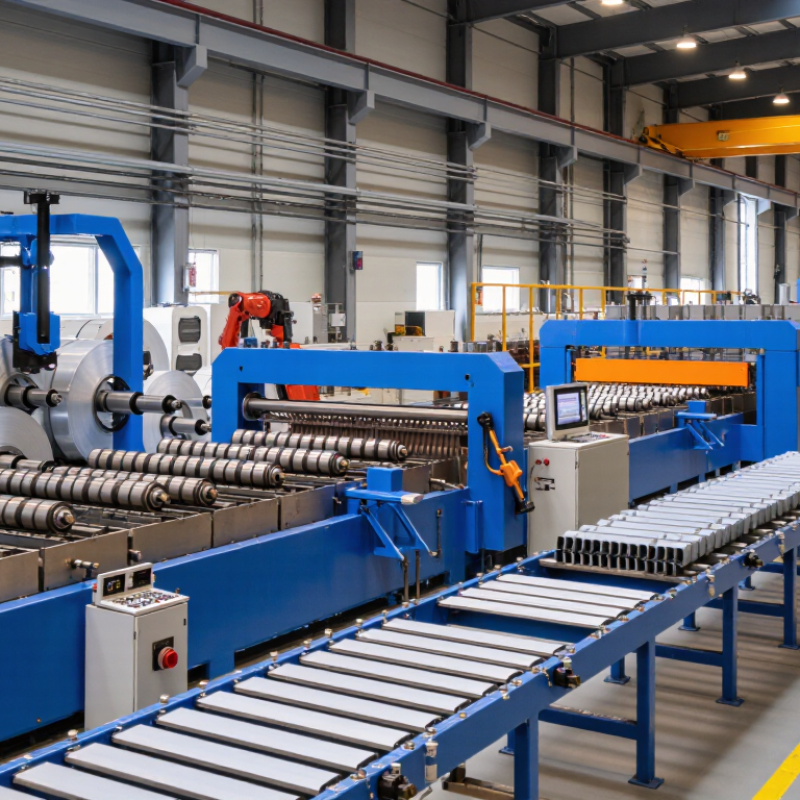
A strut channel machine converts flat steel coils into structural channels for supports, frames, and cable systems. The process begins with a decoiler, which feeds the strip at a controlled speed. Straightening rollers remove coil memory before forming starts. This matters because uneven steel can create twisted channels.
The forming section uses several roller stations. Each station bends the strip slightly, shaping the familiar C or U profile without one sharp deformation. Optional punching units make slots or holes while the steel remains in motion. A cutting system then produces fixed lengths, usually through a flying shear or stop-and-cut device. In practice, correct roller alignment is critical. A small adjustment can change the channel width, lip angle, or hole position.
Before purchasing, global buyers should match the machine with material grade, thickness, coil width, and required profile size. Production speed is important, but stability matters more. I would also check motor capacity, control-system language, spare roller availability, and local electrical compatibility. These details are easy to overlook. They often affect installation time and operating cost.
Operators should inspect the first pieces with calipers and a profile gauge. Check straightness, slot spacing, burrs, and coating damage. The machine may perform well during a factory test, yet behave differently with another steel batch. That uncertainty deserves attention. A reliable supplier should provide drawings, operating guidance, and realistic tolerance data instead of promising perfect results.
How to Evaluate Strut Channel Machines for Global Production
Evaluating a strut channel machine starts with the finished channel, not the sales brochure. Measure steel thickness, flange height, hole pitch, and cut-length tolerance across several production runs. A reliable machine should maintain accuracy after coil changes, not only during a short factory demonstration. Ask for recorded data, including line speed, scrap rate, changeover time, and punch-tool life.
The International Federation of Robotics reported 541,302 industrial robots installed worldwide in 2023, with 4.28 million robots operating globally. This indicates a clear shift toward automated production and stronger demand for compatible controls. A strut channel line should support remote diagnostics, recipe storage, sensor feedback, and safe integration with existing handling equipment. Still, automation is not always the best answer. A highly automated line may waste money when product variations remain limited.
Global buyers should examine material compatibility, including galvanized steel, stainless steel, and different coil widths. Check whether the forming rolls can be adjusted without long downtime. Power requirements matter too. Voltage, frequency, compressed-air quality, and factory floor space can create hidden installation problems. Spare-parts availability deserves equal attention. The World Bank’s 2023 Logistics Performance Index evaluates customs, infrastructure, and shipment reliability, all of which affect international maintenance response. I would request a full acceptance test using the buyer’s actual material. A polished sample can hide inconsistent punching, uneven forming, or excessive scrap. The uncomfortable question is simple: can the machine repeat the result next month?
Which Features, Materials, and Standards Should Buyers Compare?
For global buyers, the best strut channel machine is not always the fastest one. Compare forming stability, punching accuracy, changeover time, and actual material range. A practical line should process common channel widths, galvanized steel, and stainless steel without excessive manual adjustment. Check whether the machine handles 1.5–3.0 mm coil thickness consistently. Ask for trial samples, not only factory videos.
Material standards deserve close attention. World Steel Association reported 1.88 billion tonnes of crude steel production in 2023, showing the scale of steel supply and its quality variation. Buyers should verify coil certificates, yield strength, coating mass, and thickness tolerance. ASTM A653 is common for galvanized sheet in North America, while EN 10346 is widely used in European supply chains. The machine must match these material behaviors. Small deviations can distort the channel profile.
Standards matter too. Compare dimensional inspection, electrical safety, guarding, and documentation against ISO 12100 and ISO 13849 principles. For structural channels, confirm project requirements for load testing and corrosion protection. Servo punching can improve hole positioning, but it raises maintenance demands. I would not trust a claimed speed without checking finished profiles. A spreadsheet can miss vibration, burrs, and difficult tool changes. Those details often decide whether seven machines are genuinely suitable for international production.
How to Choose, Install, and Maintain the Right Machine Worldwide
Choosing a strut channel machine for international production requires more than comparing cutting speed. Match the machine to channel thickness, width, material, and expected daily volume. A unit handling 1.5 mm steel may struggle with thicker stainless steel. Ask for verified test results, dimensional tolerances, tooling life, and spare-part availability. Request samples made from your actual channel profile.
Installation should begin with a level foundation and enough clearance for coil feeding, discharge, and maintenance access. Check local power requirements before shipment, including voltage, frequency, grounding, and control-system compatibility. Train operators to align the rollers gradually. Small alignment errors can create twisted channels, uneven holes, or damaged coatings. Keep guards fitted and use documented lockout procedures during adjustments.
Maintenance becomes easier when it is planned around production, not emergencies. Inspect rollers, punches, bearings, sensors, and hydraulic lines at scheduled intervals. Remove metal dust daily, lubricate according to the machine manual, and record unusual vibration or noise. In humid regions, protect electrical cabinets from condensation. In dusty workshops, clean filters more often than the standard schedule suggests. A perfect maintenance plan rarely survives real factory conditions. One overlooked loose fastener can affect an entire batch, so operators should have authority to stop the line and report defects without delay.
The chart compares seven common strut channel machine configurations by typical rated line speed. Actual output depends on channel size, steel thickness, punching requirements, coil quality, tooling, and operator settings. For global installation, buyers should also verify electrical compatibility, spare-parts availability, safety compliance, and preventive-maintenance support.



 08045479132
 Send Inquiry

 Send Inquiry
 Send SMS