| Material Identification | UNS S30403; common European designation: EN 1.4307 / X2CrNi18-9. | Clear identification of the grade, applicable standard, heat number, product form, and plate condition. | Material test certificate showing the grade designation, heat number, chemical analysis, mechanical results, and applicable specification. | Critical for preventing substitution with standard 304 or another austenitic stainless grade. |
| Applicable Product Standards | Common references include ASTM A240/A240M for chromium and chromium-nickel stainless steel plate, sheet, and strip, and EN 10088-2 for stainless steel flat products. | Ability to manufacture and document the product against the exact standard and revision required by the purchaser. | Purchase-order compliance statement, standard edition, inspection plan, and third-party inspection option where required. | High; standards may differ in chemistry, tolerances, testing, and surface requirements. |
| Chemical Composition | Typical ASTM A240 limits for 304L include: carbon ≤ 0.030%, manganese ≤ 2.00%, silicon ≤ 1.00%, phosphorus ≤ 0.045%, sulfur ≤ 0.030%, chromium approximately 17.5–19.5%, and nickel 8.0–12.0%. | Consistent heat chemistry within the ordered standard; low carbon must be demonstrated rather than assumed from the “L” suffix. | Heat-analysis report issued against the required standard, preferably supported by independent laboratory testing for critical applications. | Critical for corrosion performance, weldability, and specification compliance. |
| Mechanical Properties | Typical ASTM A240 minimum values for annealed 304L plate include tensile strength of 485 MPa, yield strength of 170 MPa, and elongation of 40%; exact requirements depend on thickness and standard. | Results should be reported for the actual production heat and product thickness, not only as generic grade data. | Tensile test report with yield strength, tensile strength, elongation, specimen direction, thickness, and test method. | High for pressure equipment, structural fabrication, forming, and regulated projects. |
| Dimensions and Tolerances | Common commercial plate thicknesses range from approximately 3 mm to 50 mm or more; widths and lengths vary by mill capability and order quantity. | Confirmed thickness, width, length, squareness, flatness, edge condition, and permitted dimensional tolerances. | Dimensional inspection report referencing ASTM, EN, or the purchaser’s specified tolerance class. | High; dimensional variation affects fabrication yield, machining allowance, and installation fit. |
| Surface Finish | Common plate finishes include No. 1 hot-rolled annealed and pickled; thinner flat products may also be supplied in 2B or other cold-rolled finishes when available. | Surface designation, roughness or visual acceptance criteria, edge treatment, and protection method should be stated in the quotation. | Surface inspection record, representative photographs, roughness data where specified, and packing inspection. | High for architectural, hygienic, food-processing, and visible equipment applications. |
| Heat Treatment and Corrosion Control | 304L is normally supplied in an annealed condition. It offers good general atmospheric and many chemical-service corrosion resistance properties but is not universally resistant to chloride pitting or crevice corrosion. | Confirmation of annealing, pickling, passivation requirements, and suitability review for the actual service environment. | Heat-treatment record, pickling/passivation declaration, corrosion-service review, and relevant testing where contractually required. | Critical where exposure includes chlorides, acids, elevated temperatures, or hygienic processing. |
| Weldability and Fabrication | The low-carbon composition helps reduce the risk of sensitization during welding compared with standard 304, although welding procedure control remains necessary. | Technical guidance for welding, forming, cutting, and post-fabrication cleaning without contaminating the stainless surface with carbon steel. | Welding procedure recommendations, fabrication guide, ferrite or weld-quality requirements when applicable, and contamination-control plan. | High for fabricated tanks, process equipment, piping components, and welded structures. |
| Traceability | Each plate should be traceable to a specific heat and production batch through permanent marking or controlled documentation. | Matching heat numbers on the plate, packing list, certificate, inspection report, and shipping documents. | Heat-number photographs, digitally searchable certificates, packing records, and chain-of-custody documentation. | Critical for safety-related, pressure-retaining, pharmaceutical, and regulated applications. |
| Inspection and Testing | Standard testing commonly includes chemical analysis, tensile testing, dimensional inspection, and visual examination; ultrasonic testing may be added for internal discontinuity control. | Inspection scope should be agreed before production, including sampling frequency, acceptance criteria, and independent inspection access. | Inspection and test plan, mill certificate, dimensional report, visual report, and ultrasonic report when specified. | High for thick plate, pressure applications, heavy fabrication, and export projects. |
| Quality Management | A documented quality-management system should control purchasing, melting, rolling, heat treatment, testing, nonconformities, and corrective actions. | Current quality certification and evidence that the certified scope covers stainless flat products and relevant production sites. | Valid quality certificate, audit summary, process-control records, calibration records, and corrective-action history. | High for repeat orders and projects requiring consistent heat-to-heat performance. |
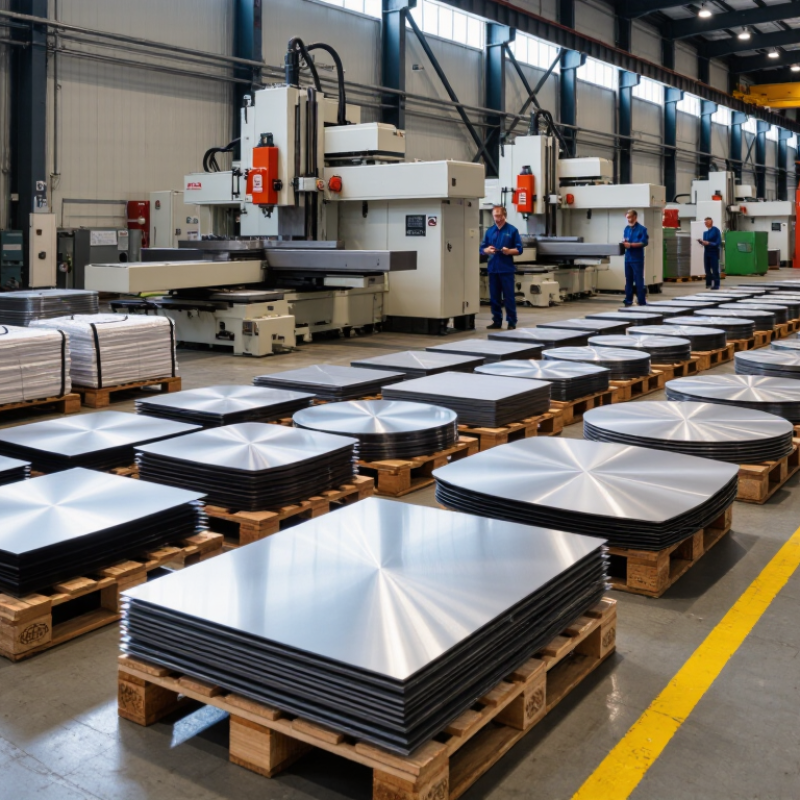
| Packing and Export Protection | Stainless plates should be protected from moisture, salt contamination, abrasion, and contact with untreated carbon steel during handling and transport. | Moisture-resistant wrapping, suitable skids or supports, corrosion-resistant strapping, clear marking, and container-loading controls. | Packing specification, loading photographs, weight list, shipping marks, and transport-damage procedure. | Medium to high, especially for long-distance ocean shipments and polished or sensitive surfaces. |
| Delivery Capability | Availability depends on thickness, width, length, surface finish, quantity, testing scope, and production schedule; no universal lead time applies. | Written confirmation of stock or production status, estimated dispatch date, partial-shipment policy, and capacity for repeat orders. | Order schedule, production milestones, booking confirmation, previous on-time delivery records, and escalation contact. | High when project schedules, shutdown windows, or continuous production depend on the material. |
| Commercial Evaluation | The landed cost should include material price, testing, cutting, surface treatment, packing, inland transport, freight, insurance, duties, and inspection fees. | Transparent quotation with validity period, currency, Incoterm, payment terms, minimum order quantity, and exclusions. | Itemized quotation, landed-cost model, payment-risk review, and written agreement on claims and replacement obligations. | High; the lowest ex-works price may not represent the lowest total procurement cost. |
| Technical Suitability | Typical 304L physical data includes density of approximately 8.0 g/cm³ and a melting range of approximately 1,400–1,450°C; application performance depends on design and service conditions. | Supplier should review temperature, chloride exposure, chemical concentration, forming, welding, and cleaning conditions before confirming suitability. | Application data sheet, corrosion-resistance guidance, design review record, and written deviation approval where necessary. | Critical; correct grade selection cannot be based on price or nominal chemistry alone. |



 08045479132
 Send Inquiry

 Send Inquiry
 Send SMS