What Are the 2026 Top Open Frame Generator Sets for Buyers?
Choosing among the 2026 top Open Frame Generator Sets requires more than comparing advertised kilowatts. Buyers must examine real operating conditions, service access, fuel use, noise, emissions, and lifecycle costs. A unit that looks economical on paper may consume more fuel during partial loads. It may also become difficult to maintain in a dusty construction yard.
Industry research supports this careful approach. The International Energy Agency’s Electricity 2024 report highlights rising electricity demand and continuing reliability concerns across several markets. These pressures keep standby and prime-power equipment relevant. Grand View Research also identifies growing demand for distributed power systems, supported by data-center expansion, construction activity, and grid limitations. However, market forecasts often use different product definitions. Comparisons can therefore become misleading.
Definitions matter.
This guide evaluates Open Frame Generator Sets through practical buyer criteria. These include engine reputation, alternator performance, control-system usability, automatic voltage regulation, fuel efficiency, and parts availability. It also considers enclosure options, transport frames, emergency stopping systems, and documented factory testing. The U.S. Environmental Protection Agency’s nonroad engine standards remain important for compliant purchasing in applicable markets. Local requirements still vary, so buyers should verify certification before ordering.
Field experience shows that small details can decide reliability. A clearly labeled control panel saves time during a nighttime outage. A reachable oil filter reduces maintenance friction. A weak battery isolator can create an avoidable failure. No ranking is perfect. Brand reputation cannot replace load testing, warranty review, and supplier verification. The following overview therefore focuses on measurable performance, ownership risk, and suitability for specific applications in 2026.
What Are Open-Frame Generator Sets and How Do They Work?
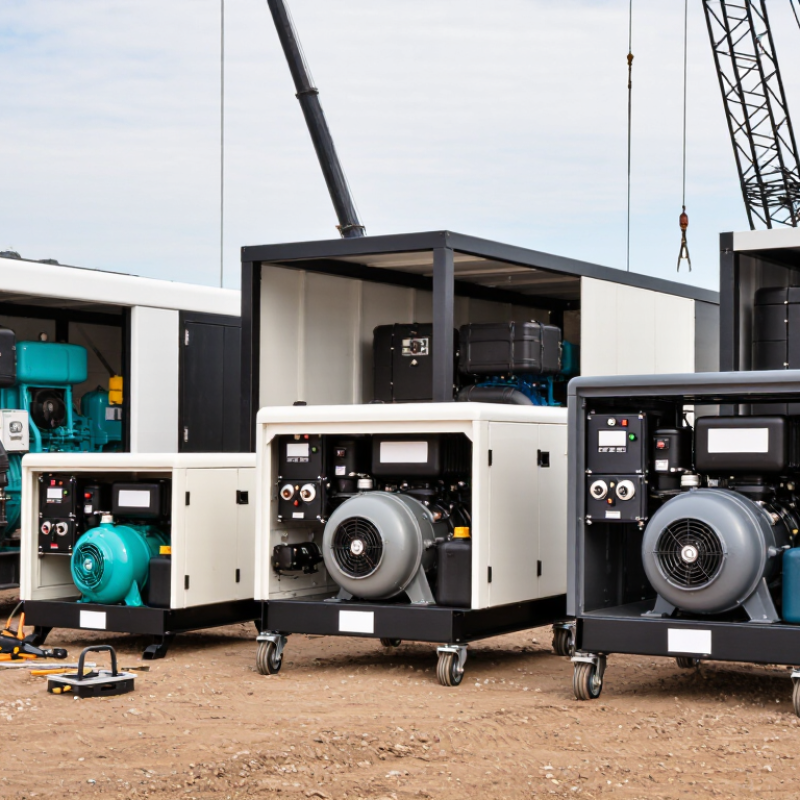
Open-frame generator sets place the engine, alternator, fuel system, radiator, and control panel on a visible steel frame. The engine burns diesel or another approved fuel, turning the alternator through a shaft. The alternator then converts mechanical rotation into electrical power. An automatic voltage regulator steadies output when appliances start or stop. A controller monitors frequency, oil pressure, coolant temperature, and overload conditions.
The open design improves access for inspection and repairs. Technicians can reach belts, filters, terminals, and fluid points without removing an enclosure. This matters on construction sites and farms, where downtime costs money. The U.S. Energy Information Administration reported that the United States generated about 4,178 billion kilowatt-hours in 2023, showing the scale of dependable electricity demand. Smaller generator sets still support critical loads when local supply fails.
Noise and weather exposure remain important weaknesses. The frame offers limited sound reduction and protection from rain, dust, or accidental contact. I once underestimated wind-driven dust during a site assessment. That was careless. Buyers should check the ISO 8528 performance rating, standby or prime-power duty, fuel consumption, and local emission requirements. The IEA’s Electricity 2024 report also notes rising demand from data centers and industrial electrification, increasing pressure on backup systems. A practical choice balances output, service access, enclosure needs, and operating conditions—not just the nameplate rating.
2026 Buyer Guide: Top Open-Frame Generator Set Classes
Open-frame generator sets mount the engine and alternator on an exposed steel frame, which improves cooling, access, portability, and serviceability. The engine turns the alternator rotor, creating electricity that is regulated and delivered through the output sockets or terminals.
How to read the chart: Continuous output is the practical rating for sustained operation. The classes shown represent common open-frame generator sizes used for home backup, construction tools, agricultural equipment, and small commercial loads. Actual performance varies with engine type, fuel, altitude, temperature, and load.



 08045479132

 Send Inquiry


 Send Inquiry
 Send SMS

