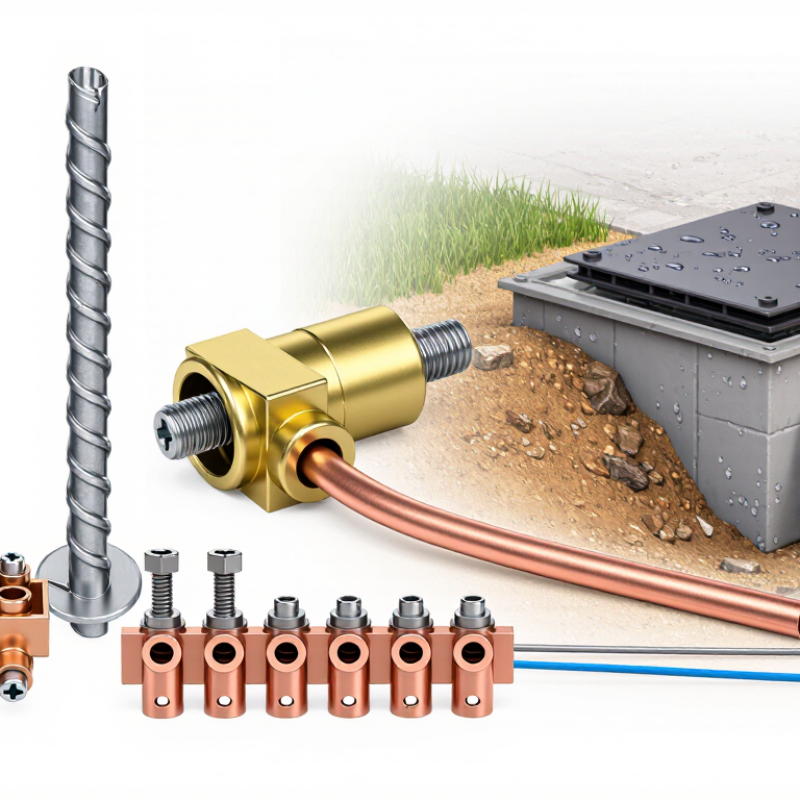
| Grounding Electrodes and Ground Rods | Disperse fault and lightning current into the soil. | Copper-clad steel, galvanized steel, stainless steel, or solid copper. | Residential, commercial, utility, solar, and industrial sites with sufficient soil depth. | Simple installation; available in multiple lengths and diameters; suitable for deep or driven grounding systems. | Check local code, soil resistivity, corrosion exposure, mechanical strength, and required electrode length or spacing. |
| Grounding Clamps and Acorn Clamps | Connect a grounding conductor to a rod, pipe, structural steel member, or other approved electrode. | Copper alloy, bronze, brass, stainless steel, or galvanized steel. | Indoor and outdoor installations where accessible mechanical connections are permitted. | Fast to install, inspect, and maintain; useful for retrofit work. | Select a clamp rated for the electrode and conductor sizes; prevent incompatible-metal corrosion and protect connections from physical damage. |
| Grounding and Bonding Conductors | Provide a low-impedance path between equipment, enclosures, bonding points, and the grounding electrode system. | Bare copper, insulated copper, aluminum, or tinned copper. | Almost all electrical, telecommunications, renewable-energy, and industrial installations. | Flexible routing options; available as solid or stranded conductors and in various cross-sectional areas. | Size according to applicable electrical codes, fault current, overcurrent protection, installation method, temperature, and corrosion conditions. |
| Grounding Busbars and Earth Bars | Create a central point for terminating and organizing multiple grounding or bonding conductors. | Tinned copper, copper, or zinc-plated steel with insulated supports. | Main electrical rooms, data rooms, control panels, telecommunications rooms, and equipment cabinets. | Improves cable organization, inspection, testing, and future expansion. | Verify short-circuit withstand rating, hole spacing, mounting insulation, conductor capacity, and accessibility. |
| Grounding Lugs and Mechanical Connectors | Terminate or bond conductors to panels, enclosures, cable trays, equipment frames, and busbars. | Copper, tinned copper, aluminum, stainless steel, or plated alloys. | Switchboards, photovoltaic equipment, battery systems, machinery, cable trays, and metal enclosures. | Compact, reusable, and suitable for equipment bonding and modular assemblies. | Confirm conductor range, bolt size, available space, torque requirements, and compatibility with the enclosure material. |
| Exothermic Welding Materials | Create a permanent molecular connection between conductors, electrodes, and structural steel. | Welding powder, graphite molds, handles, clamps, and compatible conductor materials. | Buried grids, substations, lightning-protection systems, rail infrastructure, and high-reliability outdoor sites. | Low electrical resistance, strong mechanical integrity, and good long-term performance when properly installed. | Requires trained personnel, approved molds, dry materials, fire controls, and safe working clearances. |
| Grounding Inspection Pits and Test Wells | Provide protected access to an electrode or connection for inspection and electrical testing. | Polymer concrete, fiberglass-reinforced plastic, concrete, or heavy-duty polymer. | Outdoor grounding systems, commercial sites, substations, solar farms, and lightning-protection installations. | Protects connections from traffic, soil movement, and accidental damage while supporting maintenance access. | Select the load rating, internal dimensions, drainage arrangement, cover type, and environmental resistance. |
| Ground Enhancement Materials | Improve contact between the electrode and surrounding soil where natural soil conductivity is poor. | Engineered conductive compounds such as bentonite-based or carbon-based materials, depending on the application. | Rocky, sandy, dry, or high-resistivity soil where conventional electrodes cannot achieve the required resistance. | Can reduce soil-electrode contact resistance and may help where electrode extension is difficult. | Use only products suitable for the soil and electrode materials; assess environmental impact, moisture retention, leaching, and maintenance needs. |
| Flexible Bonding Jumpers | Maintain electrical continuity across doors, hinges, expansion joints, removable panels, and moving equipment. | Tinned copper braid, copper strap, or flexible stranded copper with crimped terminals. | Switchgear, control cabinets, machinery, cable trays, photovoltaic structures, and industrial equipment. | Accommodates movement and vibration while maintaining a reliable bonding path. | Choose the correct length, cross-sectional area, bend radius, terminal type, and corrosion protection for the environment. |
| Lightning Protection Grounding Components | Connect air terminals and down conductors to an earthing system that disperses lightning current. | Copper, aluminum, galvanized steel, stainless steel, bonding clamps, test joints, and roof fixings. | Buildings, industrial structures, towers, solar installations, and exposed outdoor facilities. | Supports a coordinated path from the strike-reception system to the grounding network. | Design according to the applicable lightning-protection standard, separation distance, bonding requirements, conductor routing, and corrosion conditions. |
| Specialized Grounding Accessories for Solar and Battery Systems | Bond photovoltaic frames, mounting structures, inverters, battery enclosures, and associated metallic parts. | Tinned copper, stainless steel, aluminum, serrated washers, grounding clips, lugs, and bonding jumpers. | Rooftop solar arrays, ground-mounted solar farms, energy-storage rooms, and hybrid renewable-energy systems. | Supports electrical continuity across modular frames and equipment exposed to weather and vibration. | Verify compatibility with aluminum frames, outdoor exposure, system voltage, fault-current requirements, and the applicable photovoltaic installation code. |



 08045479132

 Send Inquiry


 Send Inquiry
 Send SMS

