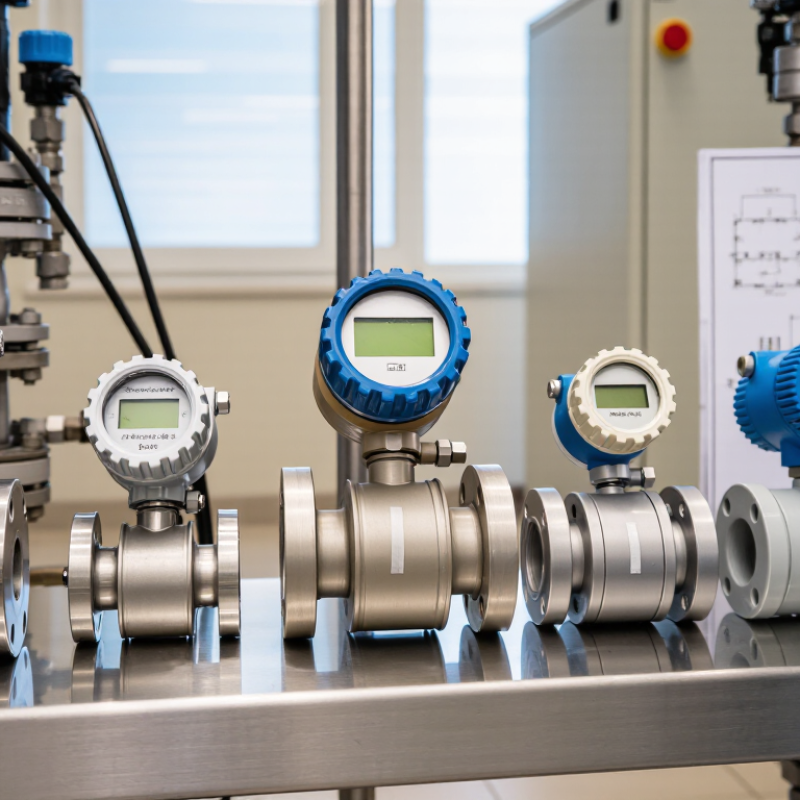
| Electromagnetic flow meter | Uses electromagnetic induction to measure the velocity of a conductive liquid. | Conductive liquids, including water, wastewater, slurries, and many process liquids. Not suitable for non-conductive fluids such as most hydrocarbons. | Water and wastewater treatment, chemical processing, pulp and paper, and industrial utilities. | Check minimum liquid conductivity, liner and electrode compatibility, pipe filling, grounding, and installation requirements. |
| Ultrasonic flow meter | Measures flow using the travel-time difference or Doppler shift of ultrasonic signals. | Transit-time designs commonly measure clean liquids; Doppler designs require sound-reflecting particles or bubbles. Clamp-on models can measure without cutting the pipe. | Water networks, energy monitoring, temporary surveys, and measurement on large pipes. | Consider fluid cleanliness, pipe material and wall condition, sensor mounting, straight-run needs, and whether in-line or clamp-on installation is preferred. |
| Coriolis mass flow meter | Detects the Coriolis effect in vibrating tubes to measure mass flow; many designs also report density and temperature. | A wide range of liquids and gases, subject to the meter’s pressure, temperature, and material limits. | Batching, chemical dosing, custody-related measurement, and process control where direct mass measurement is useful. | Evaluate line size, pressure drop, vibration, fluid compatibility, installation support, and total cost. |
| Positive displacement meter | Counts repeated, fixed-volume chambers filled and discharged by the passing fluid. | Primarily liquids; commonly used with clean fluids and can be suitable for more viscous liquids depending on design. | Fuel and oil measurement, liquid batching, dispensing, and selected commercial or process services. | Check viscosity range, particle contamination, pressure loss, moving-part wear, and maintenance access. |
| Turbine flow meter | Relates the rotational speed of a rotor to the flow velocity through the meter. | Typically clean, relatively low-viscosity liquids or gases within the instrument’s specified operating range. | Fuel systems, gas measurement, process liquids, and test or monitoring systems. | Assess fluid cleanliness, viscosity, flow profile, straight-run requirements, bearing wear, and calibration needs. |
| Vortex flow meter | Measures vortices shed from a bluff body placed in the flow stream. | Liquids, gases, and steam; performance depends on suitable flow velocity and process conditions. | Steam monitoring, compressed air, utility services, and general process flow measurement. | Check minimum flow rate, pipe vibration, pressure and temperature range, and required straight pipe lengths. |
| Thermal mass flow meter | Uses heat transfer from a heated sensor to determine gas mass flow. | Primarily gases; calibration and accuracy can depend on gas composition and operating conditions. | Compressed air, fuel gas, biogas, and emissions or process gas monitoring. | Confirm gas composition, moisture and contamination limits, insertion or in-line mounting, and calibration basis. |
| Differential pressure flow meter | Infers flow from the pressure difference created by a primary element, such as an orifice plate, nozzle, or Venturi tube. | Liquids, gases, and steam when the primary element and installation are correctly engineered. | Process plants, steam lines, energy systems, and applications requiring established differential-pressure measurement methods. | Consider permanent pressure loss, turndown, impulse-line design, fluid properties, installation geometry, and applicable standards. |



 08045479132

 Send Inquiry


 Send Inquiry
 Send SMS

