| Bleached Silicone-Coated Parchment | Bleached cellulose parchment paper | 35–60 g/m² | One- or two-sided food-grade silicone | White to ivory | Commonly 200–230°C; confirm the product declaration | Cookies, pastries, bread, roasting, tray lining | Reliable release, even caliper, low curl, resistance to grease and moisture | U.S. FDA 21 CFR 176.170; EU Framework Regulation (EC) No 1935/2004; GMP Regulation (EC) No 2023/2006 | Request coating declaration, migration test data, basis-weight tolerance, and oven-use instructions |
| Unbleached Silicone-Coated Parchment | Unbleached cellulose parchment paper | 35–60 g/m² | Food-grade silicone, usually one or two sides | Natural brown | Commonly 200–230°C; confirm the product declaration | Artisan bread, cookies, home baking, eco-focused food packaging | Non-stick release, natural appearance, sufficient wet strength, controlled odor and taste transfer | U.S. FDA 21 CFR 176.170; EU Regulations (EC) No 1935/2004 and No 2023/2006 | Check recycled-fiber status, bleaching statement, odor test, extractables, and compostability claims separately |
| Pre-Cut Baking Sheets | Bleached or unbleached cellulose parchment | 35–60 g/m² | Silicone-coated, generally double-sided for easy handling | White, ivory, or natural brown | Usually 200–230°C; product-specific limits apply | Retail baking, food-service kitchens, bakery production | Accurate dimensions, flatness, clean die-cut edges, consistent sheet count | Applicable food-contact legislation in destination market; supplier declaration of compliance | Approve dimensions, tolerances, pack count, carton compression, and barcode or labeling requirements |
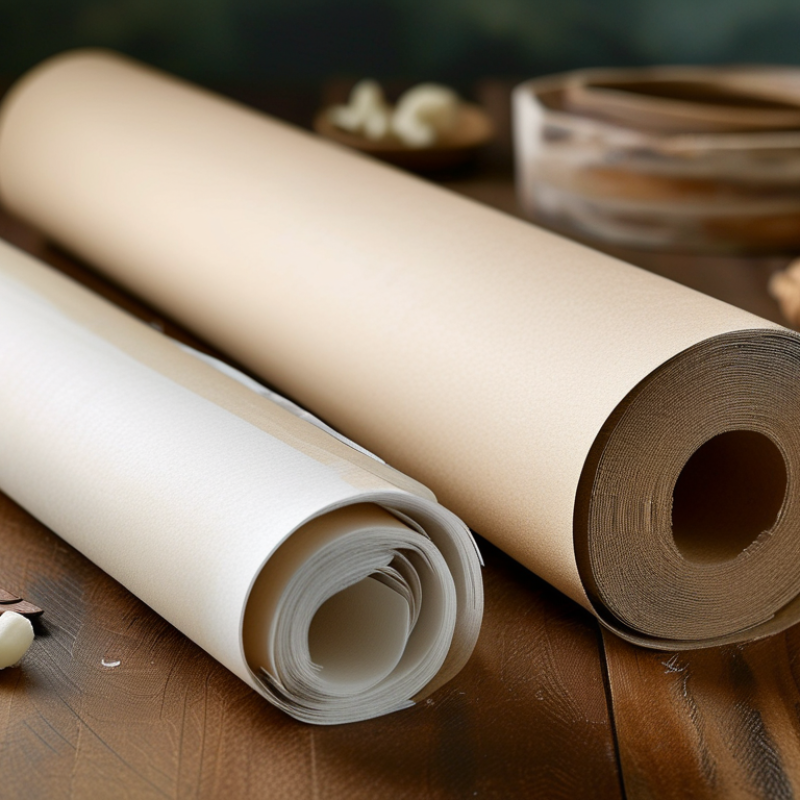
| Parchment Baking Rolls | Cellulose parchment paper with silicone coating | 35–60 g/m² | One- or two-sided silicone coating | White, ivory, or brown | Typically 200–230°C; verify roll-specific instructions | Household baking, restaurants, bakeries, catering | Smooth unwinding, low blocking, clean tear or cutting, stable roll tension | U.S. FDA 21 CFR 176.170; EU Framework Regulation (EC) No 1935/2004 | Test roll width, length, core size, winding direction, edge damage, and moisture protection |
| Pre-Formed Parchment Baking Cups | Molded cellulose parchment paper | Commonly 40–70 g/m² | Silicone-coated or grease-resistant treated surface | White, ivory, or natural brown | Usually 180–220°C; confirm cup-specific limits | Muffins, cupcakes, brioche, confectionery portions | Shape retention, grease resistance, clean separation, dimensional consistency | Destination-market food-contact requirements and applicable paper or silicone declarations | Confirm cup diameter, height, rim shape, nesting performance, and filling-line compatibility |
| Industrial Bakery Liner Paper | High-strength cellulose parchment or specialty grease-resistant paper | 50–90 g/m² | Silicone, fluorine-free release treatment, or engineered grease barrier | White, ivory, or brown | Application-dependent; validate against the production oven profile | Continuous bread lines, laminated dough, frozen dough, industrial pastry | High tensile strength, runnability, release after baking, moisture and grease resistance | Food-contact declaration, migration testing, chemical restrictions, and quality-management records | Conduct line trials for speed, tension, oven dwell time, product release, and waste rate |
| Reusable Baking Mat with Parchment Alternative Function | Woven glass-fiber substrate with silicone elastomer coating | Not normally specified by paper basis weight | Food-contact silicone on both sides | Usually translucent, brown, or dark gray | Often approximately 200–250°C; follow the specific product declaration | Repeated baking, pastry work, confectionery, commercial kitchens | Dimensional stability, repeated release, cleanability, edge safety, and resistance to cracking | Destination-market food-contact rules for silicone and substrate materials | Verify maximum temperature, cleaning method, service life, fiber exposure, and PFAS-free documentation where required |



 08045479132
 Send Inquiry

 Send Inquiry
 Send SMS