2026 Best Permanent Magnet Air Compressor for Global Buyers
Choosing the right Permanent Magnet Air Compressor in 2026 requires more than comparing motor ratings or attractive efficiency claims. Global buyers need dependable performance, transparent specifications, and support that remains practical after installation. A compressor may look impressive in a catalog, yet perform differently under heat, dust, unstable voltage, or changing production demand.
This guide examines key buying factors for international factories, workshops, and processing facilities. It considers permanent magnet motor efficiency, variable-speed control, air delivery, pressure stability, noise, cooling design, maintenance access, and expected service life. Real operating details matter. A compressor running beside a packaging line should not create excessive noise. A machine serving pneumatic tools must maintain stable pressure during sudden demand increases. Energy savings also depend on duty cycles, leakage control, ambient temperature, and correct sizing.
Details matter. So does evidence.
Reliable suppliers should provide measurable performance data, clear warranty terms, installation guidance, and accessible replacement parts. Buyers should review recognized testing practices and applicable regional requirements before placing an order. Certification alone does not guarantee suitability. That assumption deserves scrutiny. Factory visits, application testing, and documented customer experience can reveal weaknesses that product brochures often hide.
The best choice is rarely the most powerful model. It is the compressor that matches actual air consumption, operating conditions, budget, and long-term maintenance capability. This 2026 overview offers a practical framework for comparing global options with greater confidence. Some efficiency figures may change in real conditions, and that limitation should be acknowledged. A careful buyer measures before committing.
What Is a Permanent Magnet Air Compressor?
What Is a Permanent Magnet Air Compressor?
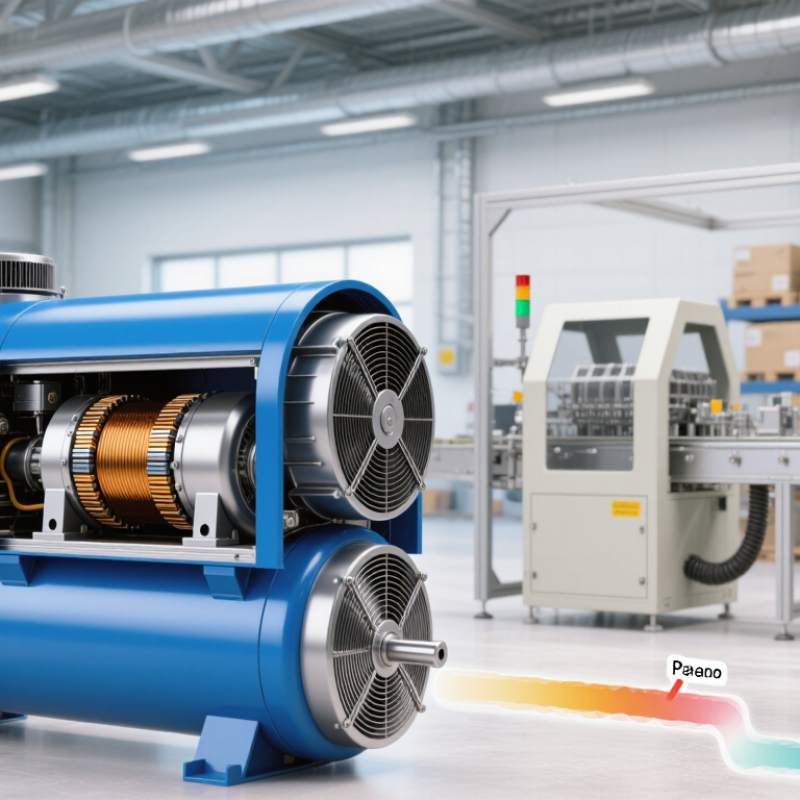
A permanent magnet air compressor uses a motor with embedded permanent magnets. Unlike a conventional induction motor, it does not rely on continuous rotor slip to create torque. This design can reduce electrical losses, especially during partial-load operation. Most models pair the motor with a variable-speed drive, adjusting rotation to match changing air demand. The result is less unloading, fewer pressure swings, and potentially lower energy use. The motor is permanent magnet; the compressor may still be oil-injected or oil-free.
The U.S. Department of Energy reports that compressed-air systems commonly consume 10–15% of industrial electricity, and inefficient plants may reach 30%. The International Energy Agency also identifies motor-driven equipment as a major industrial electricity load. These figures explain the market interest. Still, efficiency claims need careful testing. The label can mislead.
Buyers should review ISO 1217 performance data, specific power, input voltage, ambient-temperature limits, and service requirements. Ask for measured performance at several load points, not only the best rating. A permanent magnet motor may perform poorly if cooling is weak, controls are badly tuned, or demand changes sharply. Dusty workshops reveal problems quickly. So do hot coastal facilities. In my experience, the cheapest electricity estimate often ignores maintenance, standby losses, and replacement electronics. That omission deserves a second look.
2026 Best Permanent Magnet Air Compressor for Global Buyers - What Is a Permanent Magnet Air Compressor?
A permanent magnet air compressor uses a permanent-magnet synchronous motor to drive the compressor element. Compared with a conventional induction-motor system, the motor can maintain high efficiency across a wider operating range, especially when combined with variable-speed drive control. The figures below are representative engineering ranges for commonly available industrial configurations; actual performance depends on pressure, cooling method, air quality, installation conditions, and testing standards.
Buyer checklist: Compare free air delivery at the same pressure and test condition, not only motor power. Confirm voltage and frequency, ambient-temperature limits, altitude derating, cooling requirements, enclosure rating, air-quality class, maintenance intervals, service parts availability, and compliance with applicable electrical and pressure-equipment regulations. Noise values are normally measured under controlled conditions and may be higher after installation.
How Permanent Magnet Technology Works in Air Compression
Permanent magnet technology changes how an air compressor produces power. Instead of relying on a conventional induction motor, the compressor uses permanent magnets inside its rotor. These magnets create a rotating magnetic field with high efficiency and low electrical loss.
A variable-speed drive adjusts motor speed to match actual air demand. When factory tools use less air, the motor slows down instead of running at full speed. During heavy production, it accelerates smoothly. This reduces unloaded running time and can lower energy consumption, especially in facilities with changing demand. The motor also works efficiently at partial load. That detail matters.
In practical installations, buyers should examine more than the motor rating. Check the required pressure, flow, duty cycle, cooling method, voltage, and local electrical requirements. A well-designed compressor may run quietly, with less vibration and a smaller heat load in the compressor room. However, permanent magnet systems are not automatically the best choice for every site. Poor sizing can erase expected savings. Maintenance teams also need training for drive controls, insulation checks, and safe motor servicing. I have found that real operating data is more useful than a promising brochure. Measure air demand across shifts, then compare lifetime energy and maintenance costs. Reliability depends on the complete system, not one advanced component.
Key Features of the Best Models for Global Buyers
The best permanent magnet air compressor for global buyers begins with measured energy demand, not a fashionable motor label.
The U.S. Department of Energy reports that compressed air can consume 10% to 30% of industrial electricity. Permanent magnet drives can reduce motor losses, especially under variable loads. Variable-speed control is therefore essential. Fixed-speed operation wastes potential savings.
Look for IE5-class motor documentation, inverter efficiency data, and performance curves at partial load. Ask for airflow figures at the required pressure, not only advertised peak output. The DOE also notes that compressed-air leaks may waste 20% to 30% of compressor output. Measure the load. A strong compressor cannot repair poor pipework.
Efficient models should include leak monitoring, automatic standby control, and clear energy records.
Global conditions demand practical details. Confirm compatibility with 50 or 60 Hz power, local voltage, ambient temperature, altitude, and enclosure protection. ISO 8573-1 helps buyers specify air purity, but a permanent magnet motor does not automatically make a compressor oil-free. That assumption causes expensive mistakes.
Service access, multilingual manuals, spare-parts availability, and remote diagnostics matter as much as efficiency. The IEA’s Energy Efficiency 2023 analysis stresses that system-level management often delivers larger gains than equipment replacement alone. Not always. Real operating data should verify every promised saving.



 08045479132
 Send Inquiry

 Send Inquiry
 Send SMS