| Material type | Austenitic chromium-nickel-manganese stainless steel | Offers good formability, toughness, and general corrosion resistance for everyday fabricated products. |
| Typical chemical composition | Chromium: about 16–18%; nickel: about 3.5–5.5%; manganese: up to about 7.5%; carbon: up to about 0.15% | The lower nickel content is partly balanced by manganese, helping reduce material cost while retaining an austenitic structure. |
| Common sheet finishes | Mill finish, brushed finish, and polished decorative finish; surface designations vary by standard and supplier | The finish can support appearance, cleanability, and surface uniformity in interior and light-duty applications. |
| Typical minimum tensile strength | Approximately 685 MPa for annealed material manufactured to common ASTM A240 requirements | Provides adequate strength for many formed panels, covers, housings, and general fabrication components. |
| Typical minimum yield strength | Approximately 292 MPa for annealed material under common ASTM A240 requirements | Helps determine the sheet thickness and forming design needed for a specific load. |
| Formability | Good formability in annealed condition; work hardening occurs during cold forming | Suitable for bending, stamping, pressing, and roll forming, although deep or complex forming may require process control. |
| Weldability | Generally weldable using common stainless-steel welding processes, with procedure selection based on thickness and service conditions | Used for fabricated enclosures, panels, frames, and assemblies; welding discoloration and corrosion protection should be addressed. |
| Corrosion resistance | Good resistance in mild indoor, atmospheric, and low-corrosion environments; generally less resistant than 304 stainless steel in chloride-rich or highly corrosive conditions | Appropriate for many indoor and light-duty applications, but material selection should consider humidity, salt, chemicals, and cleaning agents. |
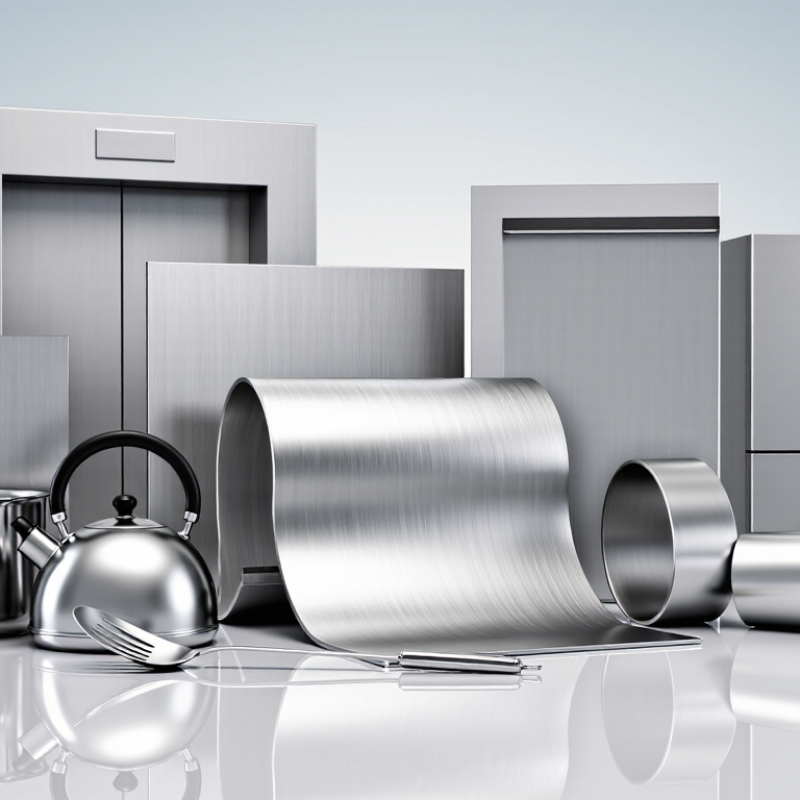
| Kitchen and catering equipment | Countertop panels, cabinet panels, backsplashes, sinks, shelving, trays, and appliance components | Selected for its clean metallic appearance, formability, and ease of routine cleaning; suitability depends on the food-contact and corrosion requirements. |
| Architectural and decorative products | Interior wall panels, elevator interiors, trim, ceiling panels, column covers, and decorative screens | Provides a modern appearance and can be fabricated into flat, bent, or patterned components. |
| Automotive and transportation components | Interior trim, decorative panels, brackets, covers, and selected non-critical formed parts | Useful where moderate strength, appearance, and formability are needed without exposure to severe corrosive environments. |
| Household and commercial products | Storage cabinets, lockers, shelving, furniture components, washing-machine panels, and appliance housings | Combines a durable surface with relatively easy fabrication for indoor products and equipment. |
| Suitable environment | Indoor areas, dry atmospheric conditions, and applications with limited chemical or salt exposure | Regular cleaning and avoidance of trapped chlorides can help preserve the surface and reduce staining. |
| Applications requiring caution | Marine installations, coastal outdoor structures, strong chemical service, high-chloride process areas, and critical pressure equipment | A more corrosion-resistant or specially qualified grade may be necessary after reviewing the service environment and applicable regulations. |
| Selection checklist | Confirm thickness, temper, surface finish, dimensional tolerance, applicable material standard, forming method, welding procedure, and corrosion conditions | These factors affect the final performance more directly than the grade designation alone. |



 08045479132
 Send Inquiry

 Send Inquiry
 Send SMS