10 Best Picosecond Laser Machines for Sale Worldwide
Choosing among the 10 Best Picosecond Laser Machines for Sale Worldwide requires more than comparing prices and advertised power. A reliable evaluation should examine pulse duration, wavelength options, fluence control, repetition rate, cooling systems, handpiece design, and service support. These details affect treatment precision, operator confidence, and long-term operating costs.
Laser pioneer Dr. R. Rox Anderson has emphasized, “The laser is a tool, not a treatment.” That reminder matters here. A Picosecond Laser can create highly focused energy pulses, but outcomes still depend on diagnosis, skin assessment, technique, maintenance, and appropriate training. A bright display does not guarantee clinical value. Nor does a low price guarantee a sensible purchase.
This guide reviews machines available across international markets, focusing on practical performance rather than polished brochures. It considers tattoo removal, pigment concerns, skin revitalization, and compatible accessories, while recognizing that indications differ by device and region. Readers should verify local regulatory clearance, manufacturer documentation, warranty terms, and qualified training before making a decision.
Some specifications look impressive on paper. They may feel less impressive during a busy clinic day. Cooling performance, replacement-part access, and responsive technical support can matter more than maximum energy. That is easy to overlook.
The ranking is not absolute. Clinic budgets, patient profiles, treatment volume, and practitioner experience change the answer. A machine that suits a high-volume dermatology center may frustrate a smaller studio. This comparison aims to make those trade-offs visible, not to promise identical results for every user.
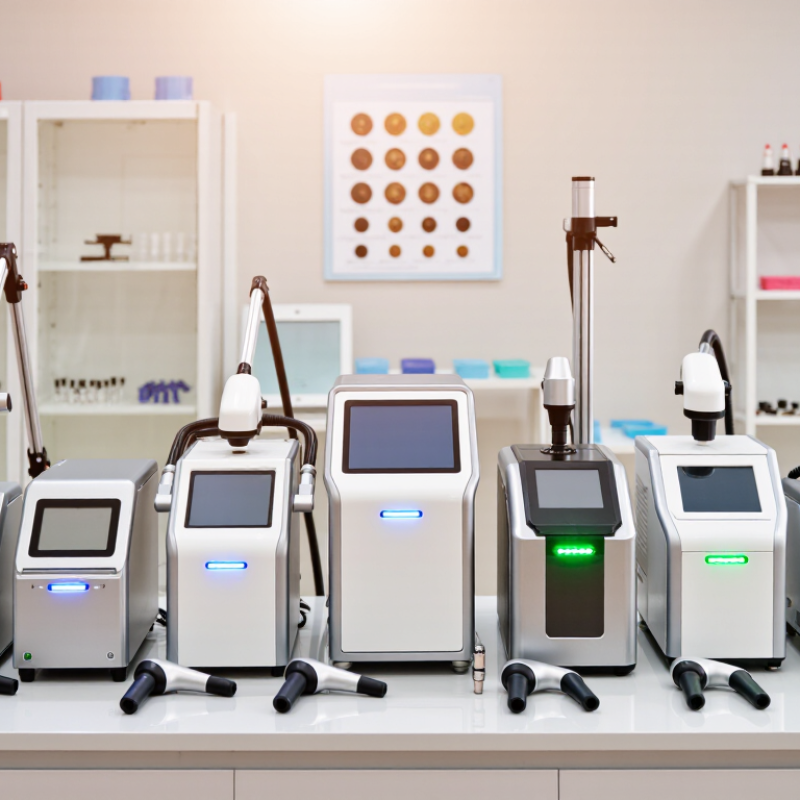
Picosecond Laser Technology: Pulse Durations, Wavelengths, and Core Principles
10 Best Picosecond Laser Machines for Sale Worldwide
Picosecond laser technology delivers pulses lasting approximately one trillionth of a second. These ultra-short bursts create strong photomechanical pressure with limited heat spreading. The energy can fragment selected pigment particles into smaller pieces, allowing natural clearance over time. It is not simply a faster conventional laser.
Wavelength determines which targets absorb the light. A 532 nm wavelength commonly addresses superficial red, orange, or brown pigments. A 755 nm wavelength can reach deeper targets with different absorption behavior. A 1064 nm wavelength generally penetrates further and is often selected for darker pigments or deeper treatment areas. Some systems also offer 1320 nm energy for specific skin-resurfacing applications. Treatment decisions should consider skin tone, pigment depth, pulse energy, spot size, repetition rate, and cooling performance.
Specifications can look impressive on paper. They do not guarantee clinical results. I have found that practical details matter more: stable output, accurate calibration, clear maintenance records, and responsive technical support. A machine with extremely high power may be unsuitable for a small clinic or inexperienced operator. Improper settings can cause burns, pigment changes, or delayed healing. Clinical training and protective eyewear remain essential. The phrase “best machine” is therefore incomplete; the right choice depends on the target, operator skill, local requirements, and measured performance.
Key Performance Metrics: Energy, Fluence, Repetition Rate, and Spot Size
10 Best Picosecond Laser Machines for Sale Worldwide
When comparing picosecond laser machines, energy is a practical starting point. It shows how much power each pulse can deliver. Higher energy may support deeper or larger treatment areas, but more is not automatically better. Poor calibration can cause uneven results and unnecessary thermal stress. Ask for measured output data, not only advertised maximum values.
Fluence describes energy per square centimeter. It is often more useful than total energy because it reflects the dose reaching the target area. A machine with adjustable fluence gives practitioners better control across different skin types and treatment goals. Repetition rate determines how many pulses the system produces each second. A high rate can shorten sessions, yet it may increase heat accumulation. Watch the skin response carefully.
Spot size affects coverage, precision, and comfort. Larger spots can treat broad areas efficiently, while smaller spots help with detailed work. Optical quality matters too. A nominal spot size may not remain consistent across the whole treatment field. This is where specifications can become less clear. I would compare beam profiles, pulse stability, cooling performance, and service records before choosing a model. Test results from an independent technician are valuable. They reveal performance that a sales sheet may not show. Always verify training requirements, electrical standards, maintenance support, and regional compliance before purchase.
10 Best Picosecond Laser Machines for Sale Worldwide — Key Performance Metrics: Energy, Fluence, Repetition Rate, and Spot Size
A non-brand-specific comparison of common commercially available picosecond laser configurations. The profiles below are representative specification ranges, not verified specifications for individual models or a product ranking.
Comparing 10 Leading Picosecond Laser Machines by Clinical Specifications
Comparing 10 leading picosecond laser machines requires more than checking advertised power. Clinical specifications should include wavelength options, pulse duration, fluence range, spot sizes, repetition rate, and beam profile. These details influence treatment precision, comfort, and tissue response. Shorter pulses may support pigment and tattoo procedures, but clinical results also depend on skin type, lesion depth, and operator settings.
Details matter. A practical evaluation should examine how quickly the system reaches the selected fluence and whether energy remains stable across repeated shots. Adjustable spot sizes can improve control on small facial areas and larger body regions. Integrated cooling may reduce discomfort, although cooling performance should be tested during extended sessions. Published evidence, electrical certification, treatment protocols, and service documentation deserve equal attention. A machine with impressive peak energy may be less useful if calibration is difficult.
I would also compare handpiece ergonomics, aiming visibility, maintenance intervals, and software access for different clinicians. These factors affect daily workflow. Not always. A clear interface can prevent setting errors, but it cannot replace training or patient assessment. Buyers should request demonstration data, independent safety records, and realistic consumable costs. One weakness in many comparisons is overreliance on brochure specifications. Real clinical performance may vary with operator technique, treatment indication, and patient response. Experienced users should record outcomes carefully and revise protocols when results do not match expectations.
10 Best Picosecond Laser Machines for Sale Worldwide
Comparison of ten anonymized commercial picosecond laser configurations by representative nominal pulse duration. Lower values indicate shorter pulses, which may support more efficient photoacoustic pigment fragmentation with reduced thermal diffusion.
The benchmark values reflect nominal pulse-duration specifications commonly published for commercial picosecond platforms. Actual performance may vary by wavelength, handpiece, energy setting, and treatment mode.
Worldwide Buying Guide: Treatment Applications, Service Support, and Total Cost
Choosing among the 10 best picosecond laser machines for sale worldwide requires more than comparing pulse duration and prices. ISAPS’s 2022 Global Survey recorded over 17 million nonsurgical aesthetic procedures globally. Demand is broad, but treatment needs differ. Picosecond systems may support pigmentation correction, tattoo removal, acne-scar improvement, and selected skin-rejuvenation protocols. A clinic should match wavelength, spot size, fluence range, and pulse settings with its actual patient profile.
Service support strongly affects clinical reliability. Ask about operator training, installation, calibration, preventive maintenance, and emergency response times. A practical supplier should provide treatment protocols, safety guidance, and documented spare-parts availability. Request service records from operating clinics. Marketing claims are not enough. A 2024 Grand View Research report described continued growth in aesthetic laser demand, yet market forecasts cannot guarantee a machine’s performance in your facility.
Total cost includes shipping, taxes, room preparation, cooling requirements, consumables, software fees, warranty limits, and staff training. Calculate the cost per treatment, not only the purchase price. For example, frequent calibration delays can reduce appointment capacity and weaken revenue. I would also test the handpiece ergonomics personally. Small discomfort becomes serious after many procedures. Independent clinical evidence matters, but it may not reflect every skin type or treatment protocol. Build a three-year budget, include downtime, and leave room for unexpected repairs.



 08045479132
 Send Inquiry

 Send Inquiry
 Send SMS